
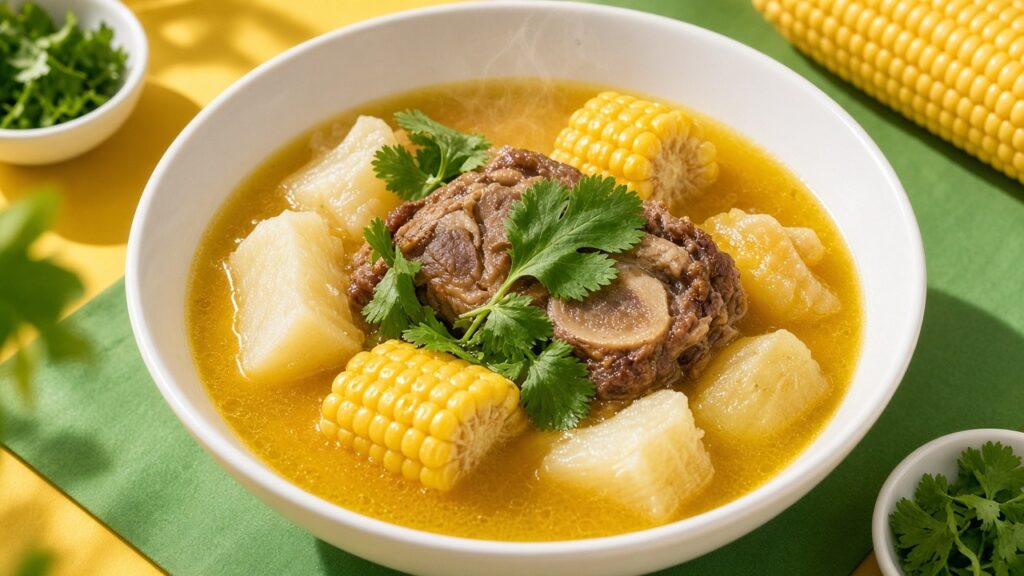
When there’s no hen for sancocho, Panamanian kitchens turn to beef. Sopa de carne uses the same roots, corn and culantro as sancocho, but the broth is deeper and meatier, and the beef falls off the bone after a long, gentle simmer.
Panamanian sopa de carne is a beef soup made with bone-in beef (shank, short rib or chuck), ñame, yuca, otoe, corn on the cob and sometimes green plantain, seasoned with onion, garlic, sweet pepper and plenty of culantro. Simmer the beef for about 2 to 2½ hours until tender, skimming for a clear broth, then add the roots in order of firmness for the last 30 to 40 minutes. Serve with white rice on the side.
What is Panamanian sopa de carne?
Sopa de carne simply means “meat soup,” and in Panama it almost always means beef. It’s a one-pot meal: big pieces of meat, chunks of starchy root vegetables and corn in a savory broth flavored with culantro. Families make it on weekends, for a crowd, or as a cure for a cold rainy day.
Sopa de carne vs sancocho vs sopa de res
| Soup | Main protein | Defining flavor | Notes |
|---|---|---|---|
| Sancocho panameño | Chicken (ideally a hen) | Culantro, ñame | Panama’s national dish; see the sancocho recipe |
| Sopa de carne | Bone-in beef | Beef broth, culantro, mixed roots | Heartier, longer cooking |
| Sopa de res (Mexican/Central American) | Beef | Often cabbage, carrot, chayote, lime | Different vegetables and garnishes |
| Sopa de pata | Cow’s feet | Gelatinous, rich | A variation below |
The biggest difference from Mexican caldo de res is the starches: Panamanian beef soup leans on ñame, yuca and otoe rather than cabbage and carrots, and culantro instead of cilantro.
Best beef cuts for sopa de carne
You want cuts with bone, connective tissue and some fat. They give body to the broth and become tender with time.
- Beef shank (chambarete): the classic. Marrow bone, collagen and lean meat. My first choice.
- Bone-in short ribs (costilla): richer and fattier; great flavor.
- Bone-in chuck or “soup bones with meat”: budget-friendly.
- Oxtail: luxurious but expensive; very rich broth.
Avoid lean, boneless steak cuts. They dry out and give a thin broth. A mix of shank and short rib is ideal.
Ingredients
For 6 to 8 servings
- 3 lb (1.4 kg) bone-in beef shank and/or short ribs
- 12 cups (about 3 L) water
- 1 large onion, chopped
- 1 green bell pepper or 3–4 ají dulce, chopped
- 5 garlic cloves, crushed
- 2 celery ribs (optional)
- 1 bunch culantro (about 10–12 leaves), plus more to finish
- 1 lb (450 g) ñame, peeled and cut in large chunks
- 1 lb (450 g) yuca, peeled, cored and cut in chunks
- ½ lb (225 g) otoe (optional)
- 2–3 ears of corn, cut into 2-inch rounds
- 1 green plantain, peeled and cut into thick pieces (optional)
- 1 tablespoon salt to start, more to taste
- 1 teaspoon dried oregano
- Black pepper
Ñame, yuca, otoe, corn and plantain
Each root brings something different. Ñame thickens the broth as it softens; yuca stays firmer and slightly chewy; otoe turns creamy. If you’ve never shopped for them, read ñame vs yuca. Frozen peeled yuca and ñame from Latin markets work well and save time.
Culantro and sofrito
Culantro is the long, serrated leaf that gives Panamanian soups their signature taste. It’s stronger than cilantro. See culantro vs cilantro and where to buy culantro in Chicago. If you can’t find it, use a big handful of cilantro stems and leaves, adding half at the end.
How to make sopa de carne step by step
- Season the beef. Rub the meat with 1 teaspoon salt, garlic and oregano. Let it sit 20 minutes or refrigerate up to overnight.
- Optional sear. Brown the beef in a little oil in a large pot for deeper flavor. Traditional versions often skip this.
- Add water and aromatics. Add the water, onion, pepper, celery and half the culantro. Bring slowly to a boil.
- Skim. As foam rises in the first 15 minutes, skim it off (details below).
- Simmer. Lower the heat so the surface barely bubbles. Cover partly and cook 2 to 2½ hours, until the meat is fork-tender.
- Add the firmest roots. Add yuca and ñame; simmer 15 minutes.
- Add the rest. Add otoe, corn and plantain; simmer 15 to 20 minutes more, until everything is tender.
- Finish. Taste and adjust salt. Add the remaining culantro, chopped, and simmer 2 minutes.
Skimming for a clear broth
The gray foam that rises is coagulated protein. It isn’t harmful, but it clouds the soup and can taste muddy. Start with cold water, heat gradually and skim with a wide spoon until the foam stops. Keeping a gentle simmer afterward (no rolling boil) keeps the broth clear.
Order to add the roots
| Ingredient | Time in pot | Why |
|---|---|---|
| Yuca | 30–40 min | Dense; needs the longest |
| Ñame | 25–35 min | Softens and thickens the broth |
| Green plantain | 20–25 min | Holds shape |
| Corn | 15–20 min | Overcooking makes it starchy |
| Otoe | 15–20 min | Falls apart if added early |
How long to simmer beef soup
Shank and short ribs need about 2 to 2½ hours on the stove. Oxtail may need 3. Test by pulling a piece of meat with a fork: it should come away from the bone easily. Undercooked shank feels rubbery; that just means it needs more time, not more heat.
Pressure cooker: cook the beef with aromatics and water at high pressure for 40 to 45 minutes, natural release 15 minutes, then add the roots and simmer uncovered (or pressure-cook 5 more minutes).
Slow cooker: 8 hours on low with the beef and aromatics; add roots for the last 1½ to 2 hours on high.
Variations
Sopa de pata
Made with cow’s feet (pata de res), long-cooked until the collagen makes the broth silky and the skin soft. It needs 3 or more hours, or about an hour under pressure. Ask your butcher to cut the feet into pieces.
Sopa de costilla
All short ribs, for a richer, fattier broth. Chill and lift off some fat if you prefer a lighter soup.
With pasta or vegetables
Some families add carrots, chayote, or a handful of small pasta at the end. Not traditional everywhere, but common at home.
What to serve with sopa de carne
- White rice, served on the side or spooned into the bowl
- Ripe avocado slices
- A few drops of Panamanian hot sauce for those who like heat
- Lime wedges
- Patacones if you want something crispy
Troubleshooting
- Cloudy broth: boiled too hard or wasn’t skimmed. Still delicious; next time simmer gently.
- Bland broth: too much water or not enough salt. Simmer uncovered to reduce, salt gradually, add more culantro.
- Mushy roots: added too early. Follow the timing table.
- Tough beef: needs more time. Keep simmering.
- Greasy surface: skim, or chill overnight and remove the solid fat.
Storage and freezing
Cool the soup quickly: divide into shallow containers and refrigerate within 2 hours of cooking. It keeps 3 to 4 days in the fridge. The same food-safety guidance applies as for sancocho; see how long sancocho is good in the fridge.
To freeze, remove the corn and most of the roots if possible (yuca and ñame can turn spongy), freeze broth and meat up to 3 months, and add fresh roots when reheating. Reheat to a full boil.
Recipe card: Panamanian Sopa de Carne
Prep: 25 minutes | Cook: 2 hours 45 minutes | Total: about 3 hours 10 minutes | Serves: 6–8
Ingredients: 3 lb bone-in beef shank/short ribs; 12 cups water; 1 onion; 1 green pepper or 3–4 ají dulce; 5 garlic cloves; 2 celery ribs (optional); 1 bunch culantro; 1 lb ñame; 1 lb yuca; ½ lb otoe (optional); 2–3 ears corn; 1 green plantain (optional); salt, oregano, black pepper.
Instructions:
1. Season beef with salt, garlic and oregano; rest 20 minutes.
2. Add beef, water, onion, pepper, celery and half the culantro to a large pot. Bring slowly to a boil and skim foam.
3. Simmer gently, partly covered, 2–2½ hours until tender.
4. Add yuca and ñame; cook 15 minutes. Add otoe, corn and plantain; cook 15–20 minutes.
5. Adjust salt, add remaining chopped culantro, simmer 2 minutes. Serve with white rice.
Ingredient swaps for US kitchens
| If you can’t find… | Use… | Notes |
|---|---|---|
| Ñame | Yuca, taro or potato | Ñame thickens the broth best; see ñame vs yuca |
| Otoe | Taro or malanga under any label | See otoe vs taro |
| Culantro | Double the cilantro, added at the end | See culantro vs cilantro |
| Ají dulce | Cubanelle or a little red bell pepper | Mild, sweet heat |
| Fresh corn | Frozen corn on the cob | Add in the last 15 minutes |
| Beef shank | Short ribs or bone-in chuck | Bones add body to the broth |
How much soup does this make?
The recipe card makes about 4 quarts, enough for 6 to 8 large bowls. Panamanian families often make a big pot on Sunday and eat it for two days; the flavor deepens overnight.
Pressure cooker and slow cooker timing
- Pressure cooker (electric): brown the beef and sofrito, add water and cook the beef at high pressure for 35 to 40 minutes with natural release. Add the roots and corn and cook at high pressure for 5 minutes more, quick release.
- Slow cooker: cook the beef with sofrito and water on low for 7 to 8 hours or high for 4 to 5. Add roots in the last 2 hours on high, corn in the last 30 minutes.
Sopa de carne for a crowd
Double the recipe in a 12- to 16-quart stockpot. Cut the roots into large chunks so they hold their shape over a longer simmer, and serve rice, avocado, lime wedges and Panamanian hot sauce on the side so people can build their own bowls.
Related Panamanian soups and stews
- Panamanian sancocho: the chicken classic.
- Panamanian lentil soup: weeknight comfort.
- Panamanian beef stew: thicker, saucier carne guisada.
- Guacho de rabito: a soupy rice stew.
FAQ
Is sopa de carne the same as sancocho?
No. Sancocho is a chicken soup and Panama’s national dish. Sopa de carne uses beef and usually more varied roots, with a longer cooking time.
Can I make it without ñame or otoe?
Yes. Use more yuca, potatoes or taro. Potatoes cook faster and won’t thicken the broth the same way, but the soup is still very good.
Can I make it in a pressure cooker?
Yes. Pressure-cook the beef 40–45 minutes, release, then cook the roots separately so they don’t turn to mush.
How long does sopa de carne keep in the fridge?
3 to 4 days in covered containers, refrigerated promptly after cooking. Reheat until it boils.
Can I freeze it?
Yes, up to about 3 months. Freeze the broth and meat; roots and corn are better added fresh.
Can I use boneless beef?
You can, but the broth will be thinner. Add a couple of marrow or soup bones for body.
Sopa de carne is patient food. Give the beef its time, add the roots in order and finish with fresh culantro, and you’ll have a pot that tastes like a Panamanian Sunday.