
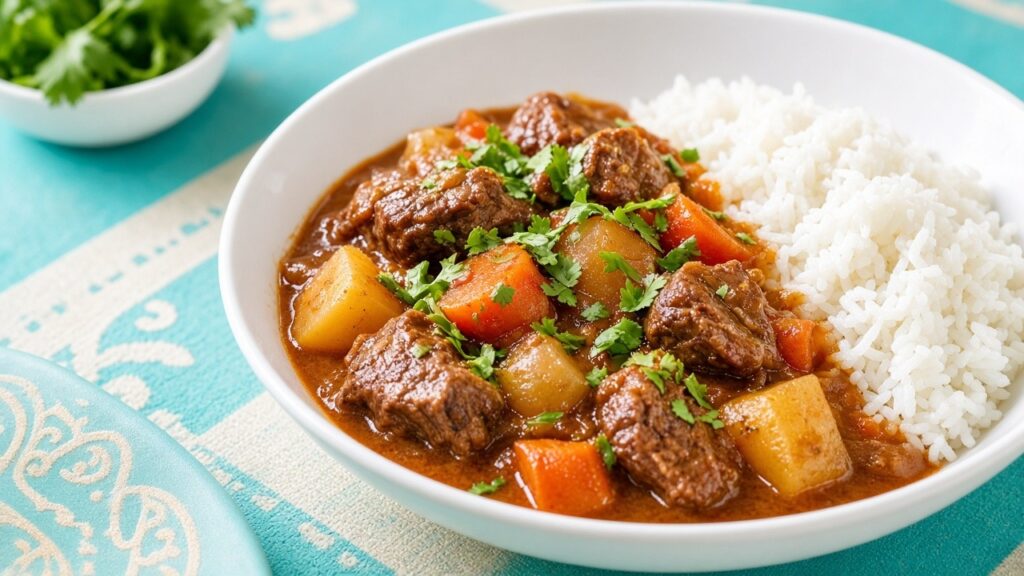
A good beef stew needs a little patience, not a long shopping list. For this Panamanian-style carne guisada, the important things are a flavorful vegetable base, beef that becomes tender with slow cooking, and enough sauce for the rice beside it.
To make Panamanian beef stew, brown beef chuck, soften onion, sweet pepper, garlic and tomato, then gently simmer the beef with broth and culantro until almost tender. Add potatoes and carrots toward the end. The finished carne guisada should have fork-tender beef and a spoonable gravy—not a thin soup or a pot of dissolved vegetables.
Jump to the complete recipe. This version serves six and takes about three hours, mostly hands-off. The vegetables, seasonings and thickness vary from household to household; this is a practical Panamanian-style version, not a claim that every family cooks the same pot.
What is Panamanian carne guisada?
Carne guisada means stewed meat. In Panama, a beef version often brings together tomato, onion, herbs and root vegetables, with white rice served alongside. The aromatic base does a lot of the work: onion and pepper softened in the pot, garlic cooked briefly, and tomato cooked until it loses its raw edge.
The word guisada describes the method rather than one fixed national ingredient list. A recipe from another Latin American country can share the name without tasting exactly like this one. You do not need a packet of seasoning or a hot pepper to make it recognizable as a home-style stew.
Carne guisada vs ropa vieja vs sopa de carne
| Dish | What happens to the beef | Finished texture |
|---|---|---|
| Carne guisada | Beef stays in bite-size chunks | Thick, spoonable sauce with vegetables |
| Ropa vieja | Cooked beef is pulled into strands | Shredded beef mixed through a sauce |
| Sopa de carne | Beef flavors a larger quantity of broth | A soup, often with substantial vegetables |
If you want the chicken-and-ñame soup closely associated with Panama, start with Panamanian sancocho instead. These dishes belong on the same family table, but they are not interchangeable recipes.
Ingredients that make the difference
Choose chuck for a slow-simmered stew
Boneless beef chuck is a dependable US supermarket choice. Look for some internal marbling and cut off thick exterior fat or hard connective tissue. Cut the meat into roughly 1½-inch pieces so the pieces finish at a similar time.
A package labeled “stew meat” can work, but that label does not tell you which muscle is inside. Mixed cuts can cook unevenly. Ask whether it is chuck if you want a more predictable pot.
Sirloin appears in some versions of carne guisada, but lean steak and chuck should not be treated as if they need identical cooking. This recipe is designed around chuck and a long, gentle simmer. Save a tender steak for a quicker preparation rather than using the clock here unchanged.
Potatoes, ñame or yuca?
The recipe below uses potatoes because they are easy to find and make a pleasantly thick sauce. Yukon Gold or another all-purpose potato holds together better than a very floury baking potato. Carrots add sweetness and color without turning the stew sweet.
For a variation, replace the potatoes with the same prepared weight of ñame. Pieces can soften and thicken the sauce at different speeds, so start checking after 20 minutes. Do not confuse tropical ñame with the orange sweet potatoes sometimes labeled “yams” in US stores. My ñame vs yuca guide explains the difference.
For yuca, an easy option is commercially prepared frozen yuca: cook it fully according to its package instructions, discard any tough center, and add it to the stew near the end. Raw cassava requires correct preparation and must never be eaten raw. Potatoes are the simplest choice if you are unfamiliar with it.
Culantro, cilantro and sweet pepper substitutions
Culantro has long, saw-edged leaves and a stronger aroma than leafy cilantro. They are different plants. Use a few culantro leaves in the simmer, or use cilantro stems in the base and chopped leaves near the end. The flavor will not be identical, but either can make a lovely stew.
If you cannot find a mild ají dulce, use bell pepper. A sweet pepper is not interchangeable with a habanero simply because the shapes look similar. This recipe does not require chile heat. A little hot sauce can go on the table for anyone who wants it.
How to build flavor without making the beef tough
- Dry and brown the beef in batches. Moist meat in an overcrowded pot steams. Give the pieces space and let a brown crust form on two or three sides. The beef does not need to cook through yet.
- Soften the vegetables in the same pot. The browned bits left behind are useful flavor, not something to wash away. If they have turned black and bitter, clean the pot before continuing.
- Cook the tomato paste briefly. Stir it through the vegetables for about a minute, then add the chopped tomatoes. This avoids a raw paste taste.
- Loosen the browned bits with broth. Scrape with a wooden spoon. Return the beef and its juices to the pot.
- Keep a gentle simmer. You want occasional lazy bubbles, not a hard rolling boil. Check the liquid periodically; the meat should remain mostly surrounded by sauce.
- Wait to add the potatoes. Add them when the beef is nearly tender, so they finish without falling apart while the meat still needs another hour.
How do you know when the beef is done?
A fork should enter a piece easily, and the meat should give when pressed rather than springing back like a rubber eraser. Chuck can need two hours or considerably longer depending on the size of the pieces, the cut and the simmer. A recipe time is a planning estimate, not permission to serve tough beef.
If the beef is still firm, keep simmering and check every 20–30 minutes. Add a splash of hot water if the sauce is becoming too concentrated. If the meat is already dry and stringy rather than firm and springy, more vigorous cooking will not restore the lost moisture; stop cooking and serve it well coated in sauce.
Stovetop, slow cooker and pressure cooker timing
| Method | Starting guide for 1½-inch chuck pieces | When to add potatoes and carrots |
|---|---|---|
| Stovetop | About 2–3 hours at a gentle simmer | Last 25–35 minutes, once beef is almost tender |
| Slow cooker | Roughly 7–8 hours on low; cook until tender | At the start for convenience, or later if your cooker reliably finishes them |
| Electric pressure cooker | About 35 minutes at high pressure, then 15 minutes natural release | After the beef; simmer with the lid off until vegetables are tender |
For a slow cooker, brown the beef and cook the aromatic base first, then transfer them. Start with about 1½ cups broth rather than three because less evaporates; follow your appliance’s capacity and safety instructions. Use thawed beef, not frozen chunks.
For a pressure cooker, use about 1½ cups broth, provided that meets your model’s minimum liquid requirement. Deglaze thoroughly before pressure cooking so tomato paste and browned bits do not scorch. Do not fill beyond the manufacturer’s limits. If the beef resists a fork after release, give it a little more pressure-cooking time before adding vegetables. These are method adaptations, not promises that every appliance finishes on the same minute.
How to thicken the gravy
First simmer uncovered for 10–15 minutes once the beef and vegetables are tender. Reduction concentrates both flavor and salt, so taste before adding more seasoning. You can also mash a few cooked potato pieces against the side of the pot and stir them back in.
If you need a final adjustment, mix one teaspoon cornstarch with one tablespoon cold water, stir it into gently bubbling sauce, and cook for a minute or two. Repeat only if needed. Do not sprinkle dry starch directly into the pot; it clumps. The goal is sauce that coats the rice, not a sliceable gravy.
What to serve with carne guisada
White rice is the natural partner because it catches the sauce. Add a crisp cabbage salad or cucumber salad for contrast. Sweet fried plantains bring a softer, sweeter side; green plantain patacones bring crunch. You do not need all of them for a complete dinner.
For more of the surrounding food traditions, see my guide to Panamanian food. I would keep the stew itself mild and let everyone adjust lime or hot sauce at the table.
Panamanian-style carne guisada recipe
Yield: 6 servings. Prep: 25 minutes. Cook: about 2 hours 30 minutes, allowing longer for a firm cut. Total: about 2 hours 55 minutes. Equipment: a heavy 5–6-quart pot with a lid.
Ingredients
- 2 pounds boneless beef chuck, trimmed and cut into 1½-inch pieces
- 1 teaspoon fine salt, divided, plus more to taste
- ½ teaspoon ground black pepper
- 2 tablespoons neutral cooking oil, divided
- 1 medium onion, diced
- 1 medium green or red bell pepper, diced
- 3 garlic cloves, minced
- 2 tablespoons tomato paste
- 2 medium tomatoes, diced, about 1½ cups
- ½ teaspoon ground cumin, optional
- 3 cups low-sodium beef broth, plus hot water as needed
- 1 bay leaf
- 3 culantro leaves, or ¼ cup chopped cilantro stems and leaves, divided
- 1 pound potatoes, peeled if desired and cut into 1½-inch chunks
- 2 medium carrots, cut into thick rounds
- Cooked white rice, for serving
Instructions
- Pat the beef dry. Season with ½ teaspoon salt and the pepper. Heat one tablespoon oil in the heavy pot over medium-high heat. Brown half the beef, about 5–7 minutes, turning as needed. Transfer to a plate. Repeat with the remaining oil and beef. Lower the heat if the bottom starts burning.
- Reduce to medium. Add the onion and bell pepper to the same pot; cook 6–8 minutes, stirring, until softened. Add a spoonful of water if the pot is dry. Stir in the garlic for 30 seconds, then the tomato paste for one minute.
- Add the tomatoes and optional cumin. Cook about five minutes, stirring, until the tomatoes soften. Pour in the broth and scrape up the brown bits.
- Return the beef and collected juices. Add the bay leaf, remaining ½ teaspoon salt and the culantro, or the cilantro stems. Bring just to a simmer, cover partly, and lower the heat. Simmer gently for 1½–2 hours, stirring occasionally. Add hot water as needed to keep the beef mostly surrounded by liquid.
- Test a piece. When the beef is nearly tender, add the potatoes and carrots. Simmer, partly covered, for 25–35 minutes or until both the beef and vegetables are tender. If the meat is still firm before adding vegetables, keep cooking it first.
- Remove the bay leaf and any whole culantro leaves. Simmer uncovered briefly if you want thicker sauce. If using cilantro, stir in the leaves now. Taste and adjust salt. Serve hot with rice.
Recipe notes: Saltiness varies by broth, so season finally after reduction. A lid that fits tightly will retain more liquid than a partly open lid. Check the pot rather than adding a fixed amount of extra water automatically.
Make ahead, storage and freezing
Stew is convenient to make ahead, but do not leave a full pot on the counter to cool for hours. Divide it into shallow containers and refrigerate within two hours, or within one hour if the temperature is above 90°F. Keep the refrigerator at 40°F or below.
Use refrigerated leftovers within 3–4 days. For longer storage, freeze meal-size portions; 2–3 months is a useful quality target for this stew. Potato texture can become a little softer after freezing. Thaw in the refrigerator, or reheat from frozen with extra time and stirring.
Reheat leftovers to 165°F throughout, checking meat as well as sauce. Bring the sauce to a boil while stirring and add a little water if it has thickened. These time and temperature recommendations follow USDA leftovers guidance.
Carne guisada FAQ
Is Panamanian carne guisada spicy?
It does not have to be. This version uses sweet pepper, not hot chile. Seasoning traditions differ between households; serve ají or another hot sauce separately rather than assuming everyone wants a fiery pot.
Can I use store-bought stew meat?
Yes. Look for chuck if possible and keep the pieces a similar size. If the package contains mixed cuts, some pieces may soften sooner than others. Check several pieces before deciding the whole pot is ready.
Can I leave out the potatoes?
Yes. Use the carrots alone, reduce the sauce a little longer, and serve it with rice. Without potatoes releasing starch, the sauce may be thinner. The small cornstarch slurry described above is an optional finish, not a required ingredient.
Why is my stew bland even after cooking for hours?
Check salt first, then sauce concentration. A lot of added water can dilute a good base. Reduce gently, taste again, and finish with fresh herbs. Browning and cooking the tomato base matter more than throwing in several extra spices at the end.
Can I double the recipe?
Yes, if the pot is large enough to stir comfortably. Brown in additional batches instead of crowding the beef. Cooking time does not automatically double, but bringing the larger pot to a simmer takes longer. Check tenderness and liquid level as you cook.
Can I freeze carne guisada with rice?
You can, but separate portions are easier to reheat evenly and let you add liquid only where needed. Cool both foods promptly and follow the same safe storage rules. For the nicest texture, make fresh rice and reheat the stew beside it.