
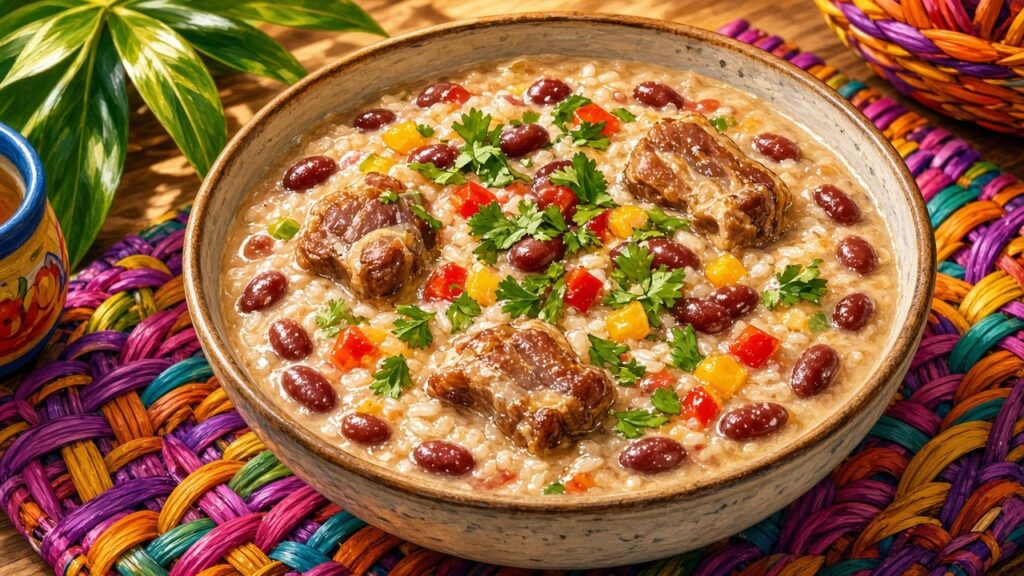
When it rains for days in Panama, someone in the family makes guacho. It’s a soupy, creamy rice stew, thicker than soup and looser than a rice dish, cooked with beans and salted pigtail until everything melts together. Guacho de rabito is the classic version, and it’s pure comfort in a bowl.
Guacho de rabito is a Panamanian rice stew made by simmering salted pigtail (rabito de cerdo) with red beans or pigeon peas until tender, then cooking rice in the same pot with sofrito, culantro and plenty of broth until it’s thick, creamy and spoonable. Desalt the pigtail first by soaking and boiling it, cook the beans until soft, and add more liquid than for regular rice; the finished guacho should ripple like a loose risotto.
Una versión en español del recetario aparece al final del artículo.
What is guacho?
Guacho (sometimes spelled “huacho”) is a Panamanian dish of rice cooked in a generous amount of liquid with beans, meat or seafood, finished so it’s soupy and creamy. It’s often called a sopa espesa (thick soup) and is especially common in the central provinces and the interior. Families make it with whatever they have: pigtail, chicken, shrimp, or just beans.
Guacho vs risotto vs asopao
| Dish | Origin | Rice | Texture | Typical flavor |
|---|---|---|---|---|
| Guacho | Panama | Long- or medium-grain, whatever is in the pantry | Soupy, thick, spoonable | Beans, pigtail, culantro |
| Risotto | Italy | Arborio, Carnaroli | Creamy, flowing, al dente | Broth, butter, cheese |
| Asopao | Puerto Rico | Medium-grain | Soupier than guacho | Sofrito, olives, chicken |
| Arroz caldoso | Spain | Short-grain | Brothy | Seafood, saffron |
Unlike risotto, guacho isn’t stirred constantly and isn’t meant to be al dente. The rice softens fully and thickens the broth.
Guacho de rabito ingredients
Serves 6 to 8
- 1½ lb (680 g) salted pigtail (rabito de puerco salado)
- 1½ cups dried red beans (frijoles chiricanos or small red beans), soaked overnight, or 2 cans, drained
- 10 to 12 cups water
- 2 tablespoons oil
- 1 large onion, diced
- 1 green bell pepper, diced
- 3 ají dulce (optional), minced
- 4 garlic cloves, minced
- 2 tablespoons tomato paste
- 1½ cups long-grain white rice, rinsed
- 1 bunch culantro (10–12 leaves), chopped
- Salt and pepper to taste
- Optional: 1 cup diced squash (zapallo) or a ripe plantain in chunks
Pigtail: where to buy and substitutes
Salted pigtails are sold in Latin and Caribbean markets, often in tubs or frozen, sometimes labeled “salted pig tails” or “rabo de cerdo salado.” Many US supermarkets in Latin or Caribbean neighborhoods carry them. Fresh (unsalted) pigtails are also available and need no soaking; just season the broth well.
Substitutes: smoked ham hocks (adds smokiness), salted pork ribs, pork neck bones, or diced salted pork belly. For a lighter version, use chicken thighs.
Frijoles chiricanos or guandú
Frijoles chiricanos are small red beans from Chiriquí, Panama’s western highlands. Any small red bean, red kidney bean or pink bean works. Pigeon peas (guandú) make an equally traditional guacho de guandú.
How to make guacho de rabito step by step
1. Desalt the pigtail
Rinse the pigtails and soak them in cold water for at least 4 hours or overnight in the fridge, changing the water two or three times. Then put them in a pot with fresh water, bring to a boil for 10 minutes, and discard that water. Taste a small piece: it should be salty but pleasant. If it’s still very salty, repeat the boil.
2. Cook the beans and pigtail
Put the soaked beans and desalted pigtail in a large pot with 10 cups water. Bring to a boil, skim, then simmer partly covered for 1½ to 2 hours, until the beans are soft and the pigtail is tender. With canned beans, simmer the pigtail alone for 1 to 1½ hours and add the beans later.
3. Make the sofrito
In a skillet, heat oil and cook onion, pepper and ají dulce 5 minutes. Add garlic and tomato paste; cook 2 minutes. Scrape into the bean pot with half the culantro.
4. Add the rice
Bring the pot back to a simmer. You should have about 8 cups of liquid; add water if needed. Stir in the rice (and squash or plantain if using). Simmer uncovered over medium-low, stirring every few minutes so the rice doesn’t stick, for 25 to 30 minutes.
5. Finish
When the rice is very soft and the stew is thick but still flowing, taste for salt, add the remaining culantro, and turn off the heat. Let it stand 5 minutes. It thickens as it sits.
How thick should guacho be?
Guacho should fall off a spoon slowly, like a loose porridge or very wet risotto. If it holds its shape like regular rice, it’s too dry; stir in hot water or broth. If the rice is floating in thin broth, simmer a few more minutes. It always thickens on standing, so take it off the heat slightly looser than you want.
Variations
Guacho de mariscos
Skip the pigtail. Make a broth with fish stock, sofrito, coconut milk (optional) and culantro, cook the rice in it, and add shrimp, squid and clams for the last 5 to 8 minutes. Popular on the coasts.
Guacho de guandú
Use fresh, frozen or canned pigeon peas instead of red beans. Cook with pigtail or with salted pork ribs.
Guacho de frijoles
Beans only, or with a little smoked pork for flavor. Economical and filling.
Guacho de pollo
Chicken thighs simmered in the broth, shredded, and returned at the end. Milder and quicker.
What to serve with it
Guacho is a meal on its own. Families commonly add:
- Sliced avocado
- Fried sweet plantain or patacones
- A few drops of Panamanian hot sauce
- Lime wedges
Storage
Guacho keeps 3 to 4 days in the fridge in a covered container, refrigerated within 2 hours of cooking. It becomes very thick when cold. To reheat, add water or broth and warm over medium-low, stirring, until steaming throughout. It freezes for up to 2 months, though the rice softens further.
Recipe card (English)
Prep: 20 minutes + soaking | Cook: 2½ hours | Serves: 6–8
- Soak pigtails 4 hours to overnight, changing water. Boil 10 minutes; discard water.
- Simmer pigtails and soaked beans in 10 cups water 1½–2 hours until tender.
- Sauté onion, pepper, ají dulce, garlic and tomato paste; add to the pot with half the culantro.
- Add 1½ cups rinsed rice; simmer uncovered 25–30 minutes, stirring often, adding water to keep it soupy.
- Season, add remaining culantro, rest 5 minutes and serve.
Receta (español)
Preparación: 20 minutos + remojo | Cocción: 2½ horas | Porciones: 6–8
Ingredientes: 1½ lb de rabito de puerco salado; 1½ tazas de frijoles rojos o chiricanos remojados; 10–12 tazas de agua; 2 cdas de aceite; 1 cebolla; 1 ají verde; 3 ajíes dulces; 4 dientes de ajo; 2 cdas de pasta de tomate; 1½ tazas de arroz; 1 manojo de culantro; sal y pimienta.
- Remoje el rabito de 4 horas a toda la noche, cambiando el agua. Hiérvalo 10 minutos y bote el agua.
- Cocine el rabito con los frijoles en 10 tazas de agua por 1½ a 2 horas, hasta que estén suaves.
- Sofría la cebolla, el ají, los ajíes dulces, el ajo y la pasta de tomate; agréguelos a la olla con la mitad del culantro.
- Añada el arroz lavado y cocine destapado 25–30 minutos, moviendo a menudo y agregando agua para que quede caldoso.
- Pruebe la sal, agregue el resto del culantro y deje reposar 5 minutos.
Guacho at a glance
| Details | |
|---|---|
| What it is | A soupy Panamanian rice stew, halfway between a soup and a risotto |
| Classic flavor | Salted pigtail (rabito), red beans or guandú, sofrito and culantro |
| Texture | Thick, spoonable, creamy from the rice starch |
| Total time | About 3 hours, including desalting and bean cooking |
| Served | In bowls, often with patacones or hot sauce |
| Region | Home cooking across Panama, especially as a weekend big-pot dish |
Guacho, sancocho and arroz con guandú compared
| Dish | Base | Texture | Main protein |
|---|---|---|---|
| Guacho | Rice cooked in bean broth | Thick, creamy, soupy | Pigtail, seafood, chicken or beans |
| Sancocho | Clear broth with ñame | Brothy soup | Chicken |
| Arroz con guandú | Rice cooked with pigeon peas and coconut | Dry, separate grains | None or a little pork |
| Sopa de carne | Beef broth with roots | Brothy soup | Beef |
If you know Italian risotto, guacho will feel familiar, but it is looser, seasoned with culantro instead of parmesan, and built on beans.
Choosing the rice
Use a regular long-grain or medium-grain white rice. Medium grain releases more starch and gives a creamier guacho; long grain keeps a little more bite. Don’t rinse it too thoroughly; the surface starch is what thickens the pot. Parboiled rice won’t thicken properly, and brown rice needs much more liquid and time (see the FAQ).
Pressure cooker shortcut
Desalt the pigtail as usual. In an electric pressure cooker, cook the soaked beans and pigtail together with water to cover by 2 inches at high pressure for 30 to 35 minutes, with natural release. Switch to sauté, stir in the sofrito, then add the rice and enough liquid to keep it soupy, and simmer uncovered, stirring often, until the rice is tender and the pot is thick, about 20 minutes. Simmering rice on the stovetop setting is safer than pressure-cooking it, since soupy rice can foam and clog the valve.
Reheating guacho
Guacho thickens a lot as it cools, almost to a solid. Reheat it in a pot with a splash of water or broth, stirring over medium-low heat until it loosens back to a spoonable stew. Taste for salt again; pigtail keeps releasing salt as it sits.
Where guacho fits in Panamanian food
Guacho is a weekend, big-pot dish: cheap, filling and made to share. For more of the dishes around it, read Panamanian food and, for celebration menus, traditional Panamanian Christmas food.
FAQ
What does “guacho” mean?
In Panama it’s the name of this soupy rice stew. In other countries the word has unrelated meanings, so context matters.
Can I make guacho without pigtail?
Yes. Use ham hocks, salted ribs, chicken, seafood or just beans. Season the broth well, since pigtail provides a lot of salt and richness.
Is guacho a soup or a rice dish?
Both. It’s a thick, soupy rice stew eaten with a spoon. Panamanians often call it a sopa espesa.
Where do I buy salted pigtail in the US?
Latin, Caribbean and some Asian markets, plus supermarkets in neighborhoods with Caribbean communities. Check the refrigerated and frozen meat cases.
Can I make it with canned beans?
Yes. Simmer the pigtail alone until tender, then add drained canned beans with the sofrito and continue with the rice.
Can I use brown rice?
You can, but it needs 45 to 50 minutes and more liquid, and won’t get as creamy.
For more Panamanian rice ideas, see arroz con guandú, and if you love saucy pork dishes, try salchicha guisada. The Panamanian food guide has everything else.