
Walk into a Latin market in Chicago and you’ll see a pile of rough brown roots that look almost the same. Two of them are the backbone of Panamanian cooking: ñame and yuca. They’re not the same thing, and swapping one for the other changes your sancocho. Here’s how to tell them apart, the way I explain it to friends at the produce bin.
Ñame is a true yam: a big tuber with rough, bark-like brown skin and white, slippery flesh that cooks soft and thickens soups. Yuca (cassava) is a long, narrow root with a waxy brown skin, a woody center string and denser flesh. Ñame thickens sancocho; yuca stays chunkier.
Ñame vs yuca at a glance
| Ñame | Yuca | |
|---|---|---|
| Also called | True yam, white yam, name root | Cassava, manioc, mandioca |
| Plant | Yam (Dioscorea) | Cassava (Manihot esculenta) |
| Shape | Large, irregular, lumpy; can be huge | Long, narrow, like a thick club |
| Skin | Rough, hairy, bark-like, brown or black | Thin, waxy brown bark over a pinkish layer; often sold waxed |
| Flesh | White or off-white, slimy when raw | Bright white, firm, dry |
| Center | No string | Woody string down the middle |
| Texture cooked | Soft, creamy; melts into broth | Dense, a little fibrous, holds its shape |
| Taste | Mild, earthy, slightly nutty | Mild, slightly sweet, buttery |
| Best for | Sancocho, soups, mashed | Fried yuca, carimañolas, boiled with mojo, soups |
What is ñame?
Ñame is a true yam, from the Dioscorea family, grown all over the tropics. In Panama it’s the heart of sancocho: as it simmers, the outside dissolves and turns the broth thick and silky, while the inside stays soft.
Ñame is not the orange “yam” in US supermarkets. Those are sweet potatoes. If you put a sweet potato in sancocho, it’ll taste sweet and turn orange. True yams like ñame are white inside, not sweet, and much starchier.
What is yuca?
Yuca, or cassava, is a woody root from a completely different plant. It’s a staple across Latin America, the Caribbean and Africa. In Panama we boil it, fry it, mash it into dough for carimañolas and add it to soups. One important thing: yuca must always be cooked. It’s never eaten raw.
Don’t confuse yuca with yucca, the ornamental desert plant. Different plant, and the root of the garden yucca isn’t food.
And what is otoe?
Otoe is the third root in many Panamanian soups. It’s called malanga or yautía in other countries (Xanthosoma). It’s smaller, with hairy brown skin and white, pink or purple-speckled flesh, and it cooks very creamy. Chiriquí-style sancocho often includes it.
Don’t mix them up with these roots
| Root | What it is | Swap for ñame? |
|---|---|---|
| US “yam” (orange) | Sweet potato | No: sweet and orange |
| Batata / boniato | White-fleshed sweet potato | Not in sancocho; fine as a side |
| Malanga / yautía / otoe | Xanthosoma corm | Yes, creamy, though it breaks down faster |
| Nagaimo / Chinese yam | An Asian yam, long and pale, slimy, eaten raw in Japan | Not ideal: very slippery and much less starchy when cooked |
| Taro (dasheen) | Colocasia corm, often purple-flecked | Sometimes, in soups; must be cooked well |
| Yucca (garden plant) | Ornamental desert plant | Not food |
How to choose them at the store
- Ñame: Heavy for its size, very firm, no soft or moldy spots. Stores often cut big ones into pieces; the cut face should look white and moist, not brown or dry.
- Yuca: Firm all over, with no cracks or sour smell. Ask to cut one end or snap a piece: the flesh should be pure white. Gray, brown or black streaks mean it’s old. Don’t buy it.
- Otoe: Firm, no soft spots.
- Frozen: Peeled frozen ñame, yuca and otoe are excellent and save a lot of work. I use them all the time in Chicago.
How to peel ñame and yuca
Ñame: Wash it, cut it into manageable pieces and peel with a sturdy knife or peeler. Raw ñame is slippery, so hold it with a towel. Some people’s hands itch from handling raw yams, so wear gloves if your skin is sensitive. Put the pieces in cold water right away so they don’t darken.
Yuca: Cut it into 3-inch sections. Stand each one up and slice off the thick skin and pink layer in strips, or slit it lengthwise and pry the skin off. Cut each piece in half lengthwise and pull out the woody center string, either before or after boiling.
How long do they take to cook?
| Root | Boiled, in 2-inch chunks |
|---|---|
| Ñame | 20–30 minutes |
| Otoe | 15–20 minutes |
| Yuca | 20–30 minutes (until it cracks open and turns slightly translucent) |
In sancocho, I add yuca about 10 minutes before the ñame, because yuca takes a little longer to get tender all the way through.
Can you substitute ñame for yuca, or yuca for ñame?
- In sancocho: Yuca is the best substitute for ñame. Your broth will be a little thinner. Yuca plus one Yukon Gold potato gets closer.
- For carimañolas: Use yuca. Ñame dough is too soft and sticky to shape.
- For mashed or boiled sides: Either works.
- Avoid: sweet potatoes and russet potatoes as a main swap in Panamanian soups.
Two easy Panamanian ways to cook yuca and ñame
Yuca frita (fried yuca)
- Boil 2 lb (900 g) peeled yuca in salted water until tender but not falling apart, about 20 minutes. Drain and remove the center strings.
- Cut into thick sticks and let them steam dry 10 minutes (or chill them; cold yuca fries crisper).
- Fry in 350°F (175°C) oil, 4 to 5 minutes, until golden and crisp. Salt right away.
Serve with fried fish, chicharrón or a little ají chombo sauce.
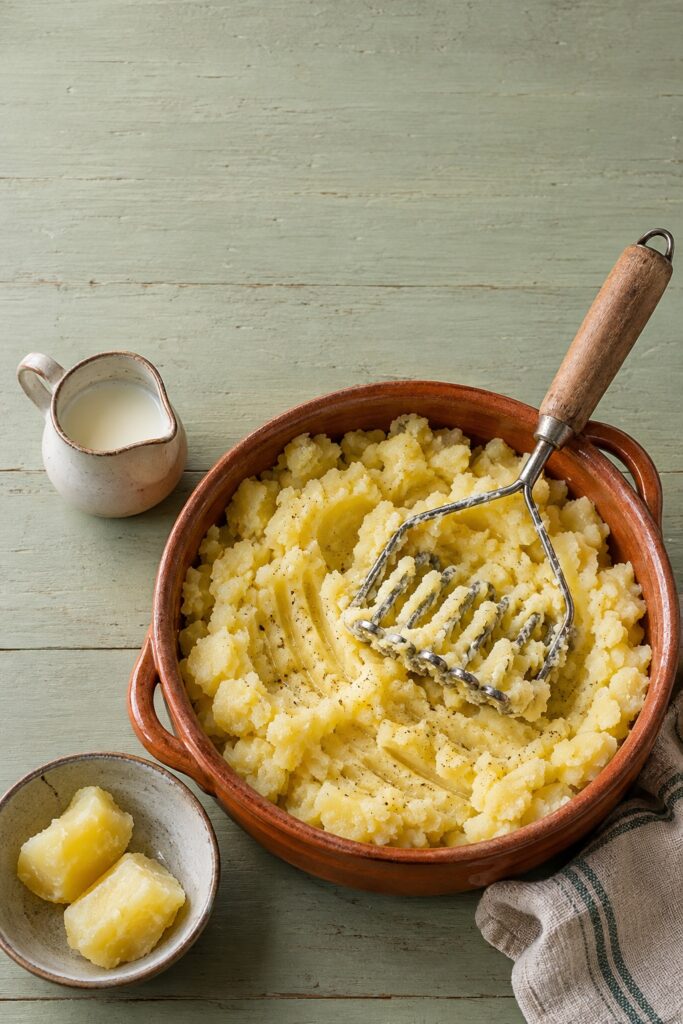
Puré de ñame (ñame mash)
- Boil 2 lb (900 g) peeled ñame chunks in salted water until very soft, 20 to 25 minutes.
- Drain, keeping a cup of the cooking water.
- Mash with 2 tbsp butter, a splash of the water or warm milk, salt and pepper. Optional: crumbled queso blanco.
Troubleshooting
- Why is my yuca still hard after an hour? Some roots never soften, usually old or poorly stored ones. Cut out the hard pieces and keep the tender ones; buy fresher yuca or frozen next time.
- Why does my yuca have black or blue lines? It’s old, and those streaks taste bitter. Cut them out or discard the root.
- Why did my ñame turn gray or purple? It oxidized after peeling. It’s safe; keep peeled pieces in cold water until cooking.
- Why do my hands itch after peeling ñame? Raw yam contains irritating crystals in the skin layer. Wear gloves or oil your hands; washing with a little lime juice or vinegar can help.
- Why is my sancocho thin? Not enough ñame, or the ñame was added too late to break down. Mash a few pieces against the side of the pot.
How to store them
- Ñame: Whole, in a cool, dark, dry place for 1 to 2 weeks. Once cut, wrap and refrigerate up to 3 to 4 days.
- Yuca: It spoils fast. Cook it within a day or two. Or peel it, cut it and freeze it raw in bags for months.
- Cooked: Both keep 3 to 4 days in the fridge.
FAQ
Is ñame the same as yam?
Yes, it’s a true yam. It is not the US “yam,” which is a sweet potato.
Is yuca the same as cassava?
Yes. Same root, different names.
Which is better for sancocho?
Ñame. It’s what makes Panamanian sancocho thick and golden.
Where can I buy ñame in the US?
Latin, Caribbean, African and Asian markets, fresh or frozen. In Chicago, see my Panamanian ingredient shopping guide.
Is ñame the same as potato in soup?
No. Ñame is starchier and creamier than potato, and it thickens the broth in a way potato can’t.
Can you eat yuca raw?
No. Always peel and cook yuca thoroughly.
What’s the name of ñame in English?
Yam, true yam or white yam. You’ll also see “name root” on signs, because the ñ is often dropped.
Cook with them
Put your ñame in my Panamanian sancocho, and your yuca in carimañolas. For more Panamanian food words, read salchicha guisada in English and other Panamanian food words, or start with my guide to Panamanian food.
¡Buen provecho!