
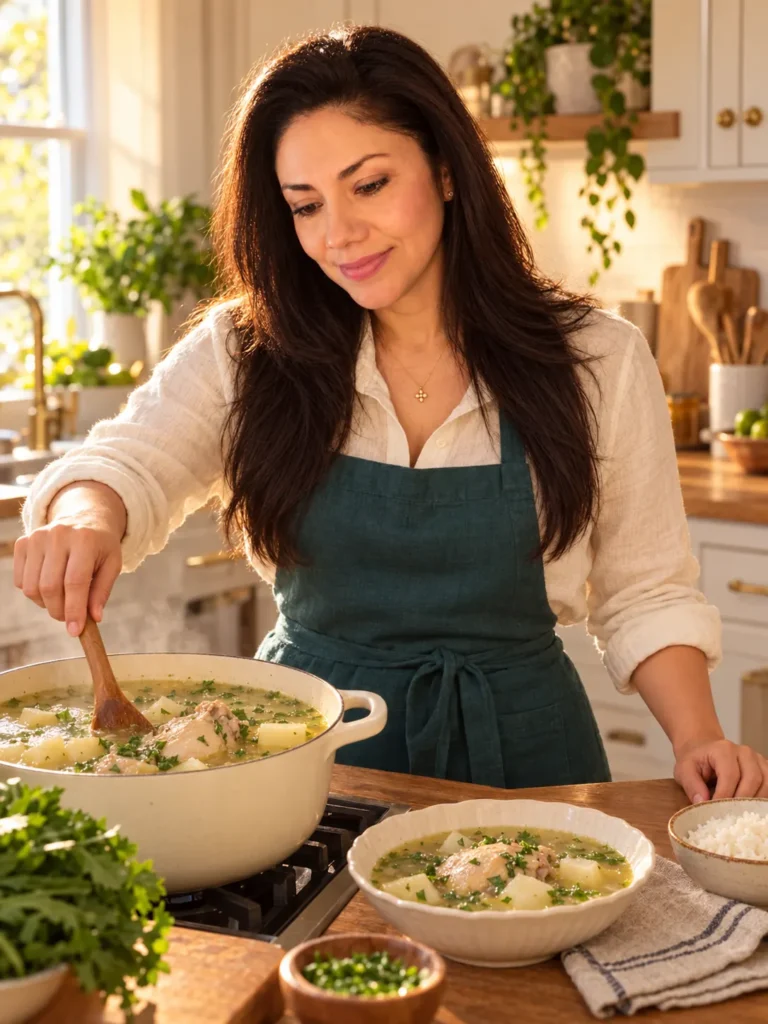
People see culantro in my sancocho recipe and ask, “Is that a typo? Do you mean cilantro?” No typo. Culantro and cilantro are two different plants, and in a Panamanian kitchen, culantro is the one that makes the soup taste like home. Here’s how to tell them apart, how they taste, and how to swap one for the other.
Culantro (Eryngium foetidum) and cilantro (Coriandrum sativum) are different plants with a similar flavor. Culantro has long, flat, serrated leaves and a much stronger taste that holds up to long cooking. Cilantro has small, delicate leaves best added at the end. Use about twice as much cilantro to replace culantro.
Culantro vs cilantro at a glance
| Culantro | Cilantro | |
|---|---|---|
| Botanical name | Eryngium foetidum | Coriandrum sativum |
| Leaves | Long (4–12 in), flat, serrated edges, grow in a rosette | Small, lacy, rounded leaves on thin stems |
| Flavor | Like cilantro, but stronger and earthier | Bright, fresh, citrusy |
| Heat | Keeps its flavor through long simmering | Fades quickly when cooked |
| Best use | Soups, stews, sofrito, rice | Garnish, salsas, finishing |
| Other names | Recao, shadow beni, ngò gai, sawtooth coriander, long coriander | Coriander leaves, Chinese parsley |
| Seeds used as spice? | No | Yes: coriander seed |
Both belong to the same broad plant family as carrots and parsley (Apiaceae), which is why they share that familiar aroma.
Watch out: the names change by country
| Country or cuisine | What they call culantro (Eryngium) | What they call cilantro (Coriandrum) |
|---|---|---|
| Panama | Culantro | Cilantro |
| Puerto Rico | Recao | Cilantro / cilantrillo |
| Trinidad and Tobago | Shadon beni (chadon beni) | Cilantro |
| Costa Rica | Culantro coyote | Culantro |
| Peru | (rarely used) | Culantro |
| Vietnam | Ngò gai | Ngò rí |
| Thailand | Phak chi farang | Phak chi |
So if a Peruvian or Costa Rican recipe says culantro, it usually means regular cilantro. If a Panamanian or Puerto Rican recipe says culantro or recao, it means the long-leaf herb.
What does culantro taste like?
Imagine cilantro turned up loud: more pungent, slightly earthy and peppery, with a perfume that fills the kitchen when you chop it. Raw, it can be overwhelming. Cooked into a pot of soup for an hour, it mellows into the deep, green, savory flavor that Panamanians, Puerto Ricans, Trinidadians and many Caribbean and Southeast Asian cooks love.
Why sancocho needs culantro
Panamanian sancocho is chicken, ñame, oregano and culantro. That’s the core. The chicken simmers for a long time, and culantro survives that heat, while cilantro goes flat. I add culantro twice: part at the start, so the broth absorbs it, and part at the end, chopped fine, for a fresh hit. Without it, sancocho is just good chicken soup.
Culantro is also in Panamanian sofrito, arroz con guandú, arroz con pollo, ceviche and almost every stew.
Culantro outside Panama
- Puerto Rico: recao is the backbone of recaíto, the green sofrito.
- Trinidad and Tobago: shadon beni goes into green seasoning and the sauce for doubles.
- Vietnam: ngò gai is one of the fresh herbs served with pho and in sour soups.
- Thailand: used in larb and soups, especially in the northeast.
Recipe: Panamanian-style culantro sofrito base
Blend 1 bunch culantro (about 20 leaves), 1 onion, 1 green bell pepper or 6 ají dulce, 6 garlic cloves, 1 teaspoon dried oregano, ½ teaspoon salt and 2 tablespoons oil into a coarse paste. Use 2 to 3 tablespoons to start a pot of rice, beans, stew or sancocho. It keeps 5 days in the fridge, or freeze it in ice cube trays for 3 months.
How to substitute
- Cilantro for culantro: use about 2 times as much cilantro, including the tender stems. Add some at the beginning and most at the very end.
- Culantro for cilantro: use about half as much, chopped very fine. It’s strong raw.
- Frozen culantro: Latin and Asian markets often sell it frozen. It’s my backup and works well in soups.
- Recaíto / sofrito in a jar: many Caribbean jarred sofritos are made with culantro (recao). Check the label.
Where to find culantro in the US
Look in Latin, Caribbean and Southeast Asian markets. It’s usually sold as small bundles labeled culantro, recao, ngò gai or sawtooth herb, often near the cilantro or in the Asian herb section. In Chicago, Argyle Street’s Vietnamese markets, Latin markets and the big Asian supermarkets carry it; my where to buy culantro in Chicago guide lists verified stores and addresses.
How to store and freeze culantro
- Fridge: wrap the leaves in a slightly damp paper towel, put them in a zip-top bag and refrigerate. They keep about a week, often longer than cilantro.
- Freezer: chop it, pack it into an ice cube tray with a little water or oil, and freeze. Drop a cube straight into the pot. Or freeze whole leaves flat in a bag.
Can you grow culantro?
Yes. It likes warm temperatures, partial shade and moist soil. In Chicago it does best in a pot in summer, brought indoors before frost. Pinch off the flower stalks to keep the leaves coming.
FAQ
Is culantro the same as coriander?
No. In the US, “coriander” usually means cilantro seeds (or, in the UK, the cilantro plant). Culantro is a different plant, though it’s sometimes called “long coriander.”
Do culantro and cilantro taste the same?
Similar, but culantro is much stronger.
Does culantro taste soapy?
Some people perceive cilantro as soapy, and they often find culantro has the same notes, since the two share similar aromatic compounds.
Why is my culantro tough?
The plant started to flower, or you bought old, large leaves. Choose bright, soft leaves, and chop them fine across the grain.
Can I eat culantro raw?
Yes, chopped very fine and in small amounts, as in ceviche or Vietnamese herb plates. It’s strong.
Is recao the same as culantro?
Yes. Recao is the Puerto Rican name for culantro.
More from my Panamanian kitchen
Now that you have culantro, make my Panamanian sancocho, and learn how long sancocho keeps in the fridge. For the rest of the Panamanian table, start with my guide to Panamanian food.
¡Buen provecho!