
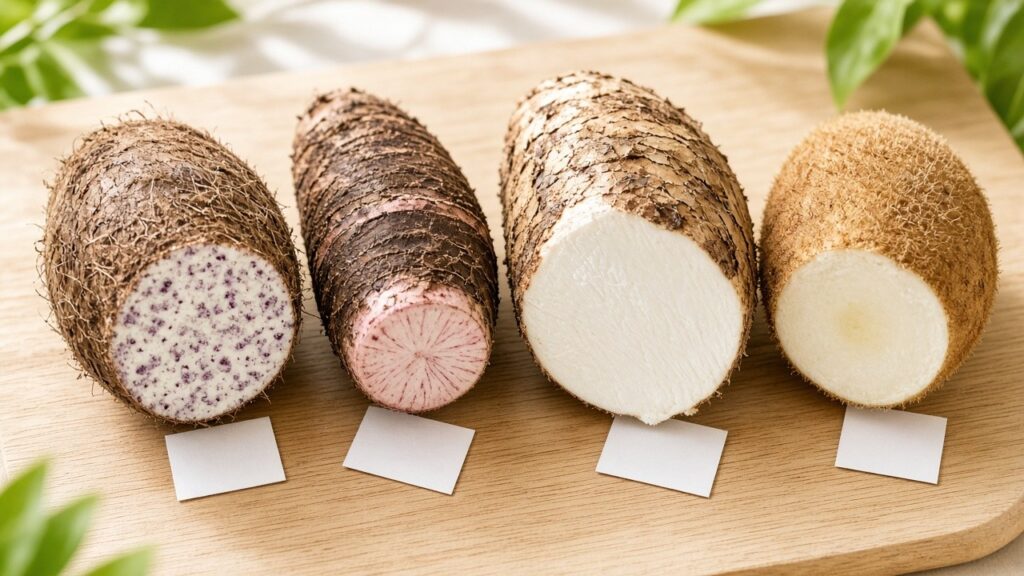
Walk into a Latin market in Chicago looking for otoe and you might find it labeled malanga, yautía, taro, eddo or “coco,” sometimes all in the same bin. Root vegetables have a naming problem, and otoe sits right in the middle of it. If you’re making Panamanian sancocho, though, it matters: otoe is what gives the broth its silky body and the pieces their creamy, almost buttery bite.
Otoe is the Panamanian name for a starchy tropical root in the aroid family, most often a Xanthosoma plant, the same root called malanga in Cuba and Miami, yautía in Puerto Rico and the Dominican Republic, tiquisque in Costa Rica and cocoyam in parts of Africa. It’s closely related to taro (Colocasia esculenta, called dasheen, eddo or “malanga isleña” in some places) and is often used interchangeably with it, though they’re different plants. Both have brown, hairy skin and white, cream, pink or purple-flecked flesh, a nutty, earthy flavor and a creamy texture when cooked. Both must be cooked, and both can make your hands itch when you peel them raw.
Below: what otoe is and what it’s called in English, otoe vs taro vs malanga vs yautía vs ñame, how to tell them apart, what it tastes like, how Panamanians use it, buying and storing it in the U.S., peeling without itchy hands, otoe vs ube vs taro, substitutes and answers to common questions. More root vegetables: ñame vs yuca.
What is otoe?
Otoe is one of the core viandas (starchy roots and tubers) in Panamanian cooking, alongside yuca, ñame and plantain. It’s grown in Panama’s tropical lowlands and sold in every market.
Otoe in English
There’s no single English name. Depending on the store, otoe may be labeled:
- Malanga (most common in U.S. Latin markets)
- Yautía
- Taro (technically a different plant, but often used for both)
- Cocoyam or new cocoyam
- Tannia or tannier
- Eddo (usually smaller taro corms)
Botanists use the scientific names to avoid confusion: Xanthosoma for malanga/yautía/otoe and Colocasia esculenta for taro.
Otoe vs taro vs malanga vs yautía vs ñame
| Name | Usually refers to | Botanical genus | Where you’ll hear it |
|---|---|---|---|
| Otoe | Malanga-type root (sometimes taro) | Mostly Xanthosoma | Panama |
| Malanga | Xanthosoma; “malanga isleña” or “malanga coco” can mean taro | Xanthosoma (or Colocasia) | Cuba, Miami, U.S. Latin markets |
| Yautía | Xanthosoma; yautía blanca, amarilla, lila (purple) | Xanthosoma | Puerto Rico, Dominican Republic |
| Taro | Colocasia esculenta: dasheen, eddo | Colocasia | Asia, Pacific, Caribbean, U.S. supermarkets |
| Ñame | Yam (true yam), a different family entirely | Dioscorea | Panama, Colombia, Caribbean |
Ñame is not otoe. Ñame is a true yam (Dioscorea), with rough, bark-like skin and a heavier, drier texture. See ñame vs yuca for the yam side of the family.
How to tell them apart (skin, flesh, color)
| Otoe / malanga / yautía (Xanthosoma) | Taro (Colocasia) | Ñame (yam) | |
|---|---|---|---|
| Shape | Elongated, club- or torpedo-shaped, sometimes curved | Round to barrel-shaped corms with rings; eddoes are small and round | Large, irregular, log-like or lumpy |
| Skin | Brown, shaggy or slightly hairy, sometimes with pinkish patches | Brown with distinct rings and hairy fibers | Rough, bark-like, dark brown to black |
| Flesh | White, cream, yellow or lilac; sometimes pinkish | White to cream with purple or pink flecks | White, cream or yellow; slimy when cut |
| Texture cooked | Creamy, smooth, slightly sticky | Creamy to fluffy, slightly sticky | Dense, starchy, a bit dry |
| Common uses | Soups (sancocho), purées, fritters | Soups, stews, chips, poi (Hawaii), bubble tea | Soups, boiled sides, mashes |
Tip: if the flesh is white with tiny purple dots, you probably have taro. If it’s solid white, cream or lilac and the root is long and club-shaped, it’s likely malanga/otoe.
What otoe tastes like
- Flavor: mild, nutty and earthy, a little like a cross between a potato and a chestnut.
- Texture: creamy, smooth and slightly sticky when cooked; it softens and thickens soups.
- Color: white otoe stays pale; lilac varieties turn grayish-purple.
Otoe is richer and creamier than potato, and less fibrous than yuca.
How Panamanians use otoe (sancocho, puré, frituras)
- Sancocho: the most famous use. Otoe pieces cook down partly into the broth, giving Panamanian sancocho its body and silkiness, while other pieces stay whole and creamy. Recipe: Panamanian sancocho.
- Sopa de carne and other soups: alongside yuca, ñame and corn. See Panamanian beef soup.
- Puré de otoe: boiled and mashed with butter, milk and salt, like mashed potatoes but silkier.
- Frituras de otoe: grated otoe mixed with egg, garlic and seasonings, then fried as fritters.
- Boiled: as a side with stews, eggs or fish, drizzled with butter or oil.
- Otoe chips: thin slices fried until crisp.
How to buy and store otoe in the US
Buying
- Where: Latin American, Caribbean and Asian markets, and many big supermarkets with international produce. Look for signs reading malanga, yautía, taro, eddo or otoe.
- What to look for: firm roots with no soft spots, mold, cracks or sour smell. Heavy for their size. Many stores cut a piece open so you can see the flesh; it should be moist and evenly colored, without dark or slimy spots.
- Frozen: peeled, cut malanga and taro are sold frozen in Latin and Asian markets. Great for soups.
In Chicago, I find otoe under several names at Latin markets and Asian supermarkets; see where to buy culantro in Chicago for the stores I shop for Panamanian ingredients.
Storing
- Whole roots: cool, dry, dark, well-ventilated place (not the fridge), for up to a week or two. They rot quickly if damp.
- Peeled and cut: cover with cold water in the fridge and use within a day or two, or freeze.
- Cooked: refrigerate up to 3 to 4 days.
How to peel and cook it (itchiness and how to avoid it)
Raw otoe and taro contain calcium oxalate crystals and other compounds that can irritate skin, causing itching, and that irritate the mouth and throat if eaten raw. Cooking breaks them down.
Avoid itchy hands
- Wear gloves when peeling.
- Or oil your hands lightly before peeling.
- Keep the root dry while peeling; itching often gets worse when the root is wet.
- Rinse your hands with cool water afterward; some cooks rub them with a little vinegar or lemon juice.
How to peel
- Scrub the root under running water and dry it.
- Cut off both ends.
- Cut into manageable pieces.
- Peel with a sharp knife or sturdy vegetable peeler, removing all the brown skin.
- Drop pieces into cold water as you go to prevent browning.
How to cook
- Boil: cover with cold salted water and simmer until tender, 15 to 25 minutes depending on size.
- In soup: add in large chunks for the last 25 to 40 minutes of cooking (otoe cooks faster than ñame and can fall apart if cut small).
- Mash: boil, drain and mash with butter, warm milk and salt.
- Fry: boil until just tender, then fry, or grate raw for fritters (wear gloves).
Always cook otoe and taro thoroughly. Don’t eat them raw.
Otoe vs ube vs taro (the purple question)
| Otoe / malanga | Taro | Ube | |
|---|---|---|---|
| What it is | Xanthosoma root | Colocasia corm | Purple yam (Dioscorea alata) |
| Flesh | White, cream or lilac | White with purple flecks | Vivid purple throughout |
| Flavor | Nutty, earthy | Nutty, slightly sweet | Sweet, vanilla-like, nutty |
| Typical use | Soups, purées (savory) | Soups, chips, desserts, bubble tea | Desserts (Filipino halaya, cakes, ice cream) |
Is taro the same as ube? No. Ube is a purple yam, related to ñame, not to taro or otoe. “Taro” bubble tea is often lilac-colored but tastes different from ube. And lilac otoe (malanga lila) isn’t ube either.
Simple puré de otoe (mashed otoe)
Serves 4 | About 35 minutes
- 2 pounds otoe (malanga), peeled and cut into 2-inch chunks
- 1 tablespoon salt for the water, plus more to taste
- 3 tablespoons butter
- ½ to ¾ cup warm milk (or the cooking water)
- 1 garlic clove, grated (optional)
- Black pepper and chopped culantro or chives, to finish
- Boil: cover the otoe with cold salted water, bring to a boil and simmer until very tender, 15 to 20 minutes.
- Drain well, saving a cup of the cooking water.
- Mash with butter and garlic, adding warm milk or cooking water a little at a time until smooth and creamy. Otoe gets gluey if overworked, so mash by hand rather than in a blender.
- Season with salt and pepper and top with herbs.
Serve with stews like Panamanian pollo guisado or ropa vieja. For an even more Panamanian flavor, stir in a spoonful of Panamanian sofrito cooked in butter.
Otoe in other cuisines
- Cuba: malanga purée is a classic comfort food, and malanga fritters (frituras de malanga) are a favorite snack.
- Puerto Rico and the Dominican Republic: yautía goes into sancocho, pasteles masa and alcapurrias.
- West Africa: cocoyam is boiled, pounded or added to soups.
- Hawaii and the Pacific: taro (the cousin) becomes poi and laulau leaves.
- Asia: taro appears in stews, dim sum, chips, desserts and bubble tea.
Is otoe low-carb?
No. Like other starchy roots, otoe is high in carbohydrate, similar to potatoes and yuca. For carb counts of plantains, yuca and ñame, see are plantains keto?
Substitutes
| Substitute | In sancocho | In purée | Notes |
|---|---|---|---|
| Taro | Excellent | Excellent | The closest substitute |
| Ñame (yam) | Very good | Good | Denser; cooks longer |
| Yuca | Good | Good | Firmer, more fibrous; see ñame vs yuca |
| Yukon Gold potato | Fair | Good | Different flavor, but creamy |
| Celery root | Fair | Fair | Lower-starch, different flavor |
For sancocho, a mix of yuca and ñame works if you can’t find otoe; the broth will be a little less silky. For keto versions, see keto sancocho.
FAQ
Is otoe the same as malanga or yautía?
Generally, yes. Otoe (Panama), malanga (Cuba and U.S. markets) and yautía (Puerto Rico and the Dominican Republic) usually refer to the same group of Xanthosoma roots.
Is taro the same as ube?
No. Taro is Colocasia esculenta; ube is a purple yam (Dioscorea alata). They taste and look different.
Can I eat otoe raw?
No. Raw otoe and taro contain compounds that irritate the mouth and throat. Always cook them thoroughly.
Where can I buy otoe in Chicago?
Look in Latin American and Caribbean markets and large Asian supermarkets, labeled as malanga, yautía, taro or eddo. Frozen peeled malanga is another option.
What can I use instead of otoe in sancocho?
Taro is the closest. Ñame and yuca also work; the broth will be a little less creamy.
Why do my hands itch after peeling otoe?
Calcium oxalate crystals and other compounds in the raw skin and flesh irritate the skin. Wear gloves or oil your hands, and keep the root dry while peeling.
Does otoe turn purple or gray when cooked?
White otoe stays creamy white. Lilac (purple) varieties cook to a soft grayish-lilac color. Both taste similar. Some cut otoe browns in the air before cooking; keep peeled pieces in cold water.