
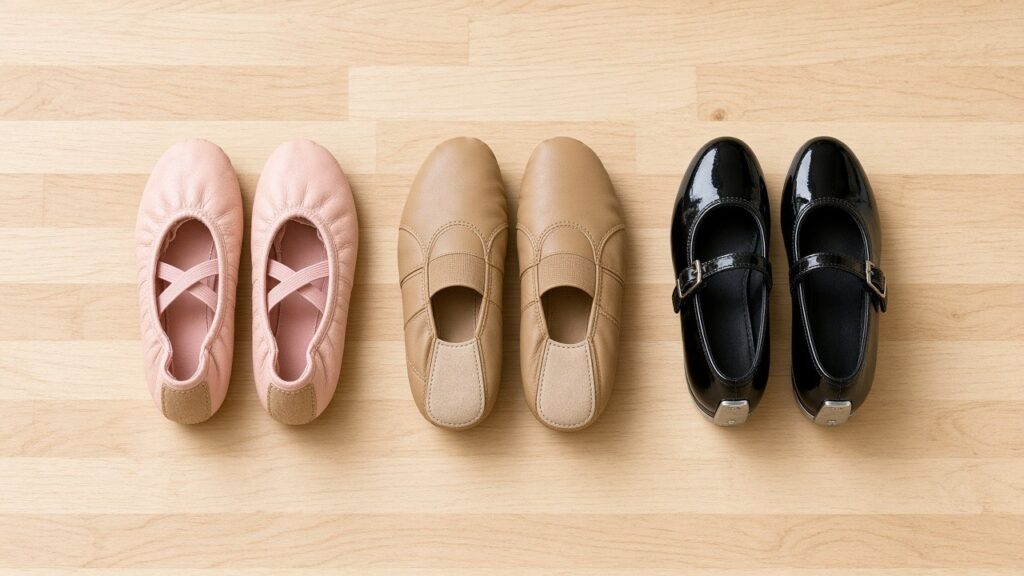
Walk into a dancewear shop (or open a dancewear website) as an adult beginner and the shoe wall can be confusing. Ballet slippers, jazz shoes and tap shoes all look like “soft dance shoes” at first glance, but they’re built for very different jobs, and wearing the wrong one can make class harder than it needs to be.
Ballet shoes are thin, soft slippers (leather, canvas or satin) with a flexible sole that lets you point and feel the floor. Jazz shoes are soft leather shoes with a split rubber sole and a small heel that grips enough for kicks, slides and jumps. Tap shoes have metal plates (taps) screwed onto the toe and heel to make sound. You need the shoe that matches your class: ballet slippers for ballet, jazz shoes for jazz and many musical theater classes, tap shoes for tap. Jazz shoes can work for a first ballet trial if your teacher agrees, but they’re not a long-term ballet shoe.
Below: a side-by-side table, each shoe explained (materials, soles, sizing), whether you can swap them, dance sneakers and turning shoes, how each should fit, care and breaking in, shoes for Zumba, salsa and hip hop, and answers to common questions. New to class? Start with can adults start ballet?, jazz dance for beginners or teach yourself tap dance.
Ballet shoes vs jazz shoes vs tap shoes
| Ballet shoes | Jazz shoes | Tap shoes | |
|---|---|---|---|
| Used for | Ballet, some lyrical and contemporary classes | Jazz, musical theater, some lyrical and hip hop classes | Tap |
| Upper | Soft leather, canvas or satin | Soft leather or synthetic | Leather or synthetic, more structured |
| Sole | Thin suede: full sole or split sole | Rubber or suede, almost always split | Leather or rubber sole with metal taps on toe and heel |
| Heel | None | Small, low rubber heel | Low to medium heel (Oxford or Mary Jane style) |
| Fastening | Elastic straps you sew on (or pre-sewn) | Slip-on with elastic gussets, or lace-up | Laces, buckle strap or ribbon ties |
| Sound | Silent | Quiet | Loud: the whole point |
| Flexibility | Very flexible: point the foot fully | Flexible through the arch | Stiffer; flexes at the ball |
| Typical price range | Lower | Lower to middle | Middle to higher |
| Can it go outside? | No | No | No (damages taps and floors) |
The short version: ballet shoes help you articulate the foot, jazz shoes help you move and grip, tap shoes help you make sound.
Ballet slippers: leather vs canvas, full vs split sole
Ballet slippers (also called ballet flats or soft ballet shoes) are what adult beginners wear. Pointe shoes are a separate, advanced shoe that requires years of training and a teacher’s approval, so you can ignore them for now.
Leather vs canvas vs satin
- Leather: durable, grips a little more and molds to your foot over time. Leather is often recommended for beginners and for floors where you want a bit of traction.
- Canvas: lighter, cheaper, breathable and often machine-washable (check the label). Canvas shows your foot line clearly and stretches less, so fit it closely.
- Satin: mostly for performances or special classes; looks pretty but wears out fast.
There’s no single right answer. Many adult students like leather for its durability and canvas for its lighter feel; if your studio has a dress code, follow it.
Full sole vs split sole
- Full sole: one suede sole runs the length of the shoe. It adds a bit of resistance, which some teachers like for beginners because you work harder to point the foot. It also supports the arch a little more.
- Split sole: two small suede pads, one under the ball of the foot and one under the heel, with nothing in between. It’s more flexible, shows the arch when you point and is very popular with adults.
If you’re not sure, ask your teacher. Many studios don’t mind, and adult beginners often find split soles easier to point in.
Elastic straps
Most ballet slippers come with elastic you either sew on yourself (usually in an X across the instep, or a single strap) or that’s already attached. Some also have a drawstring at the front: tie it snugly, tuck the bow inside the shoe and trim long ends so they don’t flop around.
Colors
Pink, tan/nude and black are the usual options. Many studios now encourage a shade that matches your skin tone. Check your studio’s dress code before buying.
Jazz shoes: slip-on vs lace-up, sizing
Jazz shoes look a bit like a soft oxford or a slipper with a small rubber heel. The split sole lets you point and flex, and the rubber patches give you grip for kicks, turns and traveling steps.
Slip-on vs lace-up
- Slip-on: elastic panels (gussets) on the sides hold the shoe on. Quick to put on and take off, with a clean line. This is the most common choice for adults.
- Lace-up: a classic oxford style that lets you adjust the fit. Good if you have narrow feet or a slip-on keeps sliding off.
Sole and heel
Most jazz shoes have a split sole with a rubber or suede patch under the ball and heel. Rubber grips more; suede turns more easily. If your studio floor is slippery, rubber helps; if you struggle to turn, a suede patch or a turning shoe can help.
Jazz shoe sizing
Jazz shoes are meant to fit snugly, like a glove, with no extra room at the toe. Many brands run differently from street shoes, so check the brand’s own size chart and measure your foot in the evening, when feet are slightly larger. If you’re between sizes, follow the brand’s advice.
Colors
Black and tan are standard. Musical theater and jazz programs often ask for tan or black; follow the studio’s dress code.
Tap shoes: types, taps, sizing
Tap shoes are the one dance shoe that’s meant to be heard. Two metal plates, the toe tap and the heel tap, are screwed onto the sole.
Types of tap shoes
- Oxford (lace-up): the most common adult tap shoe; secure and supportive.
- Mary Jane (buckle strap): common for kids and some adult classes; quick to put on.
- Slip-on or T-strap: less common for beginners.
- Professional tap shoes: heavier, with sturdier soles and bigger, more resonant taps. Great later; not needed for a first class.
Taps and sound
Taps vary in size, thickness and how they’re attached. Many taps have a small adjustment screw that lets you loosen the plate a little for a brighter, “jingly” sound or tighten it for a cleaner one. Your teacher can help you adjust them. If your neighbors are complaining about practice, read how to make tap shoes quieter and consider a tap board for home practice.
Tap shoe sizing
Tap shoes should fit snugly but not crush your toes. Most adults wear tap shoes close to their street size, though brands differ. Wear the socks or tights you’ll wear to class when you try them on. Because tap shoes are stiffer, too much room leads to blisters and lost sound.
Can you wear jazz shoes for ballet (or vice versa)?
Jazz shoes for ballet: For a single trial class, many teachers will let you wear jazz shoes or just socks. For regular ballet, jazz shoes aren’t ideal: the rubber heel and grip make turns harder, and the stiffer sole makes it harder to point and feel the floor. Ballet slippers are inexpensive, so it’s worth buying a pair once you know you’re staying.
Ballet shoes for jazz: Ballet slippers can work in a jazz class with little turning and no slides, but they offer little grip or cushioning for jumps and wear out quickly. If you take jazz regularly, get jazz shoes.
Ballet or jazz shoes for tap: No. Tap needs metal taps. Some studios let first-timers try a class in hard-soled street shoes, but you’ll want tap shoes quickly.
Socks and bare feet: Contemporary, modern and lyrical classes are often taken barefoot or in socks; some ballet trial classes allow socks. Always ask first: socks are slippery, and bare feet aren’t allowed at every studio.
Dance sneakers and turning shoes
Dance sneakers
Dance sneakers have a split sole, light cushioning and a smooth pivot point under the ball of the foot. They’re popular for hip hop, jazz funk, cardio dance and some Zumba classes because they protect your feet during jumps and still let you turn. They’re not for ballet.
Turning shoes (foot thongs, half soles)
Turning shoes, also called foot thongs, foot undies or half soles, cover only the ball of the foot and loop around a toe or two. They’re used in contemporary and lyrical classes to make turns smoother and protect the skin on the ball of the foot while keeping the barefoot feel.
How each should fit
| Shoe | How it should fit | Warning signs |
|---|---|---|
| Ballet slippers | Snug like a sock; toes lie flat, not curled; no gap at the heel | Wrinkled fabric at the toes, heel slipping, toes curled |
| Jazz shoes | Glove-like; toes reach the end but aren’t crushed | Shoe flops off on kicks, or toes press painfully |
| Tap shoes | Snug and secure; heel stays put; toes have just a little room | Heel lifts when you shuffle; taps sound muffled because the shoe is loose |
General fitting tips:
- Try on at the end of the day and with the socks or tights you’ll wear.
- Stand, plié (bend your knees) and rise onto the balls of your feet in the store or at home. The shoe shouldn’t gap or pinch.
- Don’t buy room to grow. Adults don’t need it, and loose dance shoes are a tripping risk.
- Check the return policy before you sew elastic or wear them on a studio floor.
- Wide or narrow feet: many brands make wide and narrow widths. Ask the shop.
If you have foot pain, bunions or a past injury, check with a qualified professional before choosing shoes.
Care and breaking in
Ballet slippers
- Wear them around the house (on clean floors) to mold them to your feet.
- Sew elastic in the right spot: put the shoe on, fold the heel down toward the arch and mark where the fold meets the sides.
- Air them out after class. Canvas can often be hand- or machine-washed cold (check the maker’s guidance); leather should be wiped and dried naturally.
Jazz shoes
- Bend and flex the sole by hand to soften it.
- Leather stretches slightly; synthetic barely does.
- Keep them in a breathable bag, not a sealed plastic one.
Tap shoes
- Check tap screws regularly and tighten loose ones with a small screwdriver.
- Never wear tap shoes outside; concrete scratches the taps and the soles pick up grit that scratches studio floors.
- Store them in a shoe bag so the taps don’t scratch other gear.
For all dance shoes: never wear them outdoors, keep them dry and replace them when the sole wears through or the fit becomes loose.
What shoes for Zumba, salsa and hip hop?
- Zumba: cross-training shoes or dance sneakers with a smooth pivot point and lateral support; running shoes with deep tread can stick to the floor. Full guide: how to choose Zumba shoes and what to wear to Zumba.
- Salsa and bachata: suede-soled Latin dance shoes or flat practice shoes that let you spin. Full guide: what to wear salsa dancing.
- Hip hop: clean, flat sneakers with a little grip, or dance sneakers. See hip hop dance for beginners.
- Belly dance: usually barefoot, foot thongs or soft ballet slippers. See belly dance for beginners.
- Contemporary and lyrical: bare feet, socks or turning shoes, depending on the studio.
Which dance shoes should an adult beginner buy first?
- Take the trial class first. Ask the studio what’s allowed on day one; many let you wear socks or sneakers.
- Buy for the class you’ll actually attend. If you’re signed up for ballet, buy ballet slippers. If you’re doing jazz and musical theater, buy jazz shoes.
- Start with a mid-range, comfortable pair. Expensive professional shoes aren’t necessary yet.
- Check the dress code for color and style.
- Get fitted in person once if you can, then reorder the same model online later.
If you’re taking several classes, you’ll likely end up with ballet slippers and jazz shoes (they’re inexpensive and light) and add tap shoes if you take tap. For a wider look at classes in the city, see adult dance classes in Chicago.
FAQ
Can I wear jazz shoes to ballet class?
For a trial class, usually yes if the teacher agrees. For regular ballet, ballet slippers are better: they’re more flexible, let you point and feel the floor, and turn more easily than rubber-heeled jazz shoes.
Do I need split soles or full soles?
Either works for beginners. Full soles add resistance and a bit of arch support; split soles are more flexible and show the arch. Ask your teacher if the studio has a preference.
Can I wear dance shoes outside?
No. Dirt and grit damage the soles and get tracked onto studio floors, and tap shoes will scratch. Change into dance shoes at the studio.
Do ballet flats from a store work for class?
No. Fashion ballet flats have stiff soles and structure, and they don’t let you point or turn safely. Real ballet slippers are soft and fit like a sock.
How should dance shoes fit?
Snug, like a glove. Your toes shouldn’t curl or be crushed, the heel shouldn’t slip and there should be no baggy fabric at the toes. Follow the brand’s size chart and try them on with your class socks or tights.
Are jazz shoes and ballet shoes the same?
No. They’re both soft dance shoes, but jazz shoes have a small rubber heel, grippy patches and a sturdier upper, while ballet slippers are thinner, with a suede sole and no heel.
What’s the difference between dance shoes and jazz shoes?
“Dance shoes” is a general term for any shoe made for dance (ballet, jazz, tap, ballroom, Latin, dance sneakers). Jazz shoes are one specific type.
How often should I replace dance shoes?
When the sole wears through, the shoe stretches so much that it slides off, or taps no longer tighten. Frequency depends on how often you take class.