
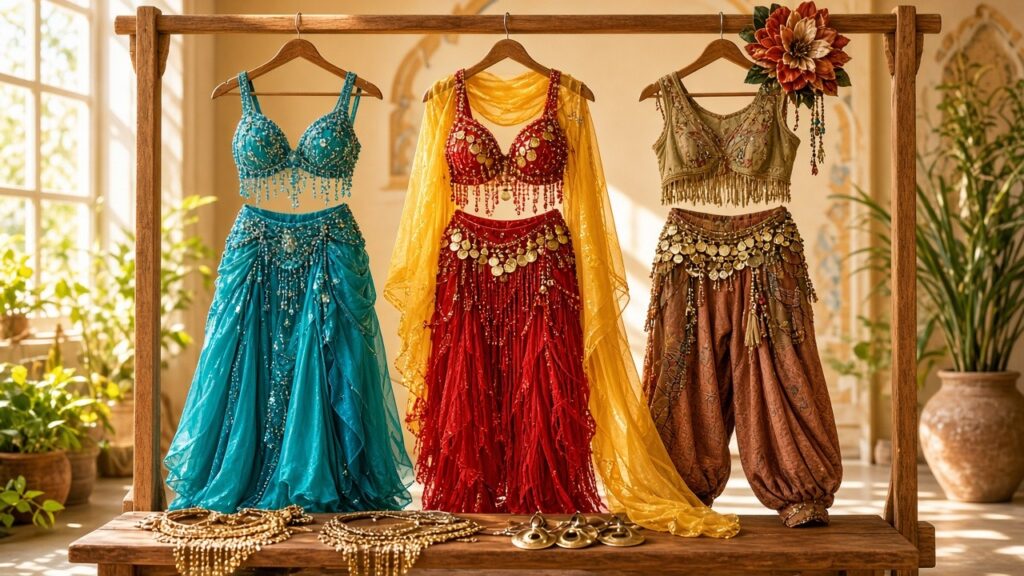
“Belly dance” sounds like one dance, but it’s really a family of styles. An Egyptian dancer moving with subtle, internal control looks very different from a Turkish dancer playing zills and dropping to the floor, and both look different from a tribal fusion dancer in wide pants and a flower headpiece. Knowing the styles helps you choose a class, understand what you’re watching and pick music and costumes that fit.
The main belly dance styles are Egyptian (raqs sharqi, plus folk-based baladi and saidi), Turkish oriental (oryantal), Lebanese, American Cabaret, American Tribal Style (now called FCBD® Style) and tribal fusion, along with folk dances such as khaleeji from the Arabian Gulf and ghawazee from Egypt. Egyptian is subtle and musical, Turkish is energetic and playful, Lebanese is big and glamorous, American Cabaret blends several traditions with veil and zills, and tribal styles focus on group improvisation or fusion with modern music. Most beginners start with a general or Egyptian-based class.
Below: how many styles there are, each style explained, a side-by-side comparison, folk styles, which style to start with, what classes usually teach and answers to common questions. New to belly dance? Start with belly dance for beginners.
How many belly dance styles are there?
There’s no official count. “Belly dance” is a Western umbrella term for solo dances of the Middle East and North Africa and the styles they inspired. Teachers usually group them into a few families:
- Oriental (stage) styles: Egyptian raqs sharqi, Turkish oryantal and Lebanese.
- Folk and regional styles: baladi, saidi, ghawazee, khaleeji and others.
- Western-developed styles: American Cabaret, American Tribal Style (FCBD® Style) and tribal fusion.
- Modern fusion: belly dance mixed with hip-hop, flamenco, Bollywood, contemporary and more.
Egyptian (raqs sharqi, baladi, saidi)
Raqs sharqi
Raqs sharqi (“oriental dance”) is the classical Egyptian stage style that developed in Cairo’s nightclubs and films in the 20th century. It’s often considered the foundation of modern belly dance.
- Feel: elegant, controlled, deeply musical. Movements are often small and internal, with an emphasis on interpreting every nuance of the music.
- Moves: hip drops and lifts, figure eights, shimmies, undulations, graceful arms and traveling steps.
- Music: classical Egyptian orchestral music, modern Egyptian pop and drum solos.
- Costume: a beaded bra and skirt set (bedlah) or a fitted one-piece dress; many Egyptian performers wear more covered costumes.
Baladi
Baladi (“of the country”) is an earthy, grounded urban folk style from Egypt, danced socially and on stage. It’s often performed to an improvised baladi progression that starts slow and builds to a fast drum section. Movements are relaxed, weighted and playful.
Saidi
From Upper Egypt (the Saʿid), saidi is a lively folk style danced to the bouncy saidi rhythm. Dancers often use a cane in raqs al assaya (cane dance), twirling and balancing it.
Turkish (oryantal)
Turkish oriental dance is energetic, flirtatious and athletic.
- Feel: bold, playful, with more vigorous hips and bigger movements.
- Moves: strong hip work, fast shimmies, floor work, backbends and expressive arms.
- Zills: finger cymbals are often played throughout.
- Music: Turkish oriental music, often with clarinet and the 9/8 karsilama rhythm.
- Costume: often revealing two-piece costumes with high slits, sometimes worn with heels.
Turkish Romani dance (Roman havası) is a related, earthy social style.
Lebanese
Lebanese style sits between Egyptian and Turkish:
- Feel: big, glamorous and energetic, with strong hip accents and dramatic presence.
- Moves: large hip movements, fast shimmies and spins, backbends; dancers often perform in high heels.
- Music: Lebanese pop and orchestral music with powerful drums.
- Costume: glamorous two-piece costumes.
American Cabaret
American Cabaret (sometimes called American Restaurant style or AmCab) developed in the US from the 1950s to the 1970s, when dancers learned from musicians and dancers of different backgrounds performing in Middle Eastern nightclubs in cities like New York and San Francisco.
- Feel: a fusion of Egyptian, Turkish and Lebanese styles, energetic and theatrical.
- Routine structure: often a multi-part set with a fast entrance, slow section, veil work, floor work, drum solo and finale.
- Props: veil, zills, sometimes a sword balanced on the head.
- Costume: glittering bra and belt sets with chiffon skirts.
American Tribal Style and fusion
American Tribal Style (FCBD® Style)
Developed in the 1980s in San Francisco by Carolena Nericcio and her company FatChanceBellyDance, American Tribal Style is now called FCBD® Style.
- Feel: grounded and strong, with an emphasis on group harmony.
- Group improvisation: dancers follow a leader using a vocabulary of moves and visual cues, so a group can improvise together without choreography.
- Moves: based on movements from North African, Middle Eastern, Indian and Spanish dance.
- Costume: full skirts or wide pants, choli tops, coin bras, tassel belts, turbans or flowers, heavy jewelry.
- Zills: commonly played.
Similar improvisational group formats include ITS (Improvisational Tribal Style) and others.
Tribal fusion
Tribal fusion grew from tribal style in the late 1990s and 2000s, blending belly dance with hip-hop, popping, contemporary dance and other styles.
- Feel: highly controlled isolations, slow and intricate, with modern influences.
- Music: electronic, trip-hop, world fusion, and more.
- Costume: varied, often with tribal-inspired elements, wide pants and textured belts.
Folk styles (khaleeji, ghawazee)
- Khaleeji: a social dance from the Arabian Gulf, performed in a long, embroidered thobe nashal. Dancers move with small steps and expressive hair tossing to a distinctive rhythm.
- Ghawazee: a folk style associated with traditional performers of Upper Egypt, with lively hip work and zills.
- Fallahi: a light, lively Egyptian village style.
- Melaya laff: a playful Alexandrian style using a large black wrap.
- Shamadan: a candelabra dance from Egyptian wedding processions, with the dancer balancing a lit candelabra on her head.
Teachers often include folk styles in intermediate classes or workshops.
Side-by-side comparison
| Style | Music | Posture and feel | Costume | Props |
|---|---|---|---|---|
| Egyptian raqs sharqi | Classical Egyptian orchestral, Egyptian pop | Upright, elegant, subtle, musical | Bedlah or dress, often more covered | Veil, occasionally cane |
| Baladi | Baladi taqsim and drums | Grounded, earthy, relaxed | Galabeya (long dress) with hip scarf | None |
| Saidi | Saidi rhythm, mizmar | Bouncy, playful | Galabeya | Cane |
| Turkish | Turkish oriental, 9/8 rhythms | Energetic, bold, playful | Revealing two-piece | Zills, veil |
| Lebanese | Lebanese pop and orchestral | Big, glamorous | Two-piece; heels | Veil |
| American Cabaret | Mixed Middle Eastern | Theatrical, fusion | Glittering bra and belt | Veil, zills, sword |
| FCBD® Style | Steady rhythms, world music | Grounded, strong, group-focused | Full skirts, pants, coins, flowers | Zills |
| Tribal fusion | Electronic, world fusion | Controlled, intricate isolations | Varied, tribal-inspired | Rare |
| Khaleeji | Gulf music | Small steps, hair tossing | Thobe nashal | None |
Other fusion styles
Belly dance mixes easily with other dance forms. Common fusions include:
- Flamenco fusion: flamenco arms, attitude and rhythm with belly dance isolations.
- Bollywood fusion: Indian film dance with belly dance hips and shimmies.
- Hip-hop and urban fusion: popping, locking and grooves layered with isolations.
- Gothic or dark fusion: dramatic music and theatrical costumes.
- Latin fusion: belly dance combined with salsa or reggaeton rhythms. As a Latin dancer, I find that the hip control from belly dance shows up everywhere.
Fusion works best when the dancer understands both styles well, so most teachers recommend learning belly dance basics first.
How to recognize a style when you’re watching
- Listen to the music. Classical Arabic orchestra suggests Egyptian; clarinet and 9/8 rhythms suggest Turkish; electronic beats suggest fusion.
- Watch the size of the movement. Small and subtle points to Egyptian; big and athletic points to Turkish or Lebanese.
- Count the dancers. A group moving in sync without choreography, following one leader, is likely FCBD® Style.
- Look at the costume. Coins, turbans and wide skirts suggest tribal; glittering bedlahs suggest oriental styles.
- Notice the props. A cane points to saidi; a candelabra to shamadan; zills appear in Turkish, American Cabaret and tribal styles.
Props by style
| Prop | Most associated with |
|---|---|
| Veil | Egyptian, American Cabaret, Turkish |
| Zills (finger cymbals) | Turkish, American Cabaret, FCBD® Style, ghawazee |
| Cane | Saidi |
| Sword | American Cabaret, some fusion |
| Wings (Isis wings) | Modern stage and fusion |
| Candelabra (shamadan) | Egyptian wedding dance |
| Fan veils | Modern stage and fusion |
Which style to start with
- General beginner classes usually teach a mix of basic movements (hip drops, shimmies, figure eights, arms) with Egyptian or American Cabaret influences. They’re a great start.
- Choose Egyptian if you love the music and want subtle, elegant technique.
- Choose FCBD® Style or tribal if you enjoy dancing in a group and like an earthy aesthetic.
- Choose tribal fusion if you like modern music and very controlled isolations, ideally after some basics.
- Choose Turkish or Lebanese if you want an energetic, flirtatious style.
The basics transfer. Hip drops, shimmies and figure eights appear in almost every style. If you’re worried about difficulty, read is belly dancing hard?.
What classes usually teach
Most studios and community classes, in Chicago and elsewhere, offer some mix of:
- Beginner belly dance (general or Egyptian-based): posture, basic isolations, simple combinations.
- Intermediate and advanced oriental: choreography, musicality, drum solos, veil.
- Tribal or FCBD® Style: group improvisation formations and cues.
- Tribal fusion: isolations, drills and choreography.
- Workshops: folk styles, props (zills, veil, cane, sword) and guest teachers.
Ask a studio which style it teaches, what music it uses and whether a trial class is available. For the music side, see what is belly dance music called?.
How styles differ in costume
- Practice clothes are the same for all styles: leggings or a long skirt, a fitted top and a hip scarf with coins so you can see and hear your hips.
- Performance costumes differ: Egyptian bedlahs and dresses, Turkish two-pieces, tribal skirts and coins, khaleeji thobes.
- Hip scarves are used in nearly every beginner class.
FAQ
Which belly dance style is best for beginners?
A general beginner or Egyptian-based class is usually the best start because it teaches the core isolations used in all styles. If you love group dancing, an FCBD® Style class is also beginner-friendly.
What is the difference between Egyptian and Turkish belly dance?
Egyptian is more subtle, upright and internal, with an emphasis on musical interpretation. Turkish is more energetic and playful, with bigger hip work, floor work and frequent zills, often to 9/8 rhythms.
What is tribal fusion?
A modern style that grew out of American tribal belly dance, blending belly dance with hip-hop, popping, contemporary and other styles, often danced to electronic or world fusion music with very controlled isolations.
Do the styles use different costumes?
Yes. Egyptian dancers often wear bedlahs or dresses, Turkish and Lebanese dancers wear glamorous two-pieces, tribal dancers wear full skirts and coins, and khaleeji dancers wear long embroidered thobes.
Is belly dance hard to learn?
The basic movements are easy to start, but mastering control and musicality takes time. Most beginners feel comfortable with the basics within a few months of regular classes.
What is American Tribal Style called now?
FCBD® Style, after FatChanceBellyDance, the company that created it.
Can I learn more than one belly dance style?
Yes, and many dancers do. Start with one style for at least several months so your basics are solid, then take workshops in others. The core isolations carry over, and each new style teaches you something about musicality and posture.