
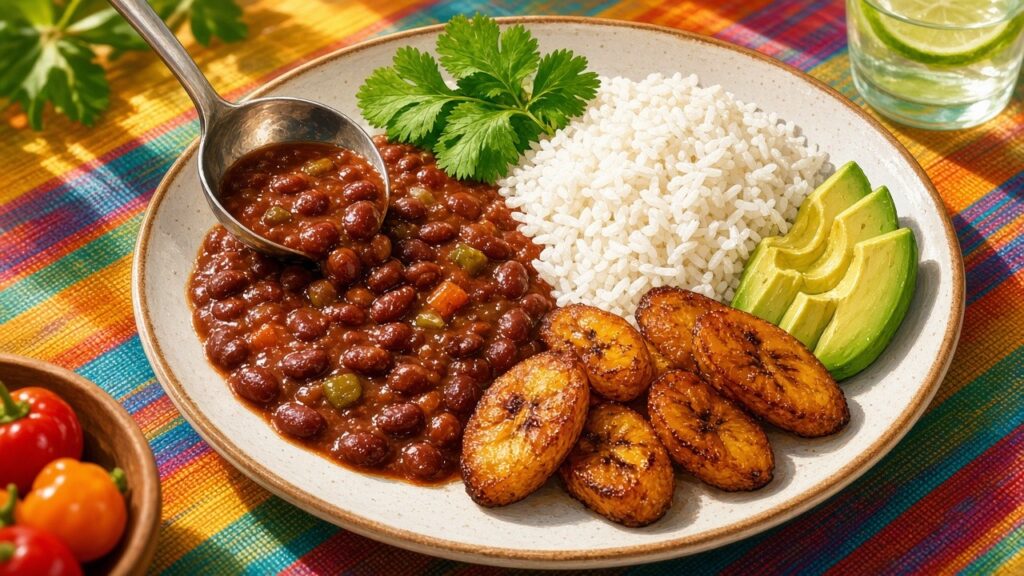
If there’s one plate that sums up everyday Panamanian lunch, it’s white rice with a ladle of stewed beans, a piece of meat or fish, and a few slices of sweet plantain. Simple, cheap, filling and endlessly comforting. Here’s how to make the beans the Panamanian way, plus what all the different bean names mean.
Panamanian rice and beans usually means white rice served with a separate pot of stewed beans (porotos), most often red beans, cooked until creamy with sofrito, culantro and sometimes pork or salchicha. Soak dried beans overnight, simmer 1½ to 2 hours (or 30 to 40 minutes in a pressure cooker), add the sofrito, then mash a few beans to thicken the broth. Serve the beans beside or over white rice.
What is Panamanian rice and beans?
In Panama, rice and beans are a pair but usually not cooked in the same pot. The rice is plain white (or coconut rice on the Caribbean side), and the beans are a saucy stew served alongside. The two are spooned together on the plate. Some families, especially in Afro-Caribbean communities, also make “rice and beans” cooked together with coconut milk.
Porotos, frijoles or habichuelas: the words explained
| Word | Where it’s common | Meaning in Panama |
|---|---|---|
| Porotos | Panama (very common), Chile, Argentina | Beans, especially red beans |
| Frijoles | Panama, Mexico, Central America | Beans in general |
| Habichuelas | Puerto Rico, Dominican Republic | Beans; in Panama sometimes green beans |
| Guandú | Panama | Pigeon peas, a different legume |
| Lentejas | Everywhere | Lentils |
Panamanians use porotos and frijoles almost interchangeably; your family probably had a favorite. If you grew up bilingual, you might have heard both at the same table.
Rice and beans vs rice and peas
“Rice and peas” is the Caribbean (especially Jamaican and Afro-Panamanian) name for rice cooked together with kidney beans or pigeon peas, coconut milk, thyme and scallion. “Peas” there means beans. Panamanian rice with separate porotos is a different preparation.
Which beans Panamanians use
- Red beans (porotos rojos): the everyday favorite; small red or red kidney beans.
- Frijoles chiricanos: small red-brown beans from Chiriquí, prized for their creaminess.
- Black beans: less common than in Cuba or Guatemala, but eaten.
- Pinto and pink beans: good substitutes in the US.
- Guandú (pigeon peas): cooked with rice, especially at Christmas; see arroz con guandú.
Ingredients
Serves 6 to 8
For the beans
- 1 lb (450 g) dried red beans
- 8 cups water (more as needed)
- 1 bay leaf (optional)
- 2 tablespoons oil
- 1 onion, diced
- 1 green bell pepper, diced
- 3 ají dulce (optional), minced
- 4 garlic cloves, minced
- 2 tablespoons tomato paste
- 8 culantro leaves, chopped
- 1½ teaspoons salt (add after beans soften)
- Optional: ½ lb salted pork, smoked ham hock, or sliced salchicha (Vienna sausages); see salchicha guisada in English
- Optional: 1 cup diced squash (zapallo) to thicken
For the rice
- 2 cups long-grain white rice, rinsed
- 3 cups water
- 1 tablespoon oil
- 1 teaspoon salt
How to cook dried beans
Soak or no soak
Soaking (overnight in plenty of cold water, or a quick soak: boil 2 minutes, cover and rest 1 hour) shortens cooking time and helps beans cook evenly. Drain and use fresh water.
No soak works too; plan on 30 to 60 extra minutes. Older beans may take much longer either way.
Pot or pressure cooker
| Method | Soaked beans | Unsoaked beans |
|---|---|---|
| Stovetop pot | 1–1½ hours | 2–2½ hours |
| Pressure cooker / Instant Pot | 15–20 min high + natural release | 35–40 min high + natural release |
| Slow cooker | 6–8 hours low | 8–10 hours low |
Red kidney bean safety: raw or undercooked kidney beans contain a natural toxin (phytohaemagglutinin). Always boil dried kidney beans vigorously for at least 10 minutes before simmering, and don’t cook dried kidney beans from raw in a slow cooker without boiling them first. Canned beans are already cooked.
How to make arroz con porotos
Beans on the side (the everyday Panamanian way)
- Simmer soaked beans with water and bay leaf until tender.
- Meanwhile, heat oil in a skillet. Cook onion, pepper and ají dulce 5 minutes. Add garlic and tomato paste; cook 2 minutes. If using pork or salchicha, brown it here.
- Add the sofrito to the beans with half the culantro and the salt. Add squash if using.
- Simmer uncovered 20 to 30 minutes, until the broth is thick and creamy.
- Finish with remaining culantro.
Rice: heat oil in a pot, add rinsed rice and stir 1 minute. Add water and salt, bring to a boil, cook uncovered until the water drops below the rice surface, then cover and cook on low 18 to 20 minutes. Rest 5 minutes and fluff.
Cooked together with coconut
Combine 2 cups rinsed rice, 1 can coconut milk, 1¼ cups bean cooking liquid or water, 2 cups cooked red beans, a sprig of thyme, 1 teaspoon salt and a whole scallion. Bring to a boil, cover and cook on low 20 minutes. This is the Afro-Caribbean “rice and beans” style. For a coconut-only version, see Panamanian coconut rice.
How to thicken the beans
- Mash a cup of beans against the side of the pot and stir them back in.
- Simmer uncovered to reduce.
- Add squash (zapallo or butternut), which melts into the broth.
- Blend a ladle of beans and broth and return it.
- Don’t add flour; it dulls the flavor.
What to serve with it
- Meat: carne guisada, pollo guisado, fried pork chops or fish
- Plantains: tajadas (sweet) or patacones (crisp); see maduros vs tostones
- Salad: cabbage, tomato and cucumber with lime
- Avocado and a fried egg for a quick lunch
- Hot sauce at the table
Rice and beans with a protein and plantain is the classic comida corriente plate you’ll find at fondas across Panama. More dishes are in the Panamanian food guide.
Storage and freezing beans
- Fridge: cooked beans keep 4 to 5 days; rice 3 to 4 days. Cool and refrigerate both promptly (rice within 1 hour).
- Freezer: beans freeze beautifully for up to 6 months in their broth. Freeze in portions for quick lunches.
- Reheat: add a splash of water; beans thicken as they sit.
Troubleshooting
- Beans won’t soften: old beans or hard water. Keep simmering; add salt and tomato only once they’re tender, since acid and salt can slow softening in some beans.
- Broth too thin: mash beans or reduce.
- Bland: more salt, more culantro, a little pork or a spoon of sofrito.
- Split skins: boiled too hard; keep a gentle simmer.
Recipe card: Panamanian Porotos with White Rice
Prep: 15 minutes + soaking | Cook: 2 hours | Serves: 6–8
Ingredients: 1 lb dried red beans; 8 cups water; 1 bay leaf; 2 tbsp oil; 1 onion; 1 green pepper; 3 ají dulce; 4 garlic cloves; 2 tbsp tomato paste; 8 culantro leaves; 1½ tsp salt; optional pork or salchicha and squash. Rice: 2 cups rice, 3 cups water, 1 tbsp oil, 1 tsp salt.
Instructions:
1. Soak beans overnight; drain. Boil hard 10 minutes in fresh water, then simmer with bay leaf 1–1½ hours until tender.
2. Make sofrito with oil, onion, pepper, ají dulce, garlic and tomato paste (brown pork or salchicha if using).
3. Add sofrito, half the culantro and salt to beans. Simmer uncovered 20–30 minutes; mash some beans to thicken.
4. Cook rice: toast in oil, add water and salt, boil, then cover on low 18–20 minutes.
5. Finish beans with culantro and serve with rice.
Panamanian beans at a glance
| Bean | Spanish name in Panama | Typical use |
|---|---|---|
| Small red beans | Porotos rojos, frijoles rojos | Everyday stewed beans with white rice |
| Kidney beans | Porotos | Stewed beans, rice and beans |
| Pigeon peas | Guandú | Arroz con guandú, Christmas |
| Cowpeas (frijoles chiricanos) | Frijoles chiricanos | Guacho, interior cooking |
| Lentils | Lentejas | Panamanian lentil soup |
| Chickpeas | Garbanzos | Stews and soups |
Seasoning the beans the Panamanian way
The flavor comes from a simple sofrito cooked in oil: onion, garlic, sweet pepper and culantro, sometimes with a spoon of tomato paste. Add it once the beans are tender so it stays bright. Many cooks also simmer the beans with a piece of salted pork, a ham hock or a little bacon. For a ready-made base, make a jar of Panamanian sofrito. If you can’t find culantro, see culantro vs cilantro.
How to cook perfect white rice for beans
Panamanian white rice is fluffy and lightly salted, cooked with a little oil.
- Heat 1 tablespoon oil in a heavy pot and add a little garlic if you like.
- Add 2 cups long-grain white rice and stir for a minute to coat.
- Add about 3 cups water and 1 teaspoon salt, bring to a boil and cook uncovered until the water drops just below the surface of the rice.
- Cover, turn the heat to low and cook 15 to 20 minutes without lifting the lid.
- Fluff, and save the crisp bottom (pegao) for whoever asks first.
Adjust the water slightly for your rice brand.
A full Panamanian plate with beans
Beans and rice are the base of the plato del día. Add a protein such as bistec picado, pollo guisado or ropa vieja, a few patacones and a cabbage salad. For the coconut version of rice, see arroz con coco.
Canned beans: making them taste homemade
Drain and rinse the canned beans, then simmer them for 15 to 20 minutes in a fresh sofrito with a cup of water or broth and a bay leaf. Mash a few beans against the side of the pot to thicken the broth. Finish with fresh culantro.
Beans for a crowd
Beans scale easily. A 2-pound bag of dried beans makes enough for 12 to 16 people as a side. Cook them in a large stockpot or in two batches in a pressure cooker, and add the sofrito and salt at the end so you can taste and adjust once for the whole pot. Leftovers freeze well in flat bags.
FAQ
Can I use canned beans as a shortcut?
Yes. Use 3 cans (15 oz each), drained and rinsed, plus 2 cups water or broth. Add the sofrito and simmer 20 to 30 minutes, mashing some beans to thicken.
Why do rice and beans go together?
They’re cheap, filling, store well and complement each other nutritionally: beans bring protein and fiber, rice brings easy energy. Together they form the base of meals across Latin America and the Caribbean.
Are Panamanian beans spicy?
No, they’re mild. Add hot sauce at the table.
Do I need to soak the beans?
No, but it saves time and helps them cook evenly.
What’s the best pot for beans?
A heavy pot with a lid, like a Dutch oven, or a pressure cooker if you’re short on time.
This plate fed generations of Panamanian families. Cook a big pot of porotos on Sunday, freeze half, and you’ll have a home-style lunch ready all week.