
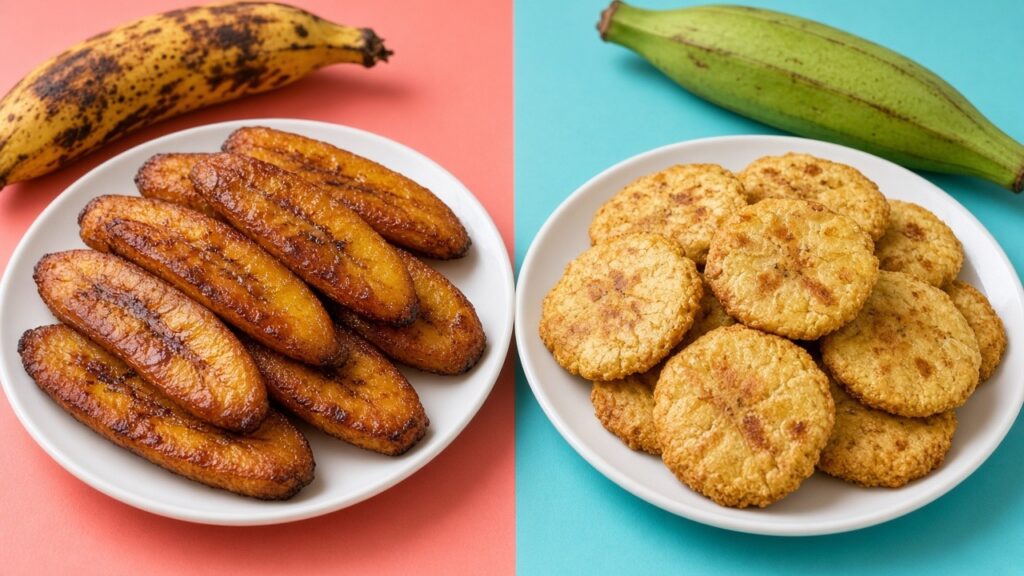
Sweet plantains and crunchy plantains can start with the same fruit and end up behaving like completely different side dishes. The difference is not a special seasoning: it is mainly ripeness and the way they are cooked.
Maduros are ripe plantains, usually fried once until soft, sweet and caramelized. Tostones are green plantains fried, flattened and fried again until crisp and savory. In Panama, those twice-fried green plantains are commonly called patacones. Choose maduros for sweetness and patacones or tostones for crunch.
Here is how to buy the right plantain, tell which preparation belongs with your meal, and avoid turning the wrong stage of ripeness into a frustrating pan of food.
Maduros vs tostones at a glance
| Feature | Maduros | Tostones / patacones |
|---|---|---|
| Starting plantain | Very ripe; yellow with many black patches, sometimes mostly black | Green and firm |
| Main flavor | Naturally sweet | Mild, starchy and savory |
| Texture | Soft center, caramelized outside | Crisp outside, firm-tender center |
| Typical shape | Diagonal slices or lengthwise pieces | Flattened rounds |
| Frying method | Usually one fry | First fry, flatten, second fry |
| Seasoning | Often no more than a little salt | Usually salt; sauces optional |
| Best role | Sweet contrast to beans, rice, stews or grilled food | Crunchy side, dipper or base for toppings |
Maduros literally means “ripe.” Tostones refers to the prepared green plantain rounds. Names vary across Latin America and the Caribbean, so you may see plátanos maduros, tajadas, plátanos fritos or patacones on menus. Read the description if you are unsure whether the kitchen means sweet slices or savory rounds.
Are they the same kind of plantain?
They can be. A plantain changes as it ripens: its starches convert to sugars, its flesh softens, and the peel goes from green through yellow to heavily darkened. That is why the same fruit can be used like a starchy side at one stage and a sweet side later.
Plantains are related to bananas, but a regular sweet banana is not a one-for-one substitute for either dish. A ripe dessert banana is generally softer and smaller and will not give a green-plantain patacón its structure.
Can you make maduros from green plantains?
Not the usual sweet, soft kind. Frying a green plantain once does not create the sweetness of a ripe one. Adding sugar changes the surface flavor but does not make the inside ripen. If your plantains are green today, make patacones or let them ripen before planning maduros.
Can you make tostones from ripe plantains?
You can flatten and cook a ripe slice, but it will be sweet and softer, may stick to the press, and will not give the same savory crunch. For classic tostones, buy green plantains. A yellow plantain that is still firm sits between the two styles and is less predictable for either result.
How to choose and ripen plantains
For patacones: choose firm, genuinely green fruit without large soft spots. A few superficial marks on the peel are not the same as damaged flesh. Use them while green if you want a crisp, starchy result.
For maduros: choose yellow plantains with abundant black patches and a little give when pressed gently. They should not be leaking, moldy or smell fermented. A dark peel is often a normal sign of ripeness, but it is not a reason to ignore spoilage.
If your plantains need time, leave them at room temperature and check daily. Ripening can take several days or longer depending on how green they are and the temperature of the room. A paper bag can help retain the fruit’s ripening gases; do not seal fruit in a damp plastic bag. An oven can soften a plantain, but it does not reproduce days of natural ripening and sweetness development.
Do not schedule a sweet-plantain dinner around a promise that hard green fruit will be ready by tomorrow. Buying the right stage is the most reliable shortcut.
How to peel green and ripe plantains
Trim both ends. For green plantains, make a shallow lengthwise slit through the thick peel, not deep into the flesh. Lift an edge with a thumb or the blunt side of a utensil and work the peel away in strips. You may need several lengthwise slits.
Green plantain sap can be sticky; a little oil on your hands can help with cleanup. Keep the fruit stable on a cutting board rather than forcing a knife toward your palm.
A ripe plantain is easier: slit the peel lengthwise and pull it away gently. Support very soft fruit so it does not break before you slice it.
A small-batch guide to maduros
Makes: about 4 side servings from 2 large ripe plantains. Time: about 20 minutes.
What you need
- 2 large very ripe plantains
- Neutral frying oil, enough for a shallow layer about ¼ inch deep
- A small pinch of salt, optional
How to cook them
- Peel the plantains and cut diagonal slices about ½ inch thick. Very thin slices can burn before you get a soft center.
- Heat the oil in a heavy skillet over medium heat, aiming around 325–350°F. Ripe fruit contains more sugar, so very hot oil can darken it too quickly.
- Lay slices in the oil away from you, in a single uncrowded layer. Fry roughly 2–4 minutes per side, adjusting heat as needed, until deeply golden with caramelized patches and a soft center.
- Turn gently with a thin spatula or tongs. Drain and add a small pinch of salt if you like the sweet-savory contrast. Serve warm.
The color should be attractive brown caramelization, not a uniformly black, bitter crust. If the surface burns almost immediately, lower the heat. If the slices are pale and greasy, the oil may be too cool or the pan too crowded.
You do not need added sugar for properly ripe plantains. Cinnamon, butter and sugar belong to some other preparations, including dessert-style dishes, but they are not required for simple fried maduros.
A small-batch guide to tostones or patacones
Makes: about 4 side servings from 2 large green plantains. Time: about 30 minutes.
What you need
- 2 large green plantains
- Neutral frying oil, enough for about ½ inch in a heavy skillet with plenty of headroom
- Fine salt, to taste
- A plantain press, or a flat-bottomed sturdy plate and a cutting board
How to cook them
- Peel and cut the plantains crosswise into pieces about 1 inch thick. Pat them dry.
- Heat the oil to about 325°F. Fry the pieces in batches for approximately 3–5 minutes per side, turning until pale golden and tender enough to flatten. They should not yet have a hard, dark crust.
- Lift them out and drain briefly. While still warm, put one piece cut-side down in a press or between two lightly oiled flat surfaces. Flatten gently to about ¼–⅜ inch thick. Do not smash so hard that it disintegrates.
- Bring the oil to about 350–375°F. Return the flattened pieces in batches and fry roughly 1–2 minutes per side until crisp and golden.
- Drain on a rack or briefly on paper towels. Salt immediately and serve promptly.
Thickness, plantain size and the amount of oil change the timing. Use tenderness after the first fry and crispness after the second as the final checks. Never leave frying oil unattended, and keep water away from the hot pan.
For more on the Panamanian name and preparation, use my patacones and tostones guide. The quick method here is intended to show why the two plantain sides turn out differently.
Why are my tostones hard in the middle?
They were probably not tender enough after the first fry, or the slices were too thick after pressing. The second fry should mainly crisp a piece whose center has already softened. If the initial pieces fight the press and crack into hard fragments, give the remaining pieces more time in the first fry.
Why are they greasy or soggy?
Oil that cooled too much, crowded batches and stacking hot pieces can all work against you. Let the oil recover between batches, drain on a rack, and avoid covering a crisp pile tightly while steam is still escaping.
Some cooks dip pressed plantains in seasoned water before frying again. That is not necessary for this basic method, and carrying water into hot oil creates a splatter risk. Seasoning after frying is simpler for a beginner.
Can you bake or air-fry them instead?
Yes, but the result is an adaptation rather than an identical substitute for frying. Ripe plantain slices generally adapt more easily because the goal is a tender center and browned surface. Lightly oil them and cook in a single layer, checking and turning as they brown; the exact setting depends on your appliance and slice thickness.
For green plantains, keep the same two-stage logic: cook the pieces until soft enough to flatten, flatten them, then oil lightly and cook again to crisp. If you skip the softening stage and simply blast thick green slices with heat, they can become dry and hard.
Follow your air fryer’s instructions, avoid aerosol products it warns against, and do not call an air-fried version oil-free if you brushed it with oil. Different methods offer different textures; none needs a moral label.
What goes with maduros, and what goes with tostones?
Maduros are wonderful when a plate needs sweetness: rice and beans, braised meat, salty cheese or a savory chicken dish. Their soft texture is a contrast rather than a crunchy element.
Patacones fit wherever you want crunch: alongside fried fish, with ceviche-style dishes, with a stew, or as a base for a small topping. Garlic sauce, a fresh salsa or a little hot sauce can work, but serve wet toppings at the last moment.
For a stew that can go either way, try Panamanian carne guisada. The maduros give a sweet contrast to the gravy; patacones give you something crisp beside the bowl. You can also browse the Panamanian food guide to build a larger meal.
Are maduros or tostones healthier?
Neither name is a nutrition guarantee. Ripeness changes the balance of starch and sugars, while portion size, absorbed oil, toppings and cooking method affect the finished dish. Both are starchy sides; neither becomes low-carbohydrate just because it is savory.
If you want less frying oil, try a lightly oiled baked version and choose a portion that suits your meal. For specific dietary or blood-sugar needs, use an appropriate nutrition resource and personalized clinical advice rather than treating “green” or “natural” as a free pass.
Make ahead, storage and reheating
Maduros are more forgiving to make ahead because softness is part of their appeal. Patacones taste best just after their second fry. If preparing them for guests, complete the first fry and flattening ahead of the final cooking, then handle and refrigerate the cooked pieces promptly rather than leaving them out all afternoon.
Refrigerate cooked leftovers in a covered container within two hours, or one hour above 90°F, and use within 3–4 days. Reheat leftovers to 165°F throughout. An oven or air fryer can restore more crispness to patacones than a covered microwave, though they may be drier than fresh. Maduros can be reheated gently in a skillet or oven; watch their sugary edges for burning.
Freeze cooked pieces separately on a tray before bagging so they do not become one solid block. Texture changes are likely, especially for ripe slices. For a safety reference, see USDA guidance on leftovers.
Plantain FAQ
Are patacones and tostones exactly the same?
They commonly refer to the same twice-fried, flattened green plantain preparation. The usual name and details vary by region and kitchen. In Panama, patacones is the name you will frequently hear.
Are tajadas the same as maduros?
Tajadas means slices and often refers to sliced ripe plantains in a food context. It describes the cut, while maduros describes ripeness. A menu may use either term for a sweet fried plantain side, so check the description.
Can I use the same oil for both?
You can use a suitable neutral frying oil for either preparation, but crumbs and caramelized residue from ripe plantains can burn in later batches. Strain and manage frying oil appropriately, and discard oil that is smoking, rancid or badly degraded. Do not assume clean-looking oil stays suitable forever.
Do I need a special tostonera?
No. A stable flat-bottomed plate or another sturdy flat tool can press a warm piece on a board. Apply even pressure and keep your hands away from the hot plantain. A dedicated press is convenient, not essential.
Should I choose black or green plantains at the store?
Choose according to dinner, not a universal idea of “best.” Green and firm is right for crisp patacones. Very ripe yellow-and-black is right for sweet maduros. That one choice solves most of the confusion before the pan even comes out.