
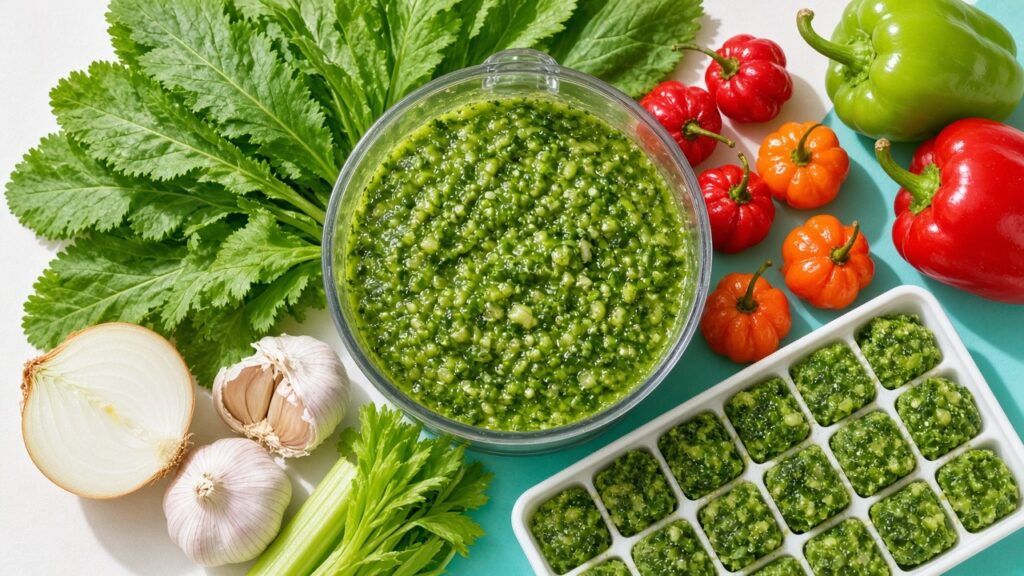
If you open a Panamanian freezer, there’s a good chance you’ll find a tray or bag of green cubes. That’s sofrito: culantro, ají dulce, onion, garlic and sweet pepper blended or chopped together, ready to drop into a pot of rice, beans or sancocho. It’s the reason home cooking tastes like home cooking, and making a batch on a Sunday saves you twenty minutes of chopping every weeknight.
Panamanian sofrito is a fresh, herb-heavy seasoning base made from culantro, ají dulce (sweet chili peppers), onion, garlic, sweet bell pepper and often celery, chopped or blended with a little oil. It’s used raw or briefly cooked as the first step in arroz con pollo, sancocho, beans, stews and picadillo. It keeps about 5 days in the refrigerator and 3 to 6 months frozen in ice-cube trays.
Below: how Panamanian sofrito compares with Puerto Rican, recaíto and Spanish sofrito, the ingredients and US substitutes, blender vs knife, raw vs cooked, storage, how to use it and a recipe card.
What is Panamanian sofrito?
In Spanish, sofreír means to fry lightly, and sofrito is the mixture of aromatics you fry first to flavor a dish. Almost every Latin American and Mediterranean cuisine has a version. In Panama, the emphasis is on culantro, the long, serrated, strongly aromatic herb that defines dishes like sancocho, plus ají dulce, small peppers that look like habaneros but carry floral sweetness without much heat.
Many Panamanian cooks don’t measure sofrito or even call it by name; they just “make the seasoning” before cooking. Some keep a jar ready-blended, others chop it fresh each time. The flavor goal is green, fresh and savory, not tomato-forward.
Panamanian sofrito vs Puerto Rican sofrito vs recaíto vs Spanish sofrito
| Style | Key herbs | Peppers | Tomato? | Texture | Typical uses |
|---|---|---|---|---|---|
| Panamanian sofrito | Culantro, sometimes cilantro | Ají dulce, sweet bell pepper | Rarely; sometimes a little tomato or tomato paste is added to a dish later | Chopped or coarsely blended | Rice, sancocho, beans, guisados, picadillo |
| Puerto Rican sofrito | Culantro (recao) and cilantro | Ají dulce, cubanelle | Usually not, though some add it | Blended to a coarse paste | Rice, beans, stews, almost everything |
| Recaíto | Mostly culantro (recao), cilantro | Little or no ají dulce or bell pepper | No | Smooth green paste | A culantro-forward variant of Puerto Rican sofrito |
| Spanish sofrito | No green herbs as the base | Sometimes sweet red pepper | Yes, grated tomato is central | Slow-cooked into a jammy sauce | Paella, stews, sauces |
| Dominican sazón (sofrito) | Cilantro, oregano | Cubanelle, bell pepper | Often tomato paste | Blended | Habichuelas, stews, rice |
So Panamanian and Puerto Rican sofrito are close cousins. Recaíto is a narrower culantro paste, and Spanish sofrito is a cooked tomato-and-onion base that tastes very different.
Ingredients
These are the building blocks. Families vary the proportions, and that’s exactly how it should be.
- Culantro (1 bunch, about 20 leaves). The star. Strong, earthy, more intense than cilantro. Learn the difference in culantro vs cilantro.
- Ají dulce (8 to 10). Sweet, aromatic and mostly heat-free. Remove the seeds and stem.
- Onion (1 large). Yellow or white.
- Garlic (1 head, about 10 cloves). Sofrito is generous with garlic.
- Sweet bell pepper (1 green and ½ red). Green is traditional; red adds sweetness and color.
- Celery (1 to 2 stalks). Common in Panamanian kitchens for an extra savory note; optional.
- Cilantro (a small handful), optional. Some cooks add it for brightness.
- Neutral oil (2 to 3 tablespoons). Helps blending and preserves color in the freezer.
- Salt (optional, 1 teaspoon). Many cooks leave sofrito unsalted so they can season each dish separately.
Substitutes in the US
- Culantro: look in Latin, Caribbean and Southeast Asian grocers, where it may be labeled recao, sawtooth coriander or ngò gai. In Chicago, see where to buy culantro. If you truly can’t find it, use about three times as much cilantro, stems included; the flavor will be lighter.
- Ají dulce: often sold in Latin groceries, sometimes frozen. Substitute 1 cubanelle pepper or ½ extra red bell pepper plus a tiny piece of seeded habanero for the floral note, used sparingly. Don’t substitute whole habaneros; they’re hot.
- Celery: skip or use a pinch of celery seed.
- Frozen culantro and frozen ají dulce work well in sofrito because you’re blending them anyway.
How to make sofrito: blender vs knife
Food processor or blender method (best for batches)
- Rinse the culantro well; grit hides at the base of the leaves. Pat dry.
- Roughly chop the onion, peppers and celery. Peel the garlic. Seed the ají dulce.
- Put the onion and garlic in the processor first, then the peppers, then the herbs on top.
- Pulse in short bursts, scraping the sides, until finely chopped. Add the oil while pulsing.
- For a coarse, spoonable texture, stop before it becomes a smooth purée. A blender gives a smoother, wetter paste; add a tablespoon of water only if it won’t move.
Knife method (best for one dish)
Finely dice the onion, peppers and celery, mince the garlic and chop the culantro last. Hand-chopped sofrito has more distinct texture and browns better in the pot because it holds less water. It’s what many cooks do daily for a single pot of rice.
| Food processor / blender | Knife | |
|---|---|---|
| Time for a big batch | About 15 minutes | 30+ minutes |
| Texture | Fine paste, wetter | Distinct bits, drier |
| Browning in the pot | Steams first, then fries | Fries quickly |
| Best for | Freezer stock | Same-day cooking |
Raw sofrito vs cooked sofrito
Raw sofrito is what you store. When you cook with it, you sauté it in oil for 3 to 5 minutes before adding rice, meat or liquid. This “frying” step is the sofrito step and gives deeper flavor.
Cooked sofrito is sautéed before storing, usually with a little oil, until soft and fragrant. It keeps slightly longer and you can stir it straight into beans or soups. It loses some of culantro’s fresh punch, so many cooks prefer raw for the freezer and add fresh culantro at the end of a dish.
How to store sofrito
Fridge
Keep raw sofrito in a clean, tightly closed glass jar. A thin layer of oil on top helps keep it from darkening. Use within about 5 days; cooked sofrito, within about a week. Always use a clean spoon. Throw it out if it smells sour, fizzy or fermented, or if you see mold.
Freezing in cubes
This is the Panamanian-in-Chicago method I swear by.
- Spoon the sofrito into ice-cube trays, about 2 tablespoons per cube.
- Freeze until solid, 4 to 6 hours.
- Pop the cubes into a labeled freezer bag, press out the air, and freeze.
- Drop frozen cubes straight into hot oil; no thawing needed.
Two cubes are about ¼ cup, a good amount for a pot of rice serving four.
How long it lasts
| Storage | Raw sofrito | Cooked sofrito |
|---|---|---|
| Refrigerator | About 5 days | About 7 days |
| Freezer | 3 to 6 months for best flavor | 3 to 6 months |
| Room temperature | Don’t store it out; garlic in oil should be refrigerated | Same |
Garlic and herbs in oil must be refrigerated or frozen. Never keep sofrito in oil at room temperature.
How to use sofrito
- Rice: sauté 2 cubes in oil before adding the rice. It’s the base for arroz con pollo and arroz con guandú.
- Sancocho: rub some on the chicken before it simmers and add more to the pot. See my Panamanian sancocho recipe.
- Beans and lentils: fry 2 to 3 cubes and stir into red beans, black beans or lentejas as they finish.
- Picadillo and guisados: start the Panamanian picadillo or a beef stew by browning sofrito before the meat.
- Eggs: a spoonful in scrambled eggs makes a quick Panamanian-style breakfast.
- Marinades: mix with lime, oregano and salt for chicken or pork.
How much sofrito to use
| Dish | Serves | Sofrito (about 2 tablespoons per cube) |
|---|---|---|
| Pot of white rice or arroz con guandú | 4 to 6 | 2 to 3 cubes (¼ to ⅓ cup) |
| Arroz con pollo | 6 to 8 | 4 cubes (½ cup), plus some to season the chicken |
| Sancocho | 6 to 8 | 3 to 4 cubes, plus fresh culantro at the end |
| Pot of beans or lentils | 6 | 2 to 3 cubes |
| Picadillo or guisado (1 to 2 lb meat) | 4 to 6 | 3 cubes |
| Scrambled eggs | 2 | 1 tablespoon |
Start with these amounts, then adjust. Sofrito is about balance, so taste the finished dish before adding more.
Troubleshooting
- Sofrito turned brown or dull in the fridge: that’s oxidation. Press plastic wrap onto the surface or float a thin layer of oil on top; freeze anything you won’t use within a few days.
- Too watery: the onion released a lot of liquid, or you added water to blend. Pulse rather than purée, and cook it a minute longer in the pot so the water evaporates before adding rice.
- Bitter or harsh: raw garlic and green pepper can taste sharp. Always fry sofrito in oil for a few minutes before adding liquid; the harshness cooks out.
- Not “Panamanian” enough: you probably need more culantro or real ají dulce. Cilantro alone gives a lighter, brighter flavor.
- Freezer burn: cubes left in an open tray dry out. Bag them as soon as they’re solid and squeeze out the air.
Recipe card: Panamanian sofrito
Makes: about 3 cups (roughly 24 cubes). Time: 15 minutes, plus freezing.
Ingredients
- 1 bunch culantro (about 20 leaves), rinsed
- 8 to 10 ají dulce peppers, stemmed and seeded
- 1 large yellow or white onion, quartered
- 1 head garlic (about 10 cloves), peeled
- 1 green bell pepper and ½ red bell pepper, seeded and chopped
- 1 to 2 celery stalks, chopped (optional)
- Small handful cilantro (optional)
- 2 to 3 tablespoons neutral oil
- 1 teaspoon salt (optional)
Instructions
- Pulse the onion and garlic in a food processor until chopped.
- Add the peppers, ají dulce and celery; pulse until fine.
- Add the culantro and cilantro; pulse while drizzling in the oil until you have a coarse paste.
- Use right away, refrigerate in a jar up to 5 days, or freeze in ice-cube trays and bag the cubes.
FAQ
Can I freeze sofrito?
Yes. Freezing is the best way to keep it. Portion it into ice-cube trays, freeze, then store the cubes in a sealed bag for 3 to 6 months. Add frozen cubes straight to hot oil.
How long does sofrito keep in the fridge?
About 5 days for raw sofrito in a clean, sealed jar, and about a week for cooked. Discard it if it smells sour or fizzy, or shows mold. Don’t store it at room temperature.
Is Panamanian sofrito the same as Puerto Rican recaíto?
Not quite. Recaíto is a culantro-dominant green paste with little or no pepper. Panamanian sofrito uses culantro too, but with more onion, garlic, ají dulce and bell pepper, so it’s sweeter and more rounded. They’re close enough to swap in a pinch.
What can I use instead of culantro?
Cilantro is the closest substitute; use about three times as much, stems included. The flavor will be lighter and brighter. Frozen culantro from a Latin market is a better option when available.
What dishes use sofrito?
Almost all savory Panamanian home cooking: arroz con pollo, arroz con guandú, sancocho, beans and lentils, guisados, picadillo, ropa vieja and even scrambled eggs. If a recipe starts with onion, garlic and peppers, sofrito can take their place.