
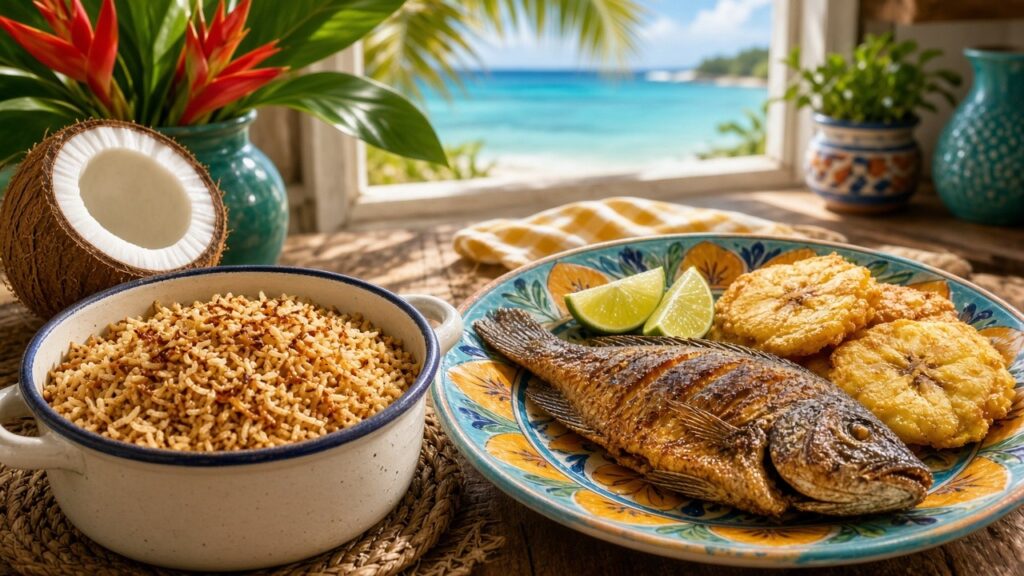
On Panama’s Caribbean side, a plate of fried fish isn’t complete without coconut rice. It’s rich but not sweet, lightly salty, and the best versions have a golden-brown color and a crispy layer stuck to the bottom of the pot that everyone fights over.
Panamanian arroz con coco is long-grain rice cooked in coconut milk with salt (and sometimes a little sugar). For the classic brown “titote” version, simmer coconut milk until the fat separates and the solids caramelize to golden brown, then add water and rice. Use about 1 can (13.5 oz) of full-fat coconut milk plus water to make 2¼ cups liquid per 1½ cups rice, simmer covered on low 20 minutes and let it rest 10. Serve with fried fish, patacones and salad.
What is Panamanian arroz con coco?
Arroz con coco means “rice with coconut.” It’s a staple of Afro-Panamanian and Caribbean coastal cooking in Colón, Bocas del Toro and the Guna Yala region, and it’s now eaten all over the country. It goes with seafood, fried fish, chicken and beans.
Arroz con coco vs arroz con guandú y coco
| Dish | What’s in it | When it’s served |
|---|---|---|
| Arroz con coco (white) | Rice, coconut milk, salt | Everyday, with fish |
| Arroz con coco titote (brown) | Rice cooked in caramelized coconut | Special meals, coastal style |
| Arroz con guandú y coco | Rice, pigeon peas, coconut milk | Christmas and holidays |
| Rice and peas (Caribbean) | Rice, kidney beans, coconut, thyme | Afro-Caribbean Panama, Jamaica |
For the pigeon-pea version, see Panamanian arroz con guandú.
Arroz con coco titote: the brown, caramelized version
Titote is the browned residue you get when you cook coconut milk down until the water evaporates, the oil separates and the milk solids toast. It gives the rice a nutty, toasty flavor and a light caramel color without needing sugar. It’s the version many Panamanians from the coast consider the real thing.
Ingredients
Serves 6
- 1½ cups (300 g) long-grain white rice
- 1 can (13.5 oz/400 ml) full-fat coconut milk
- Water as needed (see ratio below)
- 1 teaspoon salt
- 1 to 2 teaspoons sugar (optional, for titote)
- 1 tablespoon oil (optional, for white version)
Canned coconut milk vs fresh coconut
Traditionally, cooks grate a mature brown coconut, mix the flesh with hot water and squeeze it to extract milk. Fresh coconut milk tastes cleaner and sweeter, and it makes the best titote. Canned full-fat coconut milk is a perfectly good shortcut. Avoid “coconut beverage” cartons, which are diluted and won’t caramelize.
To make fresh coconut milk: grate the flesh of 1 mature coconut, blend with 2 cups hot water, and squeeze through cheesecloth. Repeat with 1 more cup water for a second, thinner extraction.
Long-grain rice
Long-grain white rice gives separate, fluffy grains. Rinse it until the water runs mostly clear to remove surface starch. Medium-grain makes stickier rice; parboiled rice works but needs more liquid.
Salt, sugar or both
Panamanian arroz con coco is a savory side, not dessert. Salt is essential. A teaspoon or two of sugar helps titote brown faster and rounds the flavor, but the rice shouldn’t taste sweet.
Rice-to-coconut-milk ratio
| Rice | Full-fat coconut milk | Extra water | Total liquid |
|---|---|---|---|
| 1 cup | ¾ can (about 1¼ cups) | ¼ cup | 1½ cups |
| 1½ cups | 1 can (1¾ cups) | ½ cup | 2¼ cups |
| 2 cups | 1½ cans | ½ cup | 3 cups |
Rule of thumb: 1½ cups total liquid per 1 cup long-grain rice. Coconut milk is thicker than water, so using all coconut milk can make rice gummy; mixing in some water helps.
How to make it step by step
Making titote
- Pour the coconut milk into a heavy pot (cast iron or heavy-bottomed aluminum, called a caldero).
- Simmer over medium heat, stirring occasionally, for 15 to 25 minutes. The water evaporates, the milk thickens, then the oil separates.
- Keep stirring as the solids turn from white to golden to light brown. Add the sugar now if using. Stop at a deep golden-brown, like peanut butter. If it goes dark brown or smells burnt, start over; burnt titote is bitter.
Cooking the rice
- Carefully add the water (it will sputter) and salt, scraping up the browned bits. Measure the liquid: you need about 2¼ cups total for 1½ cups rice. Add water if needed.
- Bring to a boil, add the rinsed rice and stir once.
- Cook uncovered over medium until the liquid drops below the surface of the rice and small craters appear, about 5 to 7 minutes.
- Cover tightly, reduce heat to the lowest setting and cook 20 minutes without lifting the lid.
- Turn off the heat and rest 10 minutes. Fluff with a fork.
White version: skip the titote. Bring coconut milk, water, salt and oil to a boil, add rice and continue from step 6.
Cooking without burning
- Use a heavy pot; thin pots scorch coconut milk.
- Keep the heat at the lowest setting once covered.
- Don’t stir after covering; it releases starch and makes the bottom stick unevenly.
- A heat diffuser helps on strong gas burners.
Getting the pegao
Pegao is the crispy rice stuck to the bottom of the pot, a treat across Latin kitchens. For more pegao: after the 20 minutes, raise the heat to medium for 3 to 5 minutes without stirring. Listen for gentle crackling and smell for toastiness (not burning). Rest, scoop out the loose rice, then pry up the crispy layer.
Why it turns mushy (and how to fix it)
| Problem | Cause | Fix |
|---|---|---|
| Mushy, sticky | Too much liquid, rice not rinsed, stirred while cooking | Use the ratio; rinse; don’t stir |
| Hard in the center | Too little liquid or lid not tight | Sprinkle 2–3 tbsp hot water, cover, cook 5–10 min on low |
| Greasy | Too much coconut fat for the rice | Use part water; spread rice on a tray briefly |
| Burnt bottom | Heat too high, thin pot | Lower heat; use a heavy pot |
| Bland | Not enough salt | Salt the liquid until it tastes like mild soup |
With beans or guandú
Add 1 can drained pigeon peas or red kidney beans with the rice. Reduce water by about ¼ cup because canned beans add moisture. Add a sprig of thyme for a Caribbean “rice and peas” flavor.
What to serve with coconut rice
- Fried whole fish (pescado frito) with lime
- Patacones; see patacones vs tostones
- Ceviche as a starter; my Panamanian ceviche is the classic pairing
- Shrimp in coconut sauce or Caribbean-style stews
- Pollo guisado or red beans
- Simple cabbage or tomato salad with lime
Explore more Panamanian sides in the Panamanian food guide.
Storage and reheating
- Fridge: refrigerate within 1 hour of cooking (cooked rice can grow bacteria if left warm); keep up to 3 to 4 days in a covered container.
- Freezer: up to 2 months in flat freezer bags.
- Reheat: sprinkle with water, cover and microwave or steam until very hot throughout. Coconut rice can firm up when cold; the steam softens it.
Recipe card: Panamanian Arroz con Coco (Titote)
Prep: 5 minutes | Cook: 50 minutes (including titote) | Rest: 10 minutes | Serves: 6
Ingredients: 1½ cups long-grain rice, rinsed; 1 can (13.5 oz) full-fat coconut milk; about ½ cup water; 1 tsp salt; 1–2 tsp sugar (optional).
Instructions:
1. Simmer coconut milk in a heavy pot, stirring, 15–25 minutes until the oil separates and solids turn golden brown. Add sugar if using.
2. Add water and salt carefully; scrape the bottom. Total liquid should be about 2¼ cups.
3. Bring to a boil, add rice, cook uncovered until craters form (5–7 minutes).
4. Cover, cook on lowest heat 20 minutes. Rest 10 minutes, fluff and serve.
Arroz con coco at a glance
| Details | |
|---|---|
| Main ingredients | Long-grain white rice, coconut milk, water, salt, a little sugar (optional) |
| Signature step | Cooking the coconut milk down to titote, the brown caramelized bits |
| Texture | Fluffy, separate grains with a crisp pegao at the bottom |
| Flavor | Savory-sweet, nutty coconut |
| Served with | Fried fish, stews, beans, seafood |
| Region | Especially loved on the Caribbean coast (Colón and Bocas del Toro) and in Afro-Panamanian cooking |
Fresh coconut milk from scratch
If you can find a mature brown coconut, crack it, pry out the meat and blend about 2 cups of chopped coconut meat with 2 cups of hot water for 2 minutes. Strain through a cloth, squeezing hard. The first press is thick; blend the pulp again with more hot water for a thinner second press. Use the thick milk for titote and the thin milk as part of the cooking liquid. Fresh milk tastes lighter and more fragrant than canned.
Panamanian coconut dishes to try next
- Arroz con guandú cooked with coconut milk, the Christmas classic.
- Arroz con guandú de lata for a pantry shortcut.
- Panamanian rice and beans, sometimes cooked with coconut.
- Panamanian desserts, several made with coconut.
Pairing ideas
| Main | Why it works |
|---|---|
| Fried whole fish or fish fillets | The classic Caribbean-coast plate |
| Panamanian ceviche | Cool, tangy contrast to rich rice |
| Pollo guisado | The sauce soaks into the rice |
| Bacalao | Salty cod balances the sweetness |
| Stewed beans or lentils | A filling weeknight plate |
Scaling the recipe
The rice-to-liquid ratio stays the same when you double it, but use a wider pot so the layer of rice isn’t too deep, and add 5 to 10 minutes to the covered cooking time. A very full pot tends to cook unevenly and burn on the bottom before the top is done.
Rice cooker method in brief
Make the titote in a skillet on the stove first, then scrape it into the rice cooker with the rinsed rice, the rest of the coconut milk, water and salt. Stir once and use the regular white rice setting. You’ll lose most of the pegao, but the flavor stays.
FAQ
Is Panamanian coconut rice sweet?
No. It’s savory and rich, with only a hint of natural sweetness from the coconut (and a small optional pinch of sugar in titote).
Can I use light coconut milk?
Yes for the white version, though it will be less rich. Light coconut milk doesn’t have enough fat to make good titote.
Can I make it in a rice cooker?
Yes, for the white version. Add rinsed rice, coconut milk, water and salt using the same total liquid, stir once and cook on the white rice setting. For titote, make the caramelized coconut in a pan first, then transfer it with the water to the rice cooker.
Can I use coconut cream?
Dilute it: about ½ cup coconut cream plus 1¼ cups water replaces one can of coconut milk.
Why didn’t my coconut milk separate?
Some canned brands contain stabilizers that slow separation. Keep simmering, or try a brand with only coconut and water on the label.
Arroz con coco proves that a pot of rice can be the star of the table. Take your time with the titote, keep the lid on, and save the pegao for yourself.