
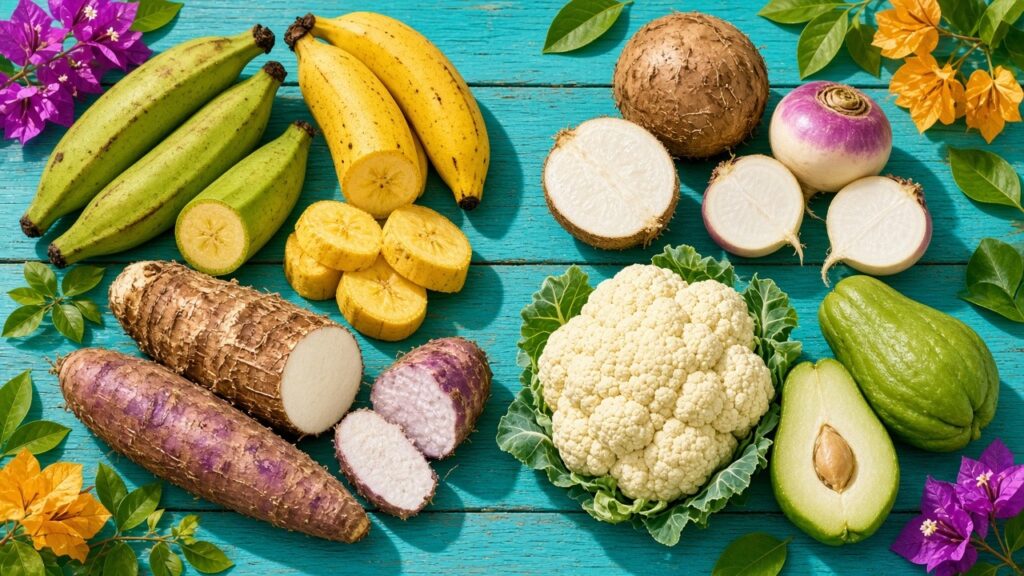
Plantains, yuca and ñame are the backbone of Panamanian cooking: patacones with fried fish, yuca in sancocho, ñame thickening a Sunday soup. If you’re eating keto, it’s worth knowing exactly where these roots land and what you can use instead without losing the flavors you love.
No, plantains are not keto. One cup of raw sliced plantain has roughly 44 grams of net carbs, and green and ripe plantains are similar in total carbs (green is mostly starch, ripe is mostly sugar). Yuca (cassava), ñame (yam) and otoe (taro) are also high-carb at roughly 22 to 36 grams of net carbs per 100 grams. Low-carb swaps that work in Panamanian dishes include jicama, turnip, cauliflower, chayote, radish and celery root.
Carb values below come from USDA FoodData Central figures for raw foods, rounded. Actual values vary with ripeness, variety and cooking. This is cooking guidance, not medical advice; use your own targets.
Are plantains keto? Net carbs per cup
| Food (raw) | Net carbs per 100 g (approx.) | Net carbs per cup sliced/cubed (approx.) |
|---|---|---|
| Plantain | ~30 g | ~44 g |
| Yuca (cassava) | ~36 g | ~75 g |
| Ñame (yam) | ~24 g | ~36 g |
| Otoe / taro | ~22 g | ~23 g (per ⅔ cup) |
| Potato (for comparison) | ~15 g | ~23 g |
| Banana (for comparison) | ~20 g | ~30 g |
For most people on a standard keto plan (often around 20 to 50 grams of net carbs a day), a single serving of any of these can use up most or all of a day’s carbs.
Green vs yellow vs ripe plantains
As plantains ripen, their starch converts to sugar. The total carbohydrate stays in a similar range; what changes is the type.
| Ripeness | Peel | Carbs mostly | Taste | Used for |
|---|---|---|---|---|
| Green | Green, firm | Starch (including resistant starch) | Savory, potato-like | Patacones/tostones, chips |
| Yellow | Yellow with some black | Mix of starch and sugar | Mildly sweet | Boiled, mashed |
| Ripe (black) | Mostly black | Sugar | Sweet, soft | Maduros, tajadas |
Some people point to resistant starch in green plantains as a reason they’re “keto-friendly.” Resistant starch does behave differently from regular starch, and cooking then cooling increases it somewhat, but green plantain still contains a lot of digestible carbohydrate. It isn’t a keto food. For the difference in the kitchen, see maduros vs tostones.
Tostones, patacones, maduros and plantain chips on keto
- Patacones / tostones: twice-fried green plantain. A typical side of 4 to 6 pieces from one plantain can contain 40+ grams of net carbs. See patacones vs tostones.
- Maduros / tajadas: fried ripe plantain; similar carbs, plus they absorb oil.
- Plantain chips: about 60 grams of carbs per 100 grams, because the water is removed. A small 1-ounce bag is roughly 15 to 18 grams.
- Mofongo: mashed fried plantain; very high in carbs.
If you choose to include a little plantain occasionally, measure it. Two thin tostones are a very different number than a plateful.
Is yuca keto? Is ñame keto? Is otoe keto?
Yuca: no. It’s one of the highest-carb roots, around 36 grams of net carbs per 100 grams. Yuca frita and carimañolas are off a strict keto plan.
Ñame: no, though somewhat lower than yuca. It still adds roughly 24 grams per 100 grams to sancocho. Learn the difference between the two in ñame vs yuca.
Otoe (taro): no, around 22 grams per 100 grams.
Malanga: similar to taro; high-carb.
Low-carb swaps I use
| Swap | Net carbs per 100 g (approx.) | Replaces | Best use | Notes |
|---|---|---|---|---|
| Jicama | ~4 g | Green plantain, yuca | “Tostones,” fries, crunchy sides | Stays crisp; needs longer cooking to soften |
| Turnip | ~5 g | Ñame, potato | Soups, stews, roasted | Peppery raw, mild when cooked |
| Cauliflower | ~3 g | Rice, mashed roots | Soups, “rice,” mash | Absorbs flavor well |
| Chayote | ~3 g | Ñame, otoe | Sancocho, stews | Mild; very Latin-pantry friendly |
| Radish | ~2 g | Potato | Stews, roasted | Loses bite when cooked |
| Celery root | ~7 g | Ñame, yuca | Soups, mash | Earthy; slightly higher carb |
| Kohlrabi | ~3 g | Potato | Roasted, stews | Sweet and mild |
Jicama “tostones”
Peel jicama and cut into ½-inch rounds. Simmer in salted water 15 to 20 minutes to soften slightly, pat dry, then pan-fry in oil until golden on both sides. Season with salt and garlic. They won’t be starchy like real patacones, but they deliver crunch, salt and a vehicle for Panamanian hot sauce or ceviche.
Turnip and chayote in sancocho
Cube turnip and chayote and add them to the pot in place of ñame and yuca for the last 20 to 25 minutes. The broth won’t thicken the way ñame makes it; stir in ¼ teaspoon xanthan gum or a spoon of mashed cauliflower if you want body.
How to keep Panamanian flavor without the roots
The roots carry texture, but most of the flavor in Panamanian cooking comes from elsewhere:
- Culantro, the signature herb. See culantro vs cilantro.
- Sofrito: onion, garlic, ají dulce, peppers.
- Achiote for color.
- Bone-in meats for rich broth.
- Lime and hot sauce at the table.
Keep all of those, swap the starch, and the dish still tastes like home. Keto versions of other Panamanian dishes are on the site, including keto picadillo, keto empanadas and keto arroz con pollo.
Cooking tips so the swaps actually work
- Jicama needs time. It stays crunchy even after boiling. Parboil before frying, or roast at 425°F (220°C) for 35 to 45 minutes for a softer, fry-like texture.
- Turnips lose bitterness when cooked in broth. Add them to soups early enough to absorb flavor, about 20 to 25 minutes before serving.
- Chayote releases water. Salt and drain cubes for 10 minutes before adding to stews so the broth stays rich.
- Cauliflower turns mushy fast. Add florets to soups only for the last 8 to 10 minutes.
- Radishes mellow completely. Roasted or simmered, they lose their sharp bite and taste much like small potatoes.
- Season more than you think. Starchy roots soak up salt and fat; low-carb vegetables don’t, so finish with a squeeze of lime, culantro and a drizzle of olive oil.
A keto Panamanian plate, built from the pantry
A plate that feels like home without rice or roots:
- Protein: fried or grilled fish, carne guisada or pollo guisado (go easy on the potatoes)
- Side 1: jicama “patacones” or roasted radishes
- Side 2: cauliflower rice cooked with sofrito, achiote and culantro
- Fresh: sliced avocado, tomato and cucumber with lime
- Heat: a few drops of ají chombo sauce
It’s colorful, filling and recognizably Panamanian in flavor.
Carb comparison: traditional vs swap in common dishes
| Dish | Traditional starch | Approx. net carbs from starch per serving | Keto swap | Approx. net carbs from swap |
|---|---|---|---|---|
| Sancocho | Ñame, yuca (~150 g) | ~45 g | Turnip + chayote (~150 g) | ~6 g |
| Fried fish with patacones | 1 green plantain | ~55 g | Jicama “tostones” (150 g) | ~6 g |
| Carimañolas | Yuca dough | ~35 g each (est.) | Cauliflower-cheese dough | ~3–4 g each (est.) |
| Maduros side | 1 ripe plantain | ~55 g | Roasted butternut (small portion, not strict keto) | ~10 g per 100 g |
Plantain forms on keto at a glance
| Form | Keto fit | Why |
|---|---|---|
| Raw green plantain | Not keto | Very high in starch |
| Ripe (yellow or black) plantain | Not keto | Starch has turned to sugar |
| Tostones or patacones | Not keto | Fried green plantain; same starch, plus oil |
| Maduros | Not keto | Sweet and high in sugar |
| Plantain chips | Not keto | Concentrated carbs in a small portion |
| Plantain flour | Not keto | Concentrated starch |
| Jicama, chayote, turnip or eggplant swaps | Keto-friendly | Low net carbs, similar roles on the plate |
The differences between the classic fried plantain dishes are in patacones vs tostones and maduros vs tostones.
Keto swaps by role on the plate
| Plantain or root used as… | Keto swap | How to cook it |
|---|---|---|
| Crispy side (patacones) | Jicama, eggplant or zucchini rounds | Pan-fry or air-fry until golden, salt well |
| Sweet side (maduros) | Roasted butternut squash in small portions, or none | Roast with cinnamon and butter (higher carb than other swaps; keep it small) |
| Soup thickener (ñame, otoe) | Turnip, cauliflower, chayote | Simmer until tender; mash a few pieces into the broth |
| Mash (puré) | Cauliflower mash | Steam and blend with butter and garlic |
| Chips | Cheese crisps or pork rinds | Bake shredded cheese until crisp |
Panamanian keto recipes on this site
- Keto sancocho: chicken soup with turnip and chayote instead of ñame.
- Keto arroz con pollo: with cauliflower rice.
- Keto picadillo: Panamanian-style ground beef.
- Keto empanadas and keto tamales: fathead and almond-flour versions.
- Keto ceviche: naturally low carb.
- Best keto rice substitutes: for every rice dish.
- Dessert: keto flan and keto tres leches cake.
Eating at a Panamanian family table on keto
Fill your plate with the protein and sauce (pollo guisado, bistec picado, ropa vieja, fish), a salad or vegetables and avocado, and pass on the rice, plantains and roots. A spoonful of Panamanian hot sauce adds flavor without carbs. For the traditional versions of these dishes, see Panamanian food.
Why plantains are so high in carbs
Plantains are a starchy fruit. Green plantains are mostly starch, a portion of it resistant starch, and as they ripen that starch turns into sugar, which is why maduros taste sweet. Either way, a single serving of plantain uses up most or all of a strict keto day’s carb budget. Frying doesn’t remove carbs; it adds oil. Resistant starch gets a lot of attention online, but it doesn’t make a plantain keto, and cooking reduces some of it anyway.
If you follow a looser low-carb plan
Some people eat low carb rather than strict keto. If that’s you, a few thin patacones at a family meal may fit your day better than a full plate of rice. Plan the rest of the day’s meals around it, keep the portion small and pair it with protein and vegetables. Use the nutrition label or a nutrition database to check numbers for the size you actually eat.
FAQ
Is plantain flour keto?
No. Plantain flour is roughly 80 grams of carbs per 100 grams, more concentrated than fresh plantain because the water is removed. Almond flour, coconut flour and psyllium are the usual keto baking choices.
Are plantain chips keto?
No. They’re about 60 grams of carbs per 100 grams. Pork rinds or baked cheese crisps give a similar salty crunch.
How many net carbs are in green vs ripe plantains?
Similar total amounts, roughly 30 grams of net carbs per 100 grams raw. Green plantains are mostly starch; ripe plantains are mostly sugar.
Is yuca keto?
No. It’s one of the highest-carb roots, about 36 grams of net carbs per 100 grams.
What can I use instead of plantains on keto?
Jicama for crunchy, fried uses; turnip, chayote and cauliflower for boiled and mashed uses.
Is there any way to include plantains on keto?
Some people on less strict low-carb plans include a very small, measured portion occasionally. On standard keto, they’re usually left out.
The roots are where most of the carbs are. Keep the culantro, sofrito and slow-cooked meat, swap in jicama, turnip or chayote, and the Panamanian taste is still there.