
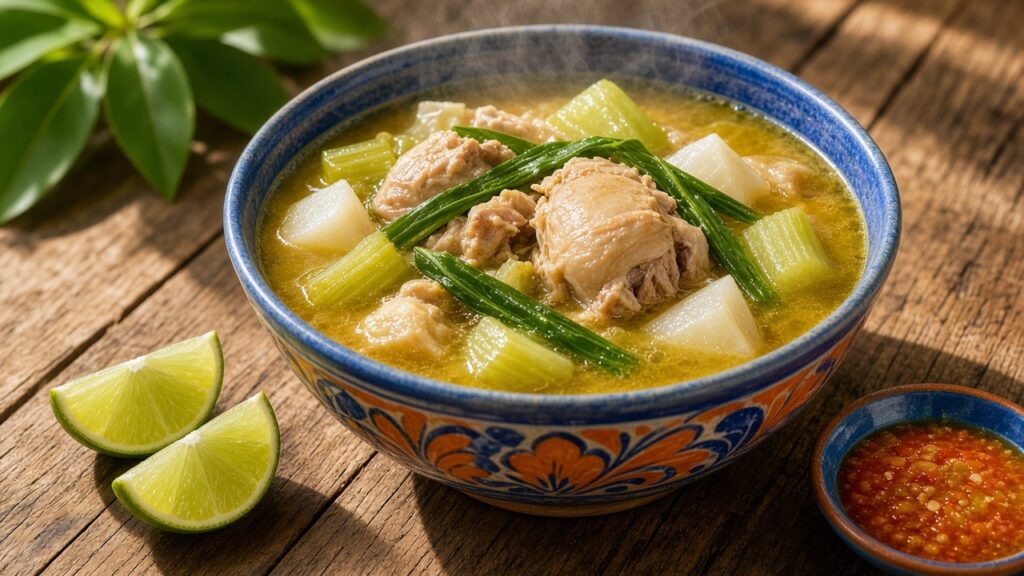
Sancocho is the national dish of Panama, the soup that fixes a long week, a cold Chicago night or a crowd at a family party. A real Panamanian sancocho de gallina is chicken, culantro, oregano and a long simmer, thickened by ñame. The starchy roots and corn are exactly what make it high in carbs, so a keto version keeps the chicken and herbs and replaces the roots with vegetables that hold up in a long simmer.
Traditional sancocho isn’t keto because ñame, yuca, otoe, corn and plantain add roughly 30 to 50 grams of net carbs per bowl. For a keto sancocho, keep the chicken, culantro, oregano, onion, garlic and broth, and replace the starchy roots with turnip, chayote, radish, celery root and a little celery. The result has about 7 to 8 grams of net carbs per generous bowl and tastes like sancocho because the flavor comes from the chicken and culantro, not the roots.
This is my low-carb version, made by someone who cooks the real one. For the classic, see my Panamanian sancocho recipe.
Is sancocho keto? Where the carbs come from
Panamanian sancocho starts with chicken (traditionally a stewing hen), culantro, onion, garlic, oregano and salt. Then comes ñame, the starchy tuber that dissolves at the edges and gives sancocho its signature body. Many families also add yuca, otoe, corn on the cob or green plantain. Those are the carb sources.
| Ingredient (per typical bowl) | Approx. amount | Approx. net carbs |
|---|---|---|
| Chicken, broth, culantro, oregano | 1 bowl | ~1–2 g |
| Ñame | ½ cup cooked | ~18–20 g |
| Yuca | ½ cup cooked | ~25 g |
| Otoe (taro/malanga) | ½ cup cooked | ~20 g |
| Corn on the cob | 1 short piece | ~10–12 g |
| Green plantain | ½ cup cooked | ~20 g |
| White rice on the side | ½ cup | ~22 g |
Ñame and yuca are different roots, and the difference matters to texture; my ñame vs yuca guide explains both. On keto, they all have to go.
What to keep and what to swap
| Keep | Swap |
|---|---|
| Chicken (bone-in thighs and drumsticks, or a whole hen) | Ñame → turnip and celery root |
| Culantro (lots of it) | Yuca → turnip or daikon radish |
| Onion, garlic, sweet pepper, in moderation | Otoe → chayote |
| Dried oregano | Corn → skip, or a small piece of baby corn if your plan allows |
| Salt, black pepper, chicken broth | Green plantain → skip |
| Hot sauce at the table | White rice → cauliflower rice or none |
Onion and pepper carry some carbs, so measure them rather than adding handfuls.
Low-carb root swaps
No vegetable acts exactly like ñame, but these four together cover most of what roots do in sancocho: chunky bites, a soft texture and a bit of body.
| Swap | Net carbs per ½ cup cooked (approx.) | Texture after simmering | What it brings |
|---|---|---|---|
| Turnip | ~2.5 g | Tender, slightly potato-like | The best all-purpose root swap; mild and sweet when cooked |
| Daikon or red radish | ~1.5 g | Soft, juicy, loses its bite | Absorbs broth; very low carb |
| Chayote | ~2 g | Tender but holds shape | Gentle squash flavor; familiar in Latin kitchens |
| Celery root (celeriac) | ~4 g | Dense and creamy | The closest thing to ñame’s body; mash a few pieces to thicken |
| Celery stalks | ~1 g | Soft | Aromatic depth |
My favorite combination is turnip plus chayote, with a few cubes of celery root for body. Radish is the cheapest and lowest in carbs but can taste slightly peppery if undercooked; simmer it until fully soft.
How to thicken without ñame
Ñame thickens sancocho as it falls apart. On keto, mash a few pieces of cooked celery root or turnip against the side of the pot and stir them in. For a silkier broth, whisk ¼ teaspoon xanthan gum into a ladle of hot broth, then stir it back in. Go slowly; too much makes the broth slick.
Keto sancocho ingredients
For 6 bowls:
- 3 pounds bone-in chicken thighs and drumsticks (or a whole stewing hen, cut up)
- 1 bunch culantro (about 12 to 15 leaves), plus more to finish
- 1 medium onion, chopped
- 4 garlic cloves, crushed
- ½ green or red sweet pepper, chopped
- 2 teaspoons dried oregano
- 2½ teaspoons salt, plus more to taste
- ½ teaspoon black pepper
- 10 cups water or low-sodium chicken broth
- 1 pound turnips, peeled and cut into 1½-inch chunks
- 2 chayotes, peeled, seeded and cut into 1½-inch chunks
- 8 ounces celery root, peeled and cut into 1-inch chunks
- 2 celery stalks, sliced
- Optional: 6 ounces daikon radish, peeled and cut into chunks
- Hot sauce and lime wedges, to serve
Can’t find culantro? It’s sold in many Latin and Asian groceries; see where to buy culantro in Chicago. Cilantro is the backup, but culantro and cilantro aren’t the same, and the flavor of sancocho depends on culantro.
How to make keto sancocho, step by step
- Season the chicken. Rub the chicken with the salt, pepper, oregano, crushed garlic and half the culantro, chopped. Let it sit 20 minutes, or refrigerate up to overnight.
- Brown lightly (optional). In a large pot, sear the chicken in a little oil over medium-high heat for a few minutes per side. Classic Panamanian sancocho often skips this, but it adds depth when there’s no ñame to enrich the broth.
- Sweat the aromatics. Add the onion, pepper and celery and cook 3 to 4 minutes until fragrant.
- Simmer the chicken. Add the water or broth and the remaining whole culantro leaves. Bring to a boil, skim any foam, then lower to a gentle simmer. Cook 45 minutes for thighs and drumsticks, or 1½ to 2 hours for a stewing hen, until tender.
- Add the celery root. It’s the densest swap, so it goes in first. Simmer 10 minutes.
- Add the turnip, chayote and radish. Simmer 20 to 25 minutes more, until all the vegetables are fork-tender but not falling apart.
- Thicken. Mash a few pieces of celery root and turnip against the pot and stir. Add xanthan gum only if you want a silkier broth.
- Finish. Taste and adjust the salt. Stir in a handful of freshly chopped culantro just before serving.
- Serve with hot sauce and lime. If you like, pull the chicken off the bone and return it to the pot so each bowl gets an even share.
How to keep the sancocho flavor
The carbs leave, but the flavor doesn’t have to.
- Use plenty of culantro. Add some at the start for depth and fresh culantro at the end for aroma.
- Use bone-in chicken. The bones, skin and connective tissue give body and flavor that boneless meat can’t.
- Don’t rush the simmer. Sancocho is a patient soup. Low and slow makes the broth taste rich.
- Season the chicken first. Marinating with oregano, garlic and culantro is what makes the meat taste like sancocho, not plain chicken soup.
- Salt at the end. Roots absorb salt differently; taste after the vegetables cook.
- Serve it Panamanian-style: with hot sauce at the table. My Panamanian hot sauce is the classic partner and is naturally low in carbs.
Storage and freezing
- Refrigerator: cool within 2 hours and refrigerate in covered containers for 3 to 4 days. For more detail, see how long sancocho is good in the fridge.
- Freezer: freeze for up to 3 months. Turnip and chayote soften a little after freezing but stay pleasant; radish turns watery, so leave it out of batches you plan to freeze.
- Thawing: overnight in the refrigerator, then reheat on the stove until it boils.
- Portioning tip: freeze in single-bowl containers with chicken in each one; it makes keto lunches easy.
Net carbs per bowl (calculated)
Calculated from standard nutrition values for each ingredient; net carbs equal total carbohydrates minus fiber.
| Ingredient (whole pot, 6 bowls) | Net carbs (approx.) |
|---|---|
| Chicken, broth, oregano, salt, pepper | 0 g |
| Onion, 1 medium | 8 g |
| Garlic, 4 cloves | 3.5 g |
| Sweet pepper, ½ | 2.5 g |
| Culantro | 0.5 g |
| Turnips, 1 lb | 16 g |
| Chayote, 2 | 6 g |
| Celery root, 8 oz | 11 g |
| Celery, 2 stalks | 1 g |
| Pot total | about 48.5 g |
| Per bowl (1 of 6) | about 8 g |
| Per bowl with half the onion and pepper | about 7 g |
Adding daikon radish adds about 3 grams to the whole pot. A regular sancocho bowl with ñame, yuca and corn lands somewhere around 35 to 55 grams of net carbs, so the keto version cuts the count dramatically. These are estimates for planning, not medical or nutritional advice.
Recipe card: keto sancocho
Yield: 6 large bowls. Prep: 25 minutes. Cook: about 1¼ hours (up to 2½ hours with a stewing hen). Net carbs: about 7 to 8 g per bowl.
Ingredients
- 3 lb bone-in chicken thighs and drumsticks
- 1 bunch culantro, divided
- 1 medium onion, chopped
- 4 garlic cloves, crushed
- ½ sweet pepper, chopped
- 2 tsp dried oregano
- 2½ tsp salt, ½ tsp black pepper
- 10 cups water or low-sodium broth
- 1 lb turnips, 2 chayotes, 8 oz celery root, 2 celery stalks, cut into chunks
- Optional: daikon radish, xanthan gum
- Hot sauce and lime to serve
Instructions
- Season the chicken with salt, pepper, oregano, garlic and chopped culantro; rest 20 minutes.
- Optional: sear in a large pot. Add onion, pepper and celery; cook 3 to 4 minutes.
- Add water and whole culantro leaves; boil, skim, then simmer 45 minutes.
- Add celery root; simmer 10 minutes. Add turnip, chayote and radish; simmer 20 to 25 minutes.
- Mash a few vegetable pieces to thicken. Adjust salt.
- Stir in fresh culantro and serve with hot sauce and lime.
Troubleshooting
- Broth tastes thin: the chicken was boneless or the simmer too short. Use bone-in pieces, simmer longer and season the chicken before it goes in.
- Vegetables turned to mush: they went in too early. Add celery root first and the softer turnip and chayote for only the last 20 to 25 minutes.
- Radish tastes sharp: it needs more time. Simmer until completely tender, or use more turnip instead.
- No culantro flavor: add a fresh handful at the end; long-simmered culantro gives depth but loses its bright aroma.
- Too salty after reheating: the broth reduced. Add a splash of water and a few fresh turnip pieces, and simmer 15 minutes.
FAQ
How many net carbs are in regular sancocho?
A typical bowl of traditional Panamanian sancocho with ñame, yuca and corn has roughly 35 to 55 grams of net carbs, depending on how many roots go into the pot and how big the bowl is. Served with white rice, it climbs higher.
Which vegetables can replace ñame, yuca and otoe?
Turnip is the best all-round substitute, chayote holds its shape and feels familiar in Latin cooking, celery root gives the most body, and radish is the lowest in carbs. A mix of turnip, chayote and celery root works best.
Is corn keto?
Not really. A short piece of corn on the cob has around 10 to 12 grams of net carbs, so most keto cooks skip it. If your daily target is more flexible, one small piece in the whole pot adds flavor for a couple of grams per bowl.
Can I still use culantro and chicken the same way?
Yes, and you should. Chicken, culantro, oregano, garlic and salt are naturally keto and carry most of the sancocho flavor. Season the chicken first, simmer it long, and finish with fresh culantro just as you would in the traditional recipe.
Can I freeze keto sancocho?
Yes, for up to 3 months. Turnip, chayote and celery root freeze well; radish gets watery, so leave it out of freezer batches. Thaw in the refrigerator and reheat until it boils.