
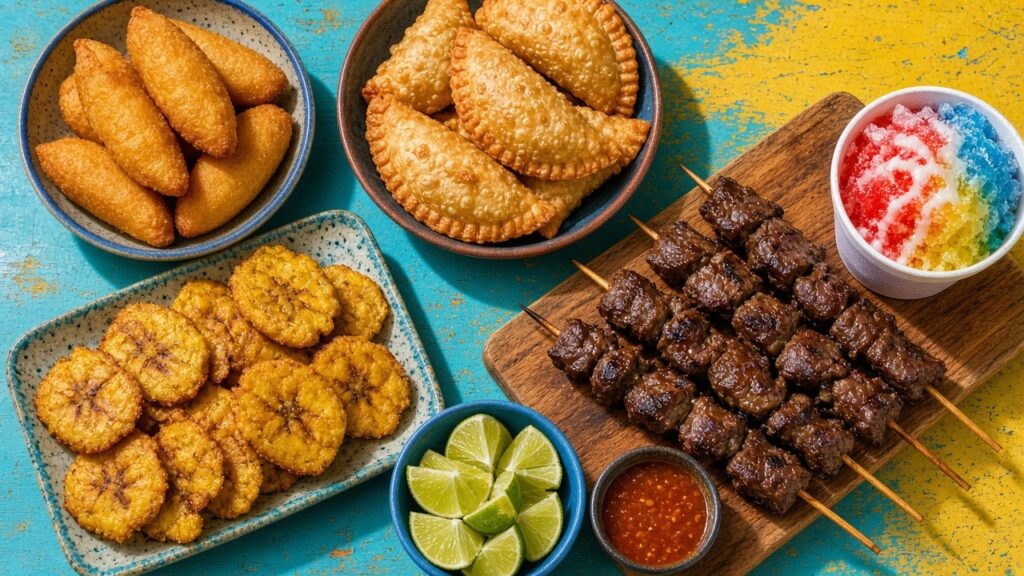
Panamanian street food is mostly fried, filling and cheap, and it’s best eaten standing at a kiosk with a cold drink in your hand. Much of it is breakfast food: hojaldras, carimañolas and empanadas sold hot in the morning. In the evening, the smoke of carne en palito skewers drifts over the sidewalks, and in the afternoon heat, the raspao carts come out with their bright syrups.
Panamanian street food centers on fried snacks (carimañolas, empanadas, hojaldras, patacones and other frituras), grilled meat skewers called carne en palito, corn bollos and tamales, and cold treats like raspao and chicheme. You’ll find it at fondas (small family-run eateries), kioskos and street carts, usually for a dollar or two per item. Must-tries include carimañolas, carne en palito, hojaldras with fried cheese and a raspao on a hot afternoon.
These are the street snacks I miss most and remake in Chicago. Below: what street food in Panama is like, 15 foods to try (each linked to a recipe where I have one), where to eat it in Panama City, how to make it at home, where to find it in Chicago and practical tips.
What is Panamanian street food like?
Panamanian food blends Indigenous, Spanish, African, Afro-Caribbean and Chinese influences, and its street food reflects that mix. A few patterns you’ll notice:
- Fried is king. Frituras, the umbrella term for fried snacks, are everywhere, especially for breakfast.
- Corn, yuca and plantain are the starches behind most snacks.
- Mild, not spicy. Heat comes from the hot sauce on the counter, not the food itself. See is Panamanian food spicy.
- Prices are low. Panama uses the US dollar (alongside the balboa coin), and many snacks cost a dollar or two.
- Breakfast and nighttime peaks. Fried snacks sell in the morning; grilled skewers and late-night bites at night.
For the big picture of Panamanian cuisine, start with my Panamanian food guide.
15 Panamanian street foods to try
| Food | What it is | When you’ll find it | Make it at home |
|---|---|---|---|
| Carimañolas | Fried yuca torpedoes stuffed with seasoned meat | Breakfast | Recipe |
| Empanadas | Fried corn or flour turnovers with meat, chicken or cheese | All day | Recipe |
| Carne en palito | Grilled beef skewers | Evenings, events | See below |
| Hojaldras | Puffy fried dough | Breakfast | Recipe |
| Patacones | Twice-fried green plantain rounds | Lunch, snacks | Guide |
| Bollos | Corn dough wrapped in husks, boiled | Breakfast, any time | Recipe |
| Tamales | Corn masa with chicken or pork in banana leaves | Weekends, holidays | Recipe |
| Raspao | Shaved ice with syrup and condensed milk | Hot afternoons | See below |
| Chicheme | Sweet corn and milk drink | Any time | Recipe |
| Frituras | Assorted fried snacks | Breakfast | Various |
| Arroz chino | Panamanian-style fried rice | Lunch, dinner | See below |
| Saus | Pickled pig’s feet with lime, onion and chili | Snacks, parties | See below |
| Pixbae | Boiled peach palm fruit with salt | Seasonal | See below |
| Mango con sal | Green mango with salt | Afternoons | See below |
| Pesada de nance | Nance fruit pudding | Desserts | See below |
Carimañolas
Yuca dough shaped into torpedoes, stuffed with seasoned ground beef (sometimes chicken or cheese) and fried until crisp. They’re one of Panama’s most beloved breakfast snacks. Eat them hot with hot sauce. My carimañolas recipe walks you through the dough.
Empanadas
Panamanian empanadas are often made with corn dough and fried, though flour versions are common too. Fillings include ground beef picadillo, chicken and cheese. See my Panamanian empanadas recipe, and for the filling, Panamanian picadillo.
Carne en palito
Grilled beef skewers, seasoned simply and charred over coals, often sold at night, at festivals, near stadiums and on busy street corners. They’re served on the stick, sometimes with a bollo or a piece of bread, and the smell is unforgettable.
Hojaldras
Puffy fried dough, a little like a savory fry bread, served at breakfast with eggs, fried cheese, salchichas guisadas or a cup of coffee. My hojaldras recipe shows the stretch-and-fry method, and for more breakfast ideas, see what Panamanians eat for breakfast.
Patacones
Green plantain slices fried, smashed and fried again until crisp and golden. They accompany fried fish, grilled meat and just about everything else. Learn the difference in patacones vs tostones.
Bollos
Ground corn dough, sometimes with butter or coconut, wrapped in corn husks and boiled. Bollos come plain, sweet or filled, and they’re often eaten with cheese or alongside carne en palito. See bollo de maíz.
Tamales
Panamanian tamales are corn masa filled with chicken or pork, olives, raisins and capers, wrapped in banana leaves and boiled. They’re especially popular on weekends and at Christmas. Here’s my Panamanian tamales recipe.
Raspao
Shaved ice packed into a cup, drenched in brightly colored syrup and topped with sweetened condensed milk, sometimes powdered milk too. Raspao carts are a classic sight on hot afternoons. For more drinks and cold treats, see the national drink of Panama.
Chicheme
A sweet, thick drink of cooked corn, milk, cinnamon and vanilla, often sold in cups from street stands and especially associated with the town of La Chorrera. My chicheme recipe is easy to make at home.
Frituras
The general name for the fried snacks you’ll find in breakfast spots: carimañolas, empanadas, hojaldras, torrejitas, tortillas and more. A plate of mixed frituras with coffee is a classic Panamanian breakfast. My torrejitas de bacalao and Panamanian tortillas are part of the family.
Arroz chino
Panama has a large Chinese-Panamanian community, and arroz chino (Panamanian-style fried rice, often with ham, chicken, shrimp or Chinese sausage) is sold everywhere from small restaurants to takeaway counters. It’s an everyday favorite.
Saus
Pig’s feet (or other cuts) cooked until tender and pickled with lime juice, onion, cucumber and chili. Saus is a Caribbean-influenced snack popular in Panama City and Colón, sold in small cups at stands and parties.
Pixbae
The fruit of the peach palm, boiled in salted water and eaten as a snack, sometimes with a little honey or mayonnaise. It has a starchy, nutty texture, somewhere between a chestnut and a squash. It’s seasonal, so grab it when you see it.
Mango con sal
Green, tart mango sliced and sprinkled with salt, and sometimes with chili, vinegar or lime. It’s a simple, refreshing afternoon snack sold in bags on the street.
Pesada de nance
Nance is a small, yellow, very aromatic tropical fruit. Pesada de nance is a thick pudding of nance pulp, sugar and cornstarch, sold as a sweet treat. For more sweets, see my Panamanian desserts guide.
Where to eat street food in Panama City
Fondas
A fonda is a small, often family-run eatery serving home-style Panamanian food at low prices: rice, beans, stews, fried fish, patacones and frituras. Many open early for breakfast and serve a set lunch. Fondas are where locals eat every day.
Kioskos
Small stands or kiosks sell frituras, empanadas, drinks and snacks. They’re common near bus stops, markets and busy streets.
Markets
Fish markets and public markets have stalls selling ceviche, fried fish and snacks. Ceviche in a cup is a classic. My Panamanian ceviche recipe recreates it.
Street carts and grills
Raspao carts, carne en palito grills and fruit vendors appear in parks, near events, at festivals and on busy corners.
Specific stands come and go, so ask locals, your hotel or your taxi driver where they like to eat.
How to make Panamanian street food at home
Most Panamanian street food is home cooking, so it’s easy to remake. A good starter menu:
- Breakfast frituras: hojaldras and carimañolas with fried cheese and coffee.
- Lunch: patacones with fried fish or chicken and a simple salad.
- Snack: empanadas with hot sauce. Make my Panamanian hot sauce for the full experience.
- Afternoon treat: chicheme or a homemade raspao.
Carne en palito at home
Cut beef (sirloin or chuck) into 1-inch cubes and season with salt, garlic, oregano and a splash of Worcestershire or soy sauce. Marinate 1 to 4 hours in the refrigerator. Thread on soaked skewers and grill over high heat until charred and cooked to your liking. Serve with bollos or patacones.
Raspao at home
Shave ice with a hand shaver or a blender designed for ice. Pack it into a cup, pour over a fruit syrup (tamarind, strawberry, cherry or passion fruit), and drizzle with sweetened condensed milk. Sprinkle with powdered milk if you like.
Arroz chino at home
Use day-old rice. Stir-fry diced ham or Chinese sausage with onion and garlic in a very hot pan, add rice, soy sauce and a little sesame oil, then push the rice aside and scramble an egg into the pan. Finish with green onions and bean sprouts.
Street food you can find in Chicago
Chicago doesn’t have Panamanian street carts, but you can find several of these foods:
- Panamanian restaurants and pop-ups occasionally serve carimañolas, empanadas and patacones. See Panamanian food in Chicago.
- Colombian, Venezuelan and Caribbean restaurants often serve patacones, empanadas and similar fried snacks.
- Latin bakeries and markets sell frozen yuca, plantains, corn husks, culantro and masa for home cooking. My where to buy culantro in Chicago guide covers several.
- Shaved-ice stands in Latin neighborhoods sell raspados close to Panamanian raspao.
- Chinese restaurants serve fried rice; ask for it with ham for a Panamanian feel.
Tips for eating street food in Panama
- Carry small bills and coins. US dollars are used; many stands don’t take cards.
- Go where locals line up. Busy stands turn food over quickly.
- Eat it hot. Fried snacks are best fresh from the oil.
- Try the hot sauce. Panamanian hot sauce is often yellow and made with scotch bonnet-type peppers; start with a drop.
- Mind the heat. Drink plenty of water, and enjoy a raspao or chicheme in the afternoon.
- Ask what’s in it. If you have allergies, ask; many snacks contain wheat, dairy, eggs or seafood.
- Ice and water. Panama City’s tap water is generally considered drinkable, but if you’re unsure in rural areas, choose bottled water.
FAQ
What is the most popular street food in Panama?
Carimañolas, empanadas, hojaldras and carne en palito are among the most popular. Patacones are everywhere as a side, and raspao is the classic cold treat on hot days.
How much does street food cost in Panama?
Many snacks cost about a dollar or two each, and a fonda lunch is often a few dollars. Prices vary by location; tourist areas are more expensive.
What is a fonda?
A fonda is a small, usually family-run Panamanian eatery serving home-style food at low prices, from breakfast frituras to a set lunch of rice, beans, meat and patacones.
What time of day are street food stands open?
Frituras and breakfast snacks are sold early in the morning. Fondas are busiest at breakfast and lunch. Carne en palito and other grilled foods show up in the evening, and raspao carts appear in the afternoon heat.
Can I find Panamanian street food in Chicago?
Some of it. Look for Panamanian pop-ups and restaurants, plus Colombian, Venezuelan and Caribbean spots for patacones and empanadas. For the rest, make it at home with ingredients from Latin markets.