
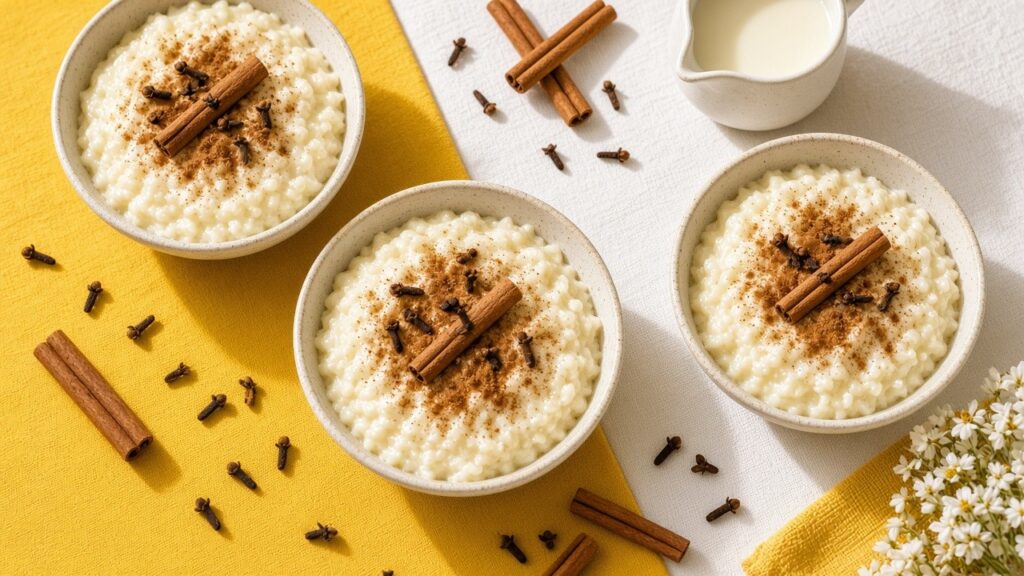
Arroz con leche is the dessert that smells like home in so many Panamanian kitchens: milk, cinnamon, clove and a pot of rice stirred slowly until it turns creamy. The rice and sugar make the classic version a high-carb treat, so a keto version has to replace both without losing that soft, spoonable, cinnamon-scented comfort.
Yes, arroz con leche can be keto if you replace the rice and sugar. Riced cauliflower simmered in heavy cream and unsweetened almond milk with cinnamon, clove and a keto sweetener such as allulose gives the closest texture, at about 4 to 5 grams of net carbs per half-cup serving. Shirataki (konjac) rice is even lower in carbs but chewier, and chia makes a pudding that tastes right but looks different.
Below you’ll find how each rice substitute behaves, the ingredients, the step-by-step method, how to keep cauliflower from tasting like cauliflower, Panamanian touches, storage, calculated net carbs and a recipe card. For the traditional dessert, see my guide to Panamanian desserts.
Can arroz con leche be keto?
Traditional arroz con leche is built on two ingredients that keto avoids: white rice and sugar. A typical half-cup of the classic dessert has somewhere around 30 to 40 grams of carbohydrates, depending on the recipe and how much sugar and condensed milk goes in. Even a small bowl uses up most of a strict keto day.
The good news is that the flavor of arroz con leche doesn’t come from the rice. It comes from the cinnamon stick, the clove, the orange or lime peel some families add, the vanilla and the slow simmer in dairy. Keep those, change the grain and the sweetener, and the bowl still tastes like the real thing.
The “rice” options compared
There is no perfect rice twin on keto. Each substitute brings a different texture, and choosing the right one depends on whether you care most about mouthfeel, carbs or convenience.
| Substitute | Texture in pudding | Flavor | Approx. net carbs per ½ cup finished pudding | Best for |
|---|---|---|---|---|
| Riced cauliflower | Soft, tender grains; the closest look to rice pudding | Mild if cooked properly | ~4–5 g | Most people; the most “arroz con leche” result |
| Shirataki / konjac rice | Bouncy, slightly chewy, distinct grains | Neutral after rinsing | ~1–2 g | Lowest carbs; people who like firmer texture |
| Chia seeds | Thick, jelly-like, tapioca style | Neutral, slightly nutty | ~2–3 g | No-cook, make-ahead dessert |
| Hemp hearts | Soft but seedy; doesn’t thicken much | Nutty, earthy | ~1–2 g | Adding body to a cauliflower base |
Riced cauliflower
Cauliflower is my first choice because, cut fine and simmered gently, it softens into small, tender pieces that look and spoon like cooked rice. It absorbs cinnamon and cream well. Its weakness is flavor: undercooked or overcooked, it can taste like a vegetable. The section on avoiding cauliflower taste below solves that.
Shirataki or konjac rice
Shirataki rice is made from konjac root fiber and is very low in digestible carbs. It holds its shape and won’t go mushy, but it never becomes creamy on its own and has a springy bite. Rinse it well, dry-toast it in a pan for a few minutes, then simmer it in the cream mixture. Many cooks like it mixed half and half with cauliflower.
Chia seeds
Chia doesn’t imitate rice at all; it makes a thick pudding with little gel-coated seeds. Stir 3 tablespoons into 1 cup of warm cinnamon-infused cream and almond milk, sweeten and chill for at least 4 hours. It’s the easiest version and tastes like arroz con leche, but the look is closer to tapioca.
Hemp hearts
Hemp hearts are soft, mild seeds that add body but don’t thicken by themselves. A few tablespoons stirred into the cauliflower version add a grain-like chew and a little extra protein.
Ingredients
For 4 servings of the cauliflower version:
- Riced cauliflower, 12 ounces (about 3 cups), fresh or frozen. Choose the finest rice you can find, or pulse florets in a food processor until the pieces are the size of rice grains.
- Heavy cream, 1 cup. The base of the creaminess.
- Unsweetened almond milk, 1 to 1½ cups. Lightens the cream; use more for a looser pudding. Unsweetened coconut milk from a carton works too.
- Cinnamon stick, 1 large (or 2 small).
- Whole cloves, 2 to 3.
- Strip of orange or lime peel, optional. Just the colored part, no white pith.
- Keto sweetener, ⅓ cup allulose or an equivalent erythritol-monk fruit blend. Adjust to taste.
- Pinch of fine salt.
- Pure vanilla extract, 1 teaspoon.
- Egg yolk, 1, optional. Adds richness and a custard-like body.
- Ground cinnamon, to finish.
How to make keto arroz con leche, step by step
- Infuse the dairy. In a medium saucepan, combine the cream, 1 cup almond milk, cinnamon stick, cloves and citrus peel. Warm over medium heat until it steams and small bubbles appear at the edge. Don’t let it boil hard. Turn off the heat, cover and let it steep for 10 minutes.
- Pre-cook the cauliflower. While the milk steeps, microwave the riced cauliflower, covered, for 3 to 4 minutes, or steam it until just tender. Spread on a clean towel and press out the moisture. This step removes much of the sulfur smell.
- Simmer. Remove the cloves and citrus peel (leave the cinnamon stick in). Add the cauliflower, sweetener and salt to the pan. Simmer gently over medium-low heat for 15 to 20 minutes, stirring often, until the mixture is thick and creamy and the cauliflower is very tender. Add more almond milk if it gets too thick.
- Enrich (optional). Whisk the egg yolk in a small bowl. Slowly whisk in a ladle of the hot pudding to temper it, then stir it back into the pan. Cook 2 more minutes on low, stirring constantly, without boiling.
- Finish. Take the pan off the heat, remove the cinnamon stick, and stir in the vanilla. Taste and adjust the sweetener.
- Serve. Spoon into small bowls and dust with ground cinnamon. Eat warm, or cover and chill.
How to avoid a cauliflower taste
This is the question everyone asks, and the answer is technique more than masking.
- Rice it finely. Smaller pieces cook faster and blend into the cream.
- Pre-cook and squeeze. Steaming or microwaving and pressing out the water drives off much of the cabbage-family smell before the cauliflower meets the dairy.
- Don’t undercook. Firm cauliflower tastes like a vegetable. Simmer until soft.
- Don’t boil it for an hour. Very long cooking brings back the sulfur notes.
- Use the full spice set. Cinnamon, clove, vanilla and citrus peel are strong aromatics that make the dessert read as arroz con leche.
- Sweeten properly. Under-sweetened cauliflower pudding tastes savory. Taste at the end.
- Serve chilled. Cold pudding tastes less of cauliflower than hot.
- Blend a little. For a smoother result, blend about a quarter of the pudding and stir it back in.
Panamanian touches
In Panama, arroz con leche is often simmered with cinnamon and clove, sometimes with a little lime or orange peel, and it’s common to see it at family gatherings and holidays. Some cooks use evaporated or condensed milk for richness, and many families add raisins.
- Cinnamon and clove: keep both. They’re what make the kitchen smell like a Panamanian Sunday.
- Raisins swap: raisins are concentrated sugar, so they’re the first thing to go on keto. For the same little bursts, add a few chopped toasted pecans or a spoonful of unsweetened coconut flakes. A tiny amount of finely chopped fresh raspberry adds tartness for about 1 gram of net carbs.
- Condensed-milk richness: the egg yolk and heavy cream provide much of the richness that condensed milk gives the classic version. A small splash of rum extract also adds depth without sugar.
- Coconut version: use unsweetened canned coconut milk instead of part of the cream for a costeño-style flavor, then top with toasted coconut.
If you love Latin desserts on keto, my keto flan is the natural companion recipe.
Storage
- Refrigerator: cool to room temperature within 2 hours, then cover and refrigerate for up to 4 days.
- Thickening: it firms up in the fridge. Stir in a splash of almond milk or cream before serving.
- Reheating: warm gently on the stove or in short microwave bursts, stirring.
- Freezing: not recommended. Cream-based cauliflower pudding can turn grainy and watery after thawing. Chia pudding freezes slightly better but is best fresh.
- Allulose note: desserts sweetened with allulose stay softer when cold. Erythritol can crystallize after a day or two in the refrigerator, which feels slightly gritty; a blend that includes allulose helps.
Net carbs per serving (calculated)
Calculated from standard nutrition values for each ingredient; net carbs equal total carbohydrates minus fiber. Sugar alcohols such as erythritol and allulose are not counted as net carbs here, which is the usual keto convention.
| Ingredient (whole batch, 4 servings) | Total carbs | Fiber | Net carbs |
|---|---|---|---|
| Riced cauliflower, 12 oz | 17 g | 7 g | 10 g |
| Heavy cream, 1 cup | 6.5 g | 0 g | 6.5 g |
| Unsweetened almond milk, 1 cup | 1.5 g | 0.5 g | 1 g |
| Vanilla, cinnamon, clove | 1 g | 0.5 g | 0.5 g |
| Egg yolk | 0.1 g | 0 g | 0.1 g |
| Allulose or erythritol | not counted | 0 g | |
| Batch total | about 18 g | ||
| Per serving (about ½ cup) | about 4.5 g |
The shirataki version comes to about 2 grams of net carbs per serving because shirataki rice contributes almost none. These are estimates for planning, not nutritional or medical advice; your exact labels decide the final count.
Recipe card: keto arroz con leche
Yield: 4 servings (about ½ cup each). Prep: 10 minutes. Cook: 25 to 30 minutes. Net carbs: about 4.5 g per serving.
Ingredients
- 12 ounces riced cauliflower (about 3 cups)
- 1 cup heavy cream
- 1 to 1½ cups unsweetened almond milk
- 1 large cinnamon stick
- 2 to 3 whole cloves
- 1 strip orange or lime peel (optional)
- ⅓ cup allulose or equivalent keto sweetener, to taste
- Pinch of salt
- 1 egg yolk (optional)
- 1 teaspoon vanilla extract
- Ground cinnamon, to serve
Instructions
- Warm the cream, 1 cup almond milk, cinnamon stick, cloves and peel until steaming. Cover and steep 10 minutes off the heat.
- Steam or microwave the cauliflower until just tender; press out the moisture in a towel.
- Remove the cloves and peel. Add the cauliflower, sweetener and salt. Simmer on medium-low 15 to 20 minutes, stirring often, until thick and creamy. Thin with almond milk as needed.
- If using the yolk, temper it with a ladle of hot pudding, stir it in, and cook 2 minutes on low without boiling.
- Remove the cinnamon stick, stir in the vanilla and adjust sweetness.
- Serve warm or chilled, dusted with ground cinnamon.
Troubleshooting
- Too thin: simmer a few minutes longer, or stir in 1 teaspoon chia seeds and rest 10 minutes.
- Too thick: stir in warm almond milk a tablespoon at a time.
- Gritty: erythritol has recrystallized. Switch to allulose or a powdered sweetener.
- Tastes like cauliflower: it was undercooked or not squeezed. Simmer longer, add more cinnamon, and serve cold.
- Curdled egg: the heat was too high when you added the yolk. Next time temper more slowly and keep the pan below a simmer.
FAQ
What can I use instead of rice?
Riced cauliflower gives the closest look and softness. Shirataki (konjac) rice is the lowest in carbs but chewier. Chia seeds make a thick, no-cook pudding, and hemp hearts add body to either. Many cooks combine cauliflower with a little shirataki or hemp.
Which sweetener works best?
Allulose is the best match for a creamy pudding because it dissolves smoothly and doesn’t recrystallize in the fridge. Erythritol-monk fruit blends work but can feel slightly gritty when cold. Taste at the end, since cinnamon and vanilla change how sweet the pudding seems.
Can I make it dairy-free?
Yes. Replace the heavy cream with full-fat canned coconut milk and use unsweetened almond or coconut milk for the rest. Skip the egg yolk or keep it; eggs aren’t dairy. The pudding will have a gentle coconut flavor, which suits the Panamanian spices.
Is it good cold or warm?
Both. Warm, it’s soft and comforting, like a fresh pot on the stove. Cold, it’s thicker, the cinnamon tastes stronger and the cauliflower is less noticeable. Many families eat traditional arroz con leche chilled, so either is authentic.
How long does it keep in the fridge?
Up to 4 days in a covered container. Stir in a splash of milk before serving, since it thickens as it sits. Don’t freeze the cauliflower version; the texture breaks down when thawed.