
I’m a Panamanian cook planning a Greek cookbook, and I’ll tell you why: Greek home cooking feels familiar. Slow-cooked stews, lots of lemon and oregano, olive oil instead of lard, and the same love of feeding a full table. These are 22 Greek dishes for a home kitchen, from easiest to most special, each with a mini-recipe or method notes, plus three full recipes (lemon chicken and potatoes, avgolemono and tzatziki), a planner table, a seasonal calendar, troubleshooting and menus.
The best Greek dishes to make at home are horiatiki (Greek village salad), tzatziki, Greek lemon chicken and potatoes, souvlaki, gigantes (baked giant beans), fasolada (bean soup), avgolemono (lemon-egg soup), spanakopita, pastitsio, moussaka, dolmades and baklava.
Greek dishes at a glance
| Dish | Hands-on time | Difficulty | Vegetarian? | Make ahead? |
|---|---|---|---|---|
| Horiatiki | 10 min | Easy | Yes | No, dress just before serving |
| Tzatziki | 15 min | Easy | Yes | Yes, 1 day (better) |
| Lemon chicken and potatoes | 15 min | Easy | No | Marinate the night before |
| Souvlaki | 20 min | Easy | No | Marinate 2–24 hours |
| Gigantes plaki | 20 min | Easy | Yes (vegan) | Yes, 3 days |
| Fasolada | 20 min | Easy | Yes (vegan) | Yes, 4 days |
| Avgolemono | 30 min | Medium | No | Broth yes; add egg-lemon at the end |
| Spanakopita | 45 min | Medium | Yes | Freeze unbaked up to 3 months |
| Pastitsio | 1 hr | Medium | No | Assemble a day ahead |
| Moussaka | 1½ hr | Project | No | Assemble a day ahead |
| Dolmades | 1 hr | Medium | Yes (rice version) | Yes, 4 days |
| Baklava | 45 min | Medium | Yes | Yes, 1–2 weeks at room temperature |
Easy Greek dishes (under 30 minutes of work)
1. Horiatiki (Greek village salad)
Tomatoes, cucumber, red onion, green pepper, Kalamata olives and a whole slab of feta on top, dressed with olive oil, dried oregano and salt. No lettuce.
Mini-recipe (4 servings): cut 4 ripe tomatoes into wedges, 1 cucumber into thick half-moons, ½ red onion and 1 green bell pepper into thin rings. Add a handful of Kalamata olives and salt the vegetables. Lay a 7 oz (200 g) slab of feta on top, sprinkle 1 tsp dried oregano and pour over 4 to 5 tbsp extra-virgin olive oil. A splash of red wine vinegar is optional. Tip: use the ripest tomatoes you can find, don’t crumble the feta, and mop up the juices with bread; that’s half the point.
2. Tzatziki
Thick Greek yogurt, grated cucumber, garlic, olive oil, a little vinegar or lemon and dill. Full recipe below. Tip: salt the grated cucumber and squeeze it dry, or the tzatziki turns watery.
3. Greek lemon chicken and potatoes
One pan, very little work, and the potatoes soak up lemon, garlic and oregano. Full recipe below.
4. Souvlaki
Cubes of pork or chicken marinated in olive oil, lemon, garlic and oregano, then grilled on skewers.
Mini-recipe (4 servings): cut 2 lb (900 g) pork shoulder or boneless chicken thighs into 1¼-inch (3 cm) cubes. Marinate 2 to 24 hours in ¼ cup olive oil, juice of 1 lemon, 3 grated garlic cloves, 2 tsp dried oregano, 1 tsp salt and ½ tsp pepper. Thread onto skewers (soak wooden ones 30 minutes) and grill over high heat 10 to 12 minutes, turning, until chicken reaches 165°F (74°C) or pork 145°F (63°C). Squeeze fresh lemon over at the end. Serve in warm pita with tzatziki, tomato, onion and, Greek-style, a few fries tucked inside.
Souvlaki vs. gyros: souvlaki is cubes on a skewer; gyros is meat stacked on a vertical rotisserie and shaved off. At home, the easiest “gyros” is thinly sliced marinated pork or chicken thighs, seared in a very hot pan.
Weeknight Greek comfort food
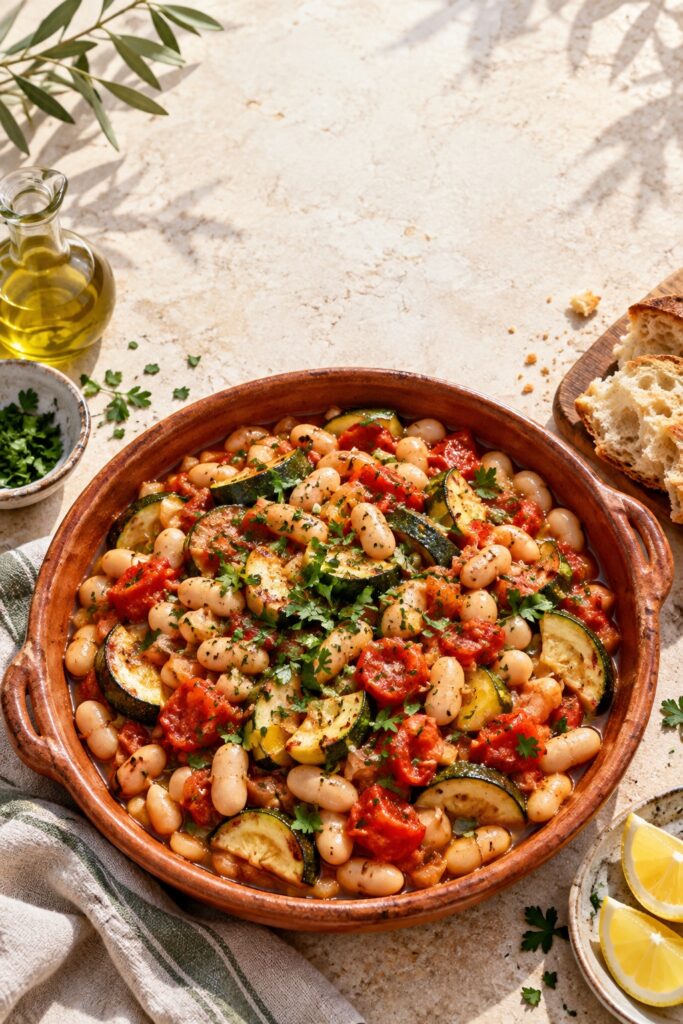
5. Gigantes plaki (baked giant beans)
Giant white beans baked in tomato sauce with onion, garlic, dill and plenty of olive oil.
Mini-recipe (4–6 servings): soften 1 chopped onion and 3 garlic cloves in ½ cup olive oil. Add a 14 oz (400 g) can of crushed tomatoes, 1 tbsp tomato paste, 1 tsp sugar, 1 tsp dried oregano, salt and pepper; simmer 10 minutes. Fold in 2 cans (about 30 oz / 850 g) drained butter beans, or 1 lb dried gigantes soaked overnight and simmered until just tender, plus ½ cup water and a handful of chopped dill and parsley. Bake uncovered at 375°F (190°C) for 40 to 50 minutes, until the sauce is thick and the top beans are slightly crusty. Tip: it’s better the next day, at room temperature, with feta and bread.
6. Fasolada (Greek bean soup)
White beans simmered with carrots, celery, onion, tomato and olive oil. Often called the national dish of Greece.
Mini-recipe (6 servings): soak 1 lb (450 g) dried white beans (cannellini or navy) overnight. Drain, cover with fresh water, boil 5 minutes and drain again. Return to the pot with 8 cups water, 1 diced onion, 2 diced carrots, 2 sliced celery stalks, 2 tbsp tomato paste, 1 bay leaf and ½ cup olive oil. Simmer 1 to 1½ hours until the beans are creamy, adding salt only in the last 20 minutes. Finish with more olive oil, black pepper and a squeeze of lemon. Tip: old dried beans may never soften; buy them from a store with high turnover.
7. Avgolemono (lemon-egg soup)
Chicken broth with rice or orzo, thickened with eggs and lemon juice. Full recipe below. Tip: temper the eggs by whisking in hot broth slowly so they don’t scramble.
Weekend and celebration dishes
8. Spanakopita
Spinach, feta, green onions and dill wrapped in layers of buttered phyllo.
Method notes (9×13-inch pan, 12 pieces): wilt 2 lb (900 g) fresh spinach (or thaw 2 lb frozen) and squeeze it very dry. Mix with 1 bunch sliced green onions, ½ cup chopped dill, 10 oz (280 g) crumbled feta, 2 eggs and pepper; feta is salty, so taste before adding salt. Brush the pan with butter or olive oil, layer 8 sheets of phyllo, brushing each one, spread the filling, then layer 8 more brushed sheets on top. Score the top into squares before baking; phyllo shatters if you cut it after. Bake at 375°F (190°C) for 45 to 55 minutes until deep golden. Rest 15 minutes. Tip: keep the phyllo under a damp towel while you work.
9. Pastitsio
Greek baked pasta: tubular pasta, a cinnamon-scented meat sauce and a thick béchamel on top.
Method notes (9×13-inch pan, 8–10 servings): cook 1 lb (450 g) bucatini or ziti 2 minutes short of al dente and toss with 1 egg white and ½ cup grated kefalotyri or Parmesan; this helps the pasta layer hold. For the sauce, brown 2 lb (900 g) ground beef with 1 onion and 2 garlic cloves, then add a splash of red wine, a 14 oz can of crushed tomatoes, 1 cinnamon stick (or ½ tsp ground), a pinch of allspice, salt and pepper; simmer 30 minutes until thick. Make a thick béchamel: 6 tbsp butter and ¾ cup flour, cooked 2 minutes, then 5 cups warm milk whisked in until thick, plus nutmeg, ½ cup grated cheese and 3 egg yolks stirred in off the heat. Layer pasta, sauce, pasta, béchamel. Bake at 350°F (175°C) for 45 to 50 minutes, then rest 30 minutes before cutting.
10. Moussaka
Layers of eggplant, potato, spiced meat sauce and béchamel. It’s a project, and it’s even better made ahead.
Method notes: slice 3 large eggplants ½ inch thick, salt them 30 minutes and pat dry, then brush with oil and roast at 425°F (220°C) for 20 to 25 minutes instead of frying (less oil, same silky texture). Slice 2 potatoes thin and roast or fry until just tender for the bottom layer. Use the same meat sauce and béchamel as pastitsio (lamb or beef). Layer potato, eggplant, meat, eggplant, béchamel; bake at 350°F (175°C) for 45 to 60 minutes; rest 45 minutes. Full timeline in can moussaka be made ahead of time?
11. Dolmades
Grape leaves rolled around rice and herbs (sometimes with meat), simmered with lemon.
Method notes (about 40 rolls): rinse a 16 oz jar of grape leaves and blanch 2 minutes to remove the brine. Mix 1 cup raw medium-grain rice with 1 finely chopped onion softened in olive oil, ½ cup each chopped dill, mint and parsley, the juice of 1 lemon, salt and pepper. Place a leaf vein-side up, put 1 heaping teaspoon of filling near the stem, fold in the sides and roll tightly, but not too tightly, because the rice swells. Line the pot with torn leaves, pack the rolls seam-side down, add ½ cup olive oil, the juice of another lemon and hot water just to cover, then weigh them down with an upside-down plate. Simmer gently 45 to 50 minutes. Cool in the pot. Tip: in my Panamanian kitchen I wrap tamales in banana leaves; the same rule applies, firm but not tight.
12. Baklava
Layers of phyllo, chopped nuts and butter, soaked in honey syrup.
Method notes (9×13-inch pan): toss 1 lb (450 g) finely chopped walnuts (or walnuts and pistachios) with 1 tsp cinnamon. Layer 8 buttered phyllo sheets, then alternate a thin layer of nuts with 2 buttered sheets until the nuts are used up, finishing with 8 buttered sheets. Cut into diamonds before baking, all the way to the bottom. Bake at 325°F (165°C) for 60 to 70 minutes until deep golden. Meanwhile simmer 1 cup sugar, 1 cup water, ½ cup honey, a strip of lemon peel and a cinnamon stick for 10 minutes, then let it cool. Pour the cool syrup over the hot baklava and leave it uncovered at least 6 hours before serving.
10 more Greek dishes worth learning
13. Saganaki
A slice of kefalograviera or kasseri cheese, about ½ inch (1.25 cm) thick, dipped in water, dredged in flour and pan-fried in hot olive oil 1 to 2 minutes per side until crusty, then finished with lemon. In Chicago’s Greektown they flame it at the table (“opa!”); at home, skip the flame. Tip: the pan must be very hot, or the cheese melts before it crusts.
14. Shrimp saganaki
Soften a little onion and garlic in olive oil, add a can of crushed tomatoes, oregano and chili flakes and simmer 10 minutes. Add 1 lb (450 g) peeled shrimp and a splash of ouzo or white wine, crumble 4 oz (115 g) feta over the top, and bake at 400°F (200°C) for 10 to 12 minutes until the shrimp are just pink. Bread is mandatory.
15. Keftedes (Greek meatballs)
Mix 1 lb (450 g) ground beef or pork-beef mix with 1 grated onion (juice and all), 1 slice of bread soaked in water and squeezed, 1 egg, 2 tbsp chopped mint, 1 tsp dried oregano, 1 tsp salt and pepper. Rest 30 minutes in the fridge, roll walnut-size balls, dust in flour and shallow-fry 6 to 8 minutes until browned. Tip: the grated onion and bread are what make them soft.
16. Soutzoukakia
Oval meatballs from Smyrna tradition, seasoned with cumin and garlic. Use the keftedes mix plus 1½ tsp ground cumin and a little red wine, shape into ovals, brown them, then bake 30 minutes in tomato sauce with a cinnamon stick. Serve over rice or with fries.
17. Fakes (Greek lentil soup)
Simmer 1 lb (450 g) brown lentils with 1 onion, 3 garlic cloves, 2 bay leaves, 2 tbsp tomato paste and ¼ cup olive oil in 8 cups water for 35 to 45 minutes. Season, and serve with a splash of red wine vinegar added at the table, olives and feta.
18. Spanakorizo
Soften 1 onion and green onions in ¼ cup olive oil, add 1 lb (450 g) chopped spinach until wilted, then 1 cup rice, 1 tbsp tomato paste and 2½ cups water. Cover and cook 20 minutes on low. Finish with dill, lemon juice and more olive oil. A vegan one-pot dinner.
19. Gemista (stuffed tomatoes and peppers)
Hollow out 6 tomatoes and 4 bell peppers; grate the tomato flesh. Mix it with 1 cup raw rice, 1 grated onion, ½ cup each mint and parsley, ½ cup olive oil, salt and pepper. Fill the vegetables three-quarters full (the rice expands), put the tops back on, tuck potato wedges around them, drizzle more oil and bake at 375°F (190°C) for 1 hour 15 minutes to 1½ hours, covering with foil if the tops darken too fast.
20. Briam (Greek roasted vegetables)
Slice zucchini, eggplant, potatoes, onion and peppers; toss with grated tomato, garlic, ½ cup olive oil, oregano and salt. Bake covered at 375°F (190°C) for 45 minutes, then uncovered 45 more, until soft with caramelized edges.
21. Horta
Boil greens (dandelion, chicory, amaranth or Swiss chard) in salted water until tender, 5 to 15 minutes depending on the green. Drain and dress warm with olive oil, lemon and salt. Bitter greens are the point.
22. Loukoumades
Make a soft yeast batter with 2 cups flour, 2¼ tsp instant yeast, 1 tsp sugar, ½ tsp salt and about 1⅓ cups warm water; let it rise until doubled and bubbly, about 1 hour. Drop spoonfuls (or squeeze through your fist) into oil at 350°F (175°C) and fry until golden. Drench in warm honey syrup and finish with cinnamon and chopped walnuts. Eat them right away.
Which Greek dish should you make first?
| If you… | Start with | Then try |
|---|---|---|
| Have never cooked Greek food | Horiatiki + tzatziki | Lemon chicken and potatoes |
| Want a one-pan dinner | Lemon chicken and potatoes | Briam |
| Cook meatless | Gigantes | Spanakorizo, fasolada |
| Have a grill | Souvlaki | Keftedes |
| Want a weekend project | Spanakopita | Pastitsio, then moussaka |
| Need make-ahead party food | Dolmades | Baklava |
| Want soup | Avgolemono | Fakes |
Greek dishes by season and holiday
| Time of year | What Greek home cooks make |
|---|---|
| Lent (Sarakosti) | Ladera (oil-cooked vegetables), fasolada, fakes, gigantes, spanakorizo, horta, taramosalata, halva |
| Clean Monday (start of Lent; March 15, 2027) | Lagana flatbread, taramosalata, olives, pickles, seafood like octopus and shrimp |
| Easter | Lamb, magiritsa soup, tsoureki, red eggs (see Greek Easter) |
| Summer | Horiatiki, gemista, briam, souvlaki, grilled fish |
| Fall and winter | Fasolada, stifado (beef and onion stew), pastitsio, moussaka |
| New Year | Vasilopita, the New Year’s cake with a hidden coin |
Lenten dishes are vegan by tradition, so they’re a ready-made answer when you cook for vegan friends.
Greek cooking techniques that make the difference
- Ladera (oil-cooked) dishes like gigantes, briam and gemista use a lot of olive oil on purpose. The oil and vegetable juices become the sauce. Cutting the oil in half gives you dry, flat vegetables.
- Lemon at the end: add most of the lemon juice after cooking for a bright taste; long cooking dulls it.
- Tempering eggs (avgolemono): whisk hot broth into the eggs a ladle at a time before they go into the pot.
- Béchamel for moussaka and pastitsio: cook the butter and flour 2 minutes before adding warm milk, and stir in egg yolks off the heat so it sets into a sliceable layer.
- Phyllo: thaw it overnight in the fridge, keep it covered, and brush every sheet with butter or oil. Torn sheets go in the middle layers.
- Dried oregano, rubbed between your palms, wakes up the oils.
Recipe: avgolemono (Greek lemon-egg chicken soup)
Yield: 4–6 servings · Prep: 10 minutes · Cook: 25 minutes
Ingredients
- 8 cups (2 L) good chicken broth
- ½ cup (100 g) medium-grain rice or orzo
- 2 cups (about 280 g) cooked shredded chicken
- 3 large eggs
- ⅓ cup (80 ml) fresh lemon juice (about 2 lemons)
- Salt and pepper; fresh dill to serve
Instructions
- Bring the broth to a boil, add the rice and simmer about 15 to 18 minutes (orzo 8 to 10) until tender. Add the chicken and season.
- Turn the heat to low. In a bowl, whisk the eggs until frothy, then whisk in the lemon juice.
- Temper: whisking constantly, add 2 cups (480 ml) of hot broth to the eggs, one ladle at a time.
- Pour the egg mixture back into the pot, stirring, and heat gently 2 to 3 minutes until it thickens slightly. Do not boil, or it will curdle.
- Serve with dill and black pepper.
Reheating: warm gently over low heat, never boiling. The rice keeps absorbing broth, so add a splash of broth when you reheat. Don’t freeze it; the egg texture breaks.
Recipe: tzatziki
Yield: about 2 cups · Prep: 15 minutes, plus 1 hour to chill
- 1 medium cucumber (about 300 g), grated with the skin
- ½ tsp salt
- 1½ cups (360 g) full-fat Greek yogurt
- 2 garlic cloves, finely grated
- 1 tbsp extra-virgin olive oil
- 1 tbsp red wine vinegar or lemon juice
- 2 tbsp chopped fresh dill (or mint)
- Toss the cucumber with the salt and let it sit 10 minutes. Squeeze it dry in a clean towel.
- Stir everything together and chill at least 1 hour so the garlic mellows.
Storage: 3 to 4 days in the fridge. Pour off any liquid and stir before serving.
Greek cooking troubleshooting
- Watery tzatziki: the cucumber wasn’t squeezed, or the yogurt wasn’t strained Greek yogurt.
- Avgolemono curdled: the eggs weren’t tempered or the soup boiled after adding them. Next time keep it below a simmer.
- Soggy spanakopita bottom: the spinach was wet. Squeeze it, and bake on the lowest rack.
- Moussaka falls apart when cut: it needs to rest 30 to 45 minutes after baking; the béchamel sets as it cools.
- Watery moussaka: salt and drain the eggplant (or roast it first) before layering.
- Soggy baklava: the syrup and pastry were the same temperature. One must be hot and the other cool.
- Tough souvlaki: lean meat cut too small, or overcooked. Use pork shoulder or chicken thighs in 1¼-inch (3 cm) cubes.
Greek menus for every occasion
| Occasion | Menu |
|---|---|
| Weeknight | Lemon chicken and potatoes, horiatiki |
| Meatless or Lenten | Fasolada or gigantes, horta, bread and olives |
| Meze party | Tzatziki, saganaki, keftedes, dolmades, horiatiki, pita |
| Sunday dinner | Pastitsio or moussaka, horiatiki, baklava |
| Sick day or cold night | Avgolemono |
| Summer cookout | Souvlaki, tzatziki, pita, briam |
| Easter | See my Greek Easter food traditions |
Greek and Panamanian kitchens side by side
Some Greek dishes have a cousin in my Panamanian kitchen: avgolemono and sancocho are both the chicken soup you make for someone who needs care; dolmades and tamales are both wrapped in leaves; and the Greek love of lemon and oregano feels close to our lime and culantro. That’s part of why I’m planning a Greek cookbook alongside my Panamanian one.
Recipe: Greek lemon chicken and potatoes
Yield: 4 servings · Prep: 15 minutes · Cook: 1 hour · Total: 1 hour 15 minutes
Ingredients
- 2½ lb (1.1 kg) bone-in, skin-on chicken thighs (about 6–8)
- 2 lb (900 g) Yukon Gold potatoes, peeled and cut into thick wedges
- ⅓ cup (80 ml) olive oil
- ⅓ cup (80 ml) fresh lemon juice (about 2 lemons), plus zest of 1 lemon
- 6 garlic cloves, minced
- 1 tbsp dried Greek oregano
- 1½ tsp salt; ½ tsp black pepper
- 1 cup (240 ml) chicken broth
Instructions
- Heat the oven to 425°F (220°C).
- Whisk the olive oil, lemon juice, zest, garlic, oregano, salt and pepper.
- Toss the potatoes with half the mixture and spread them in a large roasting pan. Rub the rest over the chicken and nestle the chicken skin side up among the potatoes.
- Pour the broth into the pan, around (not over) the chicken.
- Roast 55 to 65 minutes, turning the potatoes once halfway, until the chicken reaches 165°F (74°C) and the potatoes are tender and golden. Add a splash of water if the pan dries out.
- Rest 5 minutes and spoon the pan juices over everything.
Storage: Fridge 3–4 days. Reheat in the oven to keep the potatoes crisp.
Substitutions: Use boneless thighs and reduce the time to 35–40 minutes. Use Mexican oregano if you can’t find Greek; it’s a little different but works.
The Greek pantry to keep at home
- Good extra-virgin olive oil
- Feta in brine
- Kalamata olives
- Dried Greek oregano
- Lemons, always
- Greek yogurt
- Frozen phyllo dough
- Canned giant or butter beans
In Chicago, I shop for these in Greektown.
Two techniques worth getting right: avgolemono and tzatziki
How to keep avgolemono from curdling
Tempering is a gradual temperature adjustment, not simply pouring eggs into soup while hoping for the best. Whisk the eggs and lemon in a separate bowl. Add hot broth a small ladle at a time while whisking, so no one patch of egg suddenly meets the full heat of the pot.
Turn the soup heat low before returning the warmed mixture. Stir steadily and heat gently until the egg-enriched soup reaches 160°F, checking with a thermometer. Avoid boiling: high heat can turn the silky egg mixture into visible curds. Pasteurized eggs are a useful additional precaution, especially when cooking for someone at greater risk from foodborne illness.
If you see a few fine curds, remove the pan from the heat. Straining may improve a broth’s texture, but a fully curdled soup will not become perfectly silky just because you whisk harder. If it smells scorched from the bottom, do not scrape that burned layer into the rest.
Too sour? Begin with a little less lemon and add more after tasting, rather than assuming every lemon gives the same juice and acidity. Too thick? Rice keeps absorbing broth. Add a little hot broth when serving or reheating. Too thin? Remember that avgolemono is a silky soup, not a flour-thickened white sauce.
Refrigerate promptly in shallow containers, use within 3–4 days, and reheat leftovers gently to 165°F throughout. “Do not boil” is a texture instruction, not permission to serve lukewarm leftovers. Add broth, stir often and use a thermometer.
Thick tzatziki starts before you add the cucumber
Greek yogurt varies in thickness between brands. If yours is loose, drain it in a fine strainer lined with a suitable clean cloth in the refrigerator, then measure the thickened yogurt for the recipe. Draining after you have mixed in all the seasonings can lose flavor along with the water.
Salt the grated cucumber as directed, give it the ten-minute rest, then squeeze it thoroughly in a clean towel. A light squeeze is often not enough: cucumber can release a surprising amount of water once it sits in yogurt.
Mix the drained cucumber with the yogurt, garlic, oil, herbs and acid, then chill. The garlic can become more noticeable over time, so do not automatically double it because the first spoonful seems gentle. You can always add a little more after resting.
Can I use regular yogurt? Yes, if you drain it sufficiently first; the final yield will be smaller than the amount you started with. Can I make it the day before? Yes, and a rest helps the flavors come together. Stir before serving and check the consistency. Can I freeze it? The cucumber and yogurt can separate on thawing, so a fresh refrigerated batch gives a nicer texture.
Keep covered and cold; use within 3–4 days and put out small portions rather than leaving the full bowl at room temperature throughout a party.
For two dishes that use related Greek flavors but very different cooking methods, see souvlaki vs gyro. For the casserole question, pastitsio vs moussaka explains pasta layers versus eggplant layers.
FAQ
What is the easiest Greek dish to make at home?
Horiatiki salad or tzatziki: no cooking at all.
What is the national dish of Greece?
Fasolada is often called the national dish, though moussaka and souvlaki are the best known abroad.
What are the most popular Greek dishes?
Moussaka, souvlaki and gyros, spanakopita, horiatiki, tzatziki, pastitsio, dolmades and baklava.
What Greek dishes are vegetarian?
Horiatiki, tzatziki, spanakopita, gigantes, fasolada, fakes, spanakorizo, gemista, briam, horta and rice dolmades. Many are also vegan.
What can I make ahead for a Greek dinner party?
Tzatziki, gigantes, dolmades, baklava, and moussaka or pastitsio assembled the day before. Make the salad just before serving.
What Greek cheese should I buy?
Feta in brine for salads and pies; kefalograviera or kasseri for saganaki; kefalotyri or Parmesan for grating over pastitsio.
What is a typical Greek dinner at home?
Often a ladera dish or a bean soup, a salad, bread, feta and olives, with meat or fish a few times a week. Dinner is usually late and shared from the middle of the table.
What is the difference between souvlaki and gyros?
Souvlaki is cubed meat grilled on a skewer; gyros is meat stacked on a vertical rotisserie and shaved off. Both are served in pita with tzatziki.
What is the difference between moussaka and pastitsio?
Both have meat sauce and béchamel; moussaka is built on eggplant (and often potato), pastitsio on tubular pasta.
Can I freeze Greek dishes?
Yes: unbaked spanakopita, assembled pastitsio or moussaka, keftedes, gigantes and fasolada freeze well for up to 3 months. Don’t freeze avgolemono, tzatziki or salad.
What do Greeks eat for breakfast?
Often something small: coffee with a koulouri (sesame bread ring), yogurt with honey, or a piece of tiropita or spanakopita from the bakery.
What Greek dishes are made for Easter?
Lamb, tsoureki (sweet braided bread), red eggs and magiritsa soup. See Greek Easter food traditions.
More from my Greek kitchen
Read Greek Easter food traditions, learn to make moussaka ahead, or visit Greektown in Chicago.
¡Buen provecho! Kali orexi!