
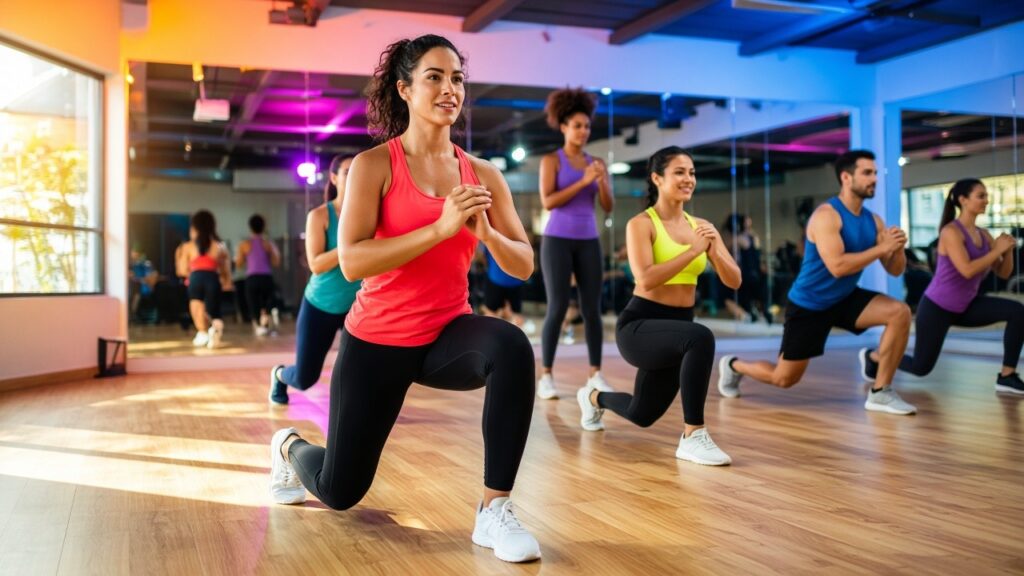
On a gym schedule, Zumba and STRONG Nation often sit side by side, made by the same company, with the same high-energy music vibe. Then you take both and realize they’re almost opposites. One is a dance party. The other is a sweaty, music-driven interval workout with lunges, squats and burpees, and not a single salsa step.
Zumba is a dance-fitness class: you follow Latin and world-music choreography (merengue, salsa, cumbia, reggaeton and more) in a party atmosphere. STRONG Nation, formerly called STRONG by Zumba, is a high-intensity interval training (HIIT) class in which bodyweight moves like squats, lunges, kicks and plyometrics are synced to music made specifically to match each move. Choose Zumba if you want to dance; choose STRONG if you want athletic drills and don’t care about dancing. Many people do both in the same week.
I’ve taken both. Here’s what STRONG Nation is, how a class works, a side-by-side comparison, which is better for beginners, what to wear and bring, and how to combine them, described without fitness claims.
Strong by Zumba vs Zumba: the short answer
| Zumba | STRONG Nation | |
|---|---|---|
| Type | Dance fitness | High-intensity interval training to music |
| Moves | Dance steps from Latin and world rhythms | Squats, lunges, kicks, punches, burpees, planks, jumps |
| Music | Real songs in many genres | Original music produced to match the moves |
| Dancing required? | You follow dance choreography | No dancing |
| Choreography | Repeating patterns per song | Repeating drills synced to the music |
| Effort pattern | Intervals of higher and lower energy songs | Work-and-recovery intervals |
| Impact | Low to moderate, with options | Moderate to high, with low-impact options |
| Typical length | 45 to 60 minutes | 30 to 60 minutes (STRONG 30 is 30 minutes) |
| Shoes | Cross-trainers with pivot-friendly soles | Supportive cross-trainers for jumping and lunging |
| Feel | Party, social, playful | Athletic, focused, bootcamp-like |
What is STRONG Nation?
STRONG Nation is a group fitness program created by the company behind Zumba. It launched as STRONG by Zumba and was later renamed STRONG Nation. Classes are led by licensed instructors at gyms, studios and online.
The big idea is music-synced training. Instead of an instructor playing popular songs and shouting counts, STRONG uses original tracks produced so that the beats, drops and builds match each move. When the music speeds up, the move speeds up; when the beat drops, you jump or hold. Many participants say the music makes the hard parts feel more like a challenge than a chore.
What is a STRONG 30 class?
STRONG 30 is a 30-minute format of STRONG Nation. It packs warm-up, intervals and cool-down into half an hour, which makes it a popular lunchtime or early-morning class. Some gyms also offer longer formats. Check your gym’s schedule for names and durations, as offerings change.
How a STRONG Nation class works
- Warm-up. Gentle movements to raise your heart rate and prepare joints.
- Work blocks. Tracks built around bodyweight moves: squats, lunges, knee strikes, punches, kicks, jumping jacks, burpees, mountain climbers, planks and plyometric jumps.
- Recovery moments. Short, slower sections to catch your breath between harder blocks.
- Repeat and build. Many routines repeat moves with increasing speed or complexity as the music builds.
- Cool-down and stretch.
Instructors usually show low-impact and higher-intensity options, so you can march instead of jump or reduce the range of a lunge. There are no dance steps, no hip rolls and no choreography that requires rhythm in the dance sense, though following the music definitely helps.
How a Zumba class works
Zumba is choreography to music. Each song has its own routine based on a rhythm: merengue marches, salsa basics, cumbia steps, reggaeton bounces and many more. The instructor cues by demonstrating, not by stopping to teach. Songs alternate between high and lower energy, and many classes include a toning song. If you’re curious about the rhythms, see what kind of music Zumba uses, and if you’ve never tried it, Zumba for beginners is the place to start. For other formats from the same company, see types of Zumba classes.
Which is better for beginners?
Both welcome beginners, but they suit different people.
Zumba may suit you if:
- You enjoy dancing or want to learn to move to Latin music.
- You like a social, party atmosphere.
- You’d rather focus on fun than counting reps.
- You prefer lower impact options built into many steps.
STRONG may suit you if:
- You feel awkward dancing and prefer simple, athletic moves.
- You enjoy bootcamp or interval-style workouts.
- You like a clear structure of work and rest.
- You’re comfortable with squats, lunges and jumping (or their modifications).
If you’re unsure, try one class of each. Your body and mood after class will tell you which you’ll keep coming back to. For comparisons with other activities, see is Zumba better than the gym and is Zumba hard.
Is STRONG Nation harder than Zumba?
Many people find STRONG more intense because it’s built around demanding bodyweight moves and plyometric intervals. Zumba can also be very intense, depending on the instructor and how big you move. Both classes let you adjust: march instead of jump, shorten the range, take a break. How hard either feels depends on you.
Is Strong by Zumba a dance class?
No. Although it comes from the same company as Zumba, STRONG Nation has no dance choreography. It’s interval training synced to music.
What to wear and bring
| Item | Zumba | STRONG Nation |
|---|---|---|
| Shoes | Cross-trainers or dance sneakers that allow pivots | Supportive cross-trainers with cushioning for jumps and lunges |
| Clothes | Breathable, comfortable; anything you can move in | Fitted, breathable clothing for floor work and lunges |
| Water | Yes | Yes, more breaks to drink |
| Towel | Yes | Yes, especially for floor moves |
| Mat | Not usually | Sometimes, for planks and floor work; ask your gym |
| Sports bra | Supportive | High support for jumping |
For Zumba shoes, see how to choose Zumba shoes, and for outfits, what to wear to Zumba. STRONG involves more jumping and lunging, so cushioning and stability matter more than pivoting.
Can you do both in a week?
Yes, and many people do. A common approach is to alternate: Zumba one day, STRONG another, with a rest day or a gentler activity like walking in between. Listen to your body, start with fewer sessions, and increase gradually. If you have a health condition, an injury, or you’re pregnant or postpartum, check with your healthcare provider before starting high-intensity classes. Nothing here is medical advice.
A sample week (illustrative)
| Day | Activity |
|---|---|
| Monday | Zumba |
| Tuesday | Rest or a walk |
| Wednesday | STRONG 30 |
| Thursday | Rest or stretching |
| Friday | Zumba |
| Weekend | A walk, a dance social or rest |
Adjust to your schedule and energy. Two classes a week is a great start.
Common STRONG Nation moves (and gentler options)
| Move | What it is | Lower-impact option |
|---|---|---|
| Squat | Sit back and down, then stand | Smaller range, or squat to a bench height |
| Jump squat | Squat, then jump up | Squat and rise onto your toes |
| Lunge | Step forward or back and lower | Shorter step, less depth |
| Jumping lunge | Switch legs in the air | Alternate stepping lunges |
| Knee strike | Drive a knee up with a pulling arm motion | Slower tempo, lower knee |
| Front kick | Kick forward from the hip | Lower kick, hold a support |
| Punches and jabs | Upper-body strikes to the beat | Smaller, controlled punches |
| Burpee | Squat, plank, return, jump | Step back to plank, step in, stand |
| Mountain climber | Drive knees toward the chest in plank | Slow alternating knee taps, or hands on a bench |
| Plank | Hold a straight line on hands or forearms | Knees down |
Ask the instructor to show options before class. Good instructors expect people to choose different levels.
Common mistakes in your first STRONG class
- Going full speed on day one. Pace yourself through the whole class; the last block is often the hardest.
- Sacrificing form for the beat. If you can’t keep good form at tempo, do half-time or choose the low-impact option.
- Locking your knees on landings. Land softly through the balls of the feet with bent knees.
- Skipping the cool-down. Stay for the last stretch; it helps you transition out of the workout.
- Comparing yourself to regulars. They’ve learned the routines; you’ll catch up quickly.
Tips for your first STRONG class
- Arrive early and tell the instructor it’s your first class.
- Stand where you can see the instructor but have space around you for lunges and jumps.
- Choose the low-impact option for the first few classes while you learn the moves.
- Focus on form over speed. The music will push you; let your technique lead.
- Breathe. Holding your breath during intervals makes them harder.
- Hydrate in the short recovery breaks.
Tips for your first Zumba class
- Don’t worry about perfect steps. Follow the general direction and rhythm.
- Stand near the middle so you can see the instructor and people around you.
- Make moves smaller if you get lost, and rejoin when the pattern repeats.
- Have fun. Zumba is built on joy. My guide on how to not feel awkward dancing helps if you feel shy.
Common questions about the music
STRONG’s original music is produced to match the moves, so it doesn’t sound like a radio playlist. Expect electronic and hybrid tracks with clear builds, drops and countdowns. Zumba uses real songs across Latin, international and pop genres. If music is your main motivation, you’ll likely have a clear favorite after one class of each.
FAQ
Is STRONG Nation harder than Zumba?
Many people find it more intense because of plyometrics, squats and lunges in work-rest intervals. But both can be adjusted, and Zumba can be very energetic. How hard each feels depends on your effort and the options you choose.
Is Strong by Zumba a dance class?
No. It comes from the same company as Zumba but contains no dance choreography. It’s music-synced interval training.
What is a STRONG 30 class?
A 30-minute STRONG Nation format with warm-up, interval blocks and cool-down. It’s popular as a quick, time-efficient class. Check your gym’s schedule for the formats it offers.
Can I do Zumba and STRONG in the same week?
Yes. Many people alternate them with rest or lighter days in between. Start gradually, listen to your body and check with a healthcare provider if you have health concerns.
What shoes do I need for STRONG Nation?
Supportive cross-training shoes with good cushioning and stability for jumping, lunging and quick changes of direction. Zumba shoes can also work, but if they’re very thin or designed mainly for pivoting, you may prefer more support for STRONG.
Do I need to be fit to try STRONG Nation?
No, but expect it to feel challenging. Every move has options, and you can take breaks whenever you need them. If you’re new to exercise or returning after time off, a gentler class, walking or Zumba Gold may be an easier first step, and it’s wise to check with your healthcare provider first.