
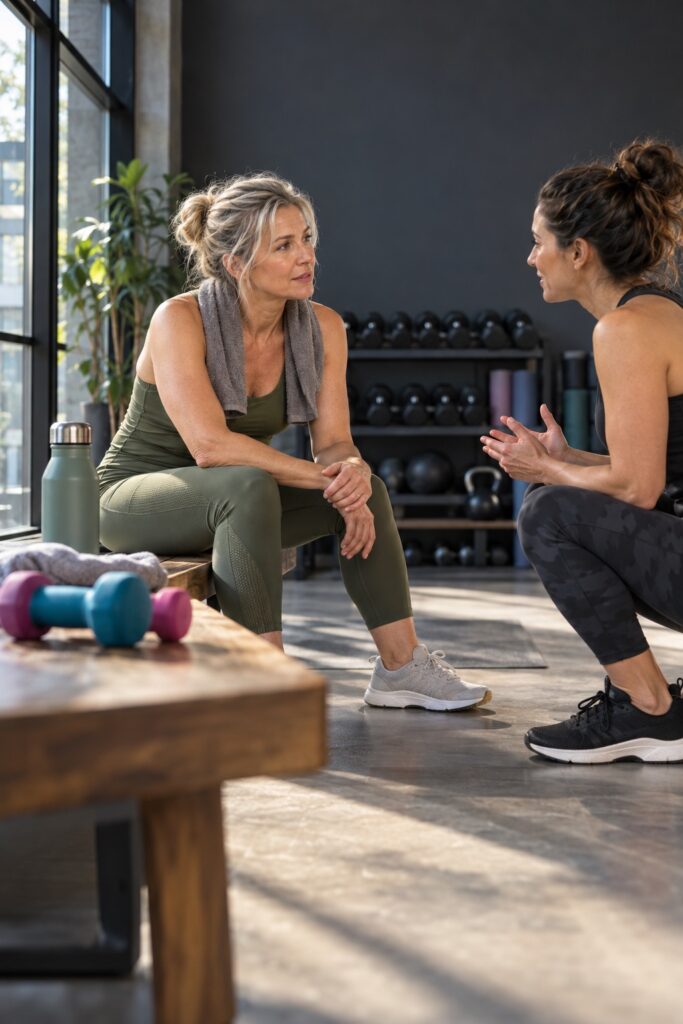
People ask me this all the time, usually with a little guilt in their voice: “I love Zumba, but shouldn’t I be at the gym?” My honest answer is that I do both, and they do different jobs. Zumba is where I get my cardio, my joy and my Latin music fix. The gym is where I lift. Here’s how they compare, and how to decide what’s right for you.
Zumba isn’t better or worse than the gym; it does a different job. Zumba is a fun, social cardio workout that’s easy to stick with. The gym is better for building strength with progressive weights. The best plan for most people mixes both: Zumba for cardio, plus strength training twice a week.
Zumba vs the gym at a glance
| Zumba class | Gym workout | |
|---|---|---|
| Main focus | Cardio (aerobic) fitness, rhythm, coordination | Whatever you choose: strength, cardio machines, mobility |
| Strength building | Some, from bodyweight moves | Strong, because you can add weight over time |
| Intensity | Moderate to vigorous, depending on the class | You set it |
| Structure | The instructor plans everything | You plan it (or hire a trainer) |
| Social | Very: group, music, energy | Usually solo, unless you take group classes |
| Learning curve | Choreography, but you can follow along | Technique for lifts and machines |
| Fun factor | It feels like a party | Depends on you |
| Cost | Drop-ins, class packs, or included in a membership | Membership, from budget gyms to boutique |
| Equipment | Sneakers and water | The gym provides it |
What Zumba does well
It’s real cardio
Zumba is aerobic exercise set to Latin and world music. Harvard’s Nutrition Source describes the intensity of a typical class as moderate to vigorous, and it notes that intensity varies a lot depending on the choreography and the instructor’s energy. A class with more jumps and faster songs is harder; a class with more salsa and cumbia steps is gentler.
You actually want to go
This is the big one. Research summarized by Harvard found that Zumba boosts intrinsic motivation, meaning people do it because they enjoy it, and that the social group setting of dance fitness may help people keep exercising long-term. The best workout is the one you’ll still be doing in six months. For me, Zumba is never a chore. When the merengue starts, I forget I’m exercising.
It trains more than your heart
Zumba’s own description calls a class a total workout: cardio, muscle conditioning, balance and flexibility. You squat in the reggaeton songs, you work your core in the shimmies, and you practice balance and coordination with every turn and direction change.
Someone else does the planning
You walk in, the instructor presses play, and you follow for an hour. No program to write, no wondering which machine is next.
What the gym does better
Building strength over time
This is where the gym wins. Muscle grows stronger when you gradually ask it to do more: heavier weights, more reps, harder variations. In a gym, you can track that. You lift 10 pounds this month, 12 next month. A regular Zumba class can’t progress your strength the same way, because the bodyweight moves stay about the same week to week.
The research agrees. A systematic review of 11 Zumba studies (summarized by Harvard) found benefits for aerobic fitness and quality of life, but limited evidence for improving muscle strength and flexibility.
Training exactly what you want
Want stronger arms, a stronger back, better posture? At the gym you can choose. In Zumba, the playlist chooses.
Flexibility in your schedule
Gyms are open long hours. Zumba classes happen at set times, and if you miss the 6 p.m. class, you wait until next week.
So which is better for you?
| If your main goal is… | Better choice | Why |
|---|---|---|
| Enjoying exercise and sticking with it | Zumba | The music, group and energy keep you coming back |
| Cardio fitness | Both work | Zumba, or cardio machines and classes at the gym |
| Getting stronger | Gym | Progressive weights are the best tool for strength |
| Coordination, rhythm and dance skills | Zumba | You’re literally learning to dance |
| Meeting people | Zumba | Same class, same faces, new friends |
| Training on your own schedule | Gym | Open hours, no class times |
| Learning to dance Latin styles | Zumba (then real dance classes!) | Salsa, merengue, cumbia and reggaeton steps in every class |
How much of each? What the guidelines say
The U.S. Physical Activity Guidelines for Americans recommend that adults get at least 150 minutes a week of moderate-intensity aerobic activity (or 75 minutes of vigorous activity, or a mix) and do muscle-strengthening activities on at least 2 days a week that work all the major muscle groups.
Notice something? The guidelines ask for both. Three one-hour Zumba classes cover the aerobic part beautifully. Two short strength sessions cover the rest. That’s why I don’t think of Zumba and the gym as competitors. They’re a team.
Zumba classes that add strength
If you love Zumba and don’t love the weight room, there are official Zumba formats that bring strength into the party:
| Format | What it adds |
|---|---|
| Zumba Toning | Light, maraca-like Toning Sticks (or light weights) to work arms, core and lower body |
| Zumba + Lift | Strength-training segments mixed with Zumba dance rhythms |
| Zumba Step | Step-aerobics moves for legs and glutes |
| Zumba Sentao | Strength and dance moves using a chair as your “partner” |
| STRONG Nation | A high-intensity class synced to music, from Zumba’s team (not dance-based) |
These are great for adding muscle work, but light toning sticks are still lighter than what you’d progress to at the gym. They’re a step in the right direction, not a full replacement for strength training.
How I combine Zumba and the gym in one week
Here’s a simple way to fit both into a week. It’s a sample, not a prescription. Adjust to your schedule and energy.
| Day | Option |
|---|---|
| Monday | Zumba class (60 min) |
| Tuesday | Strength at the gym (30–45 min, full body) |
| Wednesday | Zumba class or a long walk |
| Thursday | Rest, or a gentle stretch |
| Friday | Strength at the gym (30–45 min, full body) |
| Saturday | Zumba class, or go dancing! |
| Sunday | Rest, or a walk by the lake |
A few tips that make it work:
- Strength first in the week, dancing when you need a mood boost. Zumba is my reward for the gym days.
- Keep the gym simple. A full-body routine with squats, a push, a pull, a hinge and some core is enough to start.
- Don’t do a hard leg day right before a jumpy Zumba class if you want to enjoy the jumps.
- Walks count. On the lakefront in Chicago, a brisk walk is my favorite active rest day. My Lakefront Trail walking guide has the best stretches.
Can Zumba replace the gym?
If the gym makes you miserable and you’d quit exercise entirely without Zumba, then yes: Zumba is a great choice, and much better than nothing. Moving three times a week with joy is a win. But if you want to get stronger, add some form of strength training, even at home with dumbbells or resistance bands, or join a Zumba Toning or Zumba + Lift class.
Can the gym replace Zumba?
For fitness, yes: the gym has cardio machines and classes. But it won’t replace the music, the friends, the dancing, and that feeling when the whole room shouts “¡Wepa!” at the same moment. For me, that’s not optional.
Best of both in Chicago
Many places in Chicago offer both a gym floor and Zumba classes under one membership or fee. YMCAs like the Lake View YMCA (3333 N Marshfield Ave) and the McCormick Tribune YMCA (1834 N Lawndale Ave) have fitness centers and group exercise, and the Chicago Park District runs low-cost Zumba programs at parks around the city. I list current classes, studios and prices in my guide to Zumba classes in Chicago. New to the weights side? Here’s how to get into a gym routine. And if walking is your other favorite, read is Zumba better than walking?
FAQ
Is Zumba enough exercise on its own?
Zumba covers the aerobic (cardio) part of the activity guidelines very well, especially if you go three times a week. The guidelines also recommend muscle-strengthening activity on 2 days a week, so add some strength work or a toning class.
Is Zumba cardio or strength?
Mostly cardio, with some muscle conditioning from squats, lunges and core moves. Formats like Zumba Toning, Zumba + Lift and Zumba Step add more strength work.
Is Zumba harder than the gym?
It depends on what you do at the gym and on the Zumba class. A high-energy Zumba class can be more intense than an easy session on the bike, and a heavy lifting session is harder on your muscles than any Zumba song.
Can I do Zumba and the gym on the same day?
Yes. Many people lift first and dance after, or the other way around. Listen to your energy and keep the hard leg work away from jumpy classes if you want to enjoy both.
Is Zumba good for beginners who are scared of the gym?
Very. You follow an instructor, nobody is watching, and you can modify any move. My Zumba for beginners guide explains what to expect in your first class.
Which is cheaper, Zumba or the gym?
It depends on where you live. In Chicago, Park District Zumba programs can be very affordable, some are even free, while boutique studios cost more per class. Many gyms include Zumba in the membership, which is often the best value if you want both.
Whatever you choose, choose something you love. For me, that will always include a little Zumba. ¡Nos vemos en la pista!