
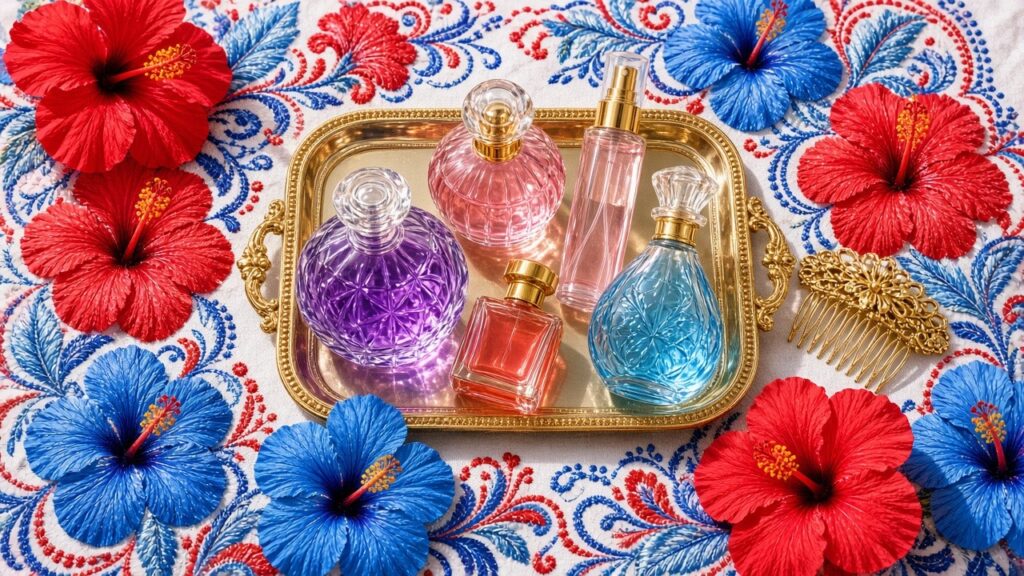
Ask a room of Latinas about the perfumes they grew up with and the stories pour out: the bottle on a mother’s dresser, the cologne an aunt sprayed before Mass, the body mist that meant summer. Perfume in many Latin American homes isn’t a luxury saved for a special day. It’s part of getting ready, part of hospitality and part of how people show they care.
There’s no single perfume all Latinas wear, but many share a love of bold, sweet, fresh and floral scents, plus generous use of colonias and body mists. Popular choices fall into a few families: sweet gourmands with vanilla and caramel, bright fruity florals, white florals like jasmine and tuberose, and fresh colognes for hot weather. Classic colonias such as violet waters and fresh splash colognes are part of many childhoods, and Latin American brands from Brazil, Mexico, Colombia and beyond are widely loved.
I’m Panamanian, and this is written from culture and experience, not stereotype. Latinas aren’t one group with one taste; we come from more than twenty countries and countless families, each with its own rituals.
The perfumes many Latinas grew up with
Every family’s dresser was different, but some kinds of scent show up again and again in our memories.
- Colonias and splash colognes. Light, fresh, often citrus or herbal, splashed on generously after a bath. Inexpensive and used daily by the whole family, including children.
- Violet waters. Gentle, powdery violet colognes are a childhood scent for many, often used on babies and kids.
- Classic fresh body splashes. Lemony, clean splashes sold in big bottles were a staple in many homes in the United States and Latin America.
- Department-store classics. Iconic designer perfumes saved for weddings, quinceañeras, church and nights out, often received as gifts.
- Powder and soap scents. Talcum powder, scented soaps and creams that made the whole house smell clean.
Many of us also remember scent being shared: a grandmother dabbing perfume behind a granddaughter’s ears before a party, or cologne poured into a palm and patted on.
Why sweet, bold and fresh scents?
Several things shape these preferences, and none of them is a rule.
- Climate. Much of Latin America is warm and humid. Fresh colognes and splashes feel good in the heat and are reapplied throughout the day. For tips, see perfume for hot, humid weather.
- Celebration culture. Parties, dancing and family gatherings invite scents with presence: sweet, warm and noticeable.
- Food and memory. Vanilla, caramel, coffee, coconut and tropical fruit are familiar flavors in our kitchens, so gourmand perfumes feel comforting. More on that style in what is a gourmand perfume.
- Abundance and generosity. Smelling good is a way of showing respect for the people you’ll see. Many grew up hearing that you never leave the house without perfume.
- Florals everywhere. Jasmine, gardenia, orange blossom and tropical flowers grow in many of our countries, so white florals feel natural.
Popular picks today, by fragrance family
Instead of naming bottles that come and go, here’s how today’s favorites usually fall into families. Use these to find your own.
| Family | What it smells like | Why it’s popular | When it shines |
|---|---|---|---|
| Sweet gourmand | Vanilla, caramel, praline, coffee, sugar | Cozy, noticeable, compliment-getting | Evenings, cool weather, dates |
| Fruity floral | Pear, berries, peach with rose or peony | Cheerful and easy to wear | Daytime, parties, gifts |
| White floral | Jasmine, tuberose, gardenia, orange blossom | Feminine, lush, very “tropical night” | Weddings, evenings |
| Fresh and citrus | Lemon, bergamot, mandarin, neroli | Clean, bright, reapplied often | Hot days, work, after the shower |
| Amber and warm spice | Amber, vanilla, cinnamon, tonka | Rich and long-lasting | Winter, special occasions |
| Tropical and solar | Coconut, frangipani, salty notes | Smells like beach days | Summer, vacation |
Body mists and colonias
Body mists and colonias deserve their own place. They’re lighter than perfume, cost less and are made to be used generously: after a bath, before bed, on the way out the door. Many Latinas wear a mist daily and save perfume for going out, or layer a mist under a perfume in the same scent family.
Colonia vs perfume: a colonia (cologne) is a light, often citrus or herbal fragrance with a low concentration of perfume oils, usually in alcohol and water. It’s designed for splashing and reapplying. Perfume (eau de parfum or parfum) is more concentrated and lasts longer. In many homes, “colonia” is simply the everyday word for any light fragrance.
Perfume rituals
- Getting ready for church. Many remember Sunday as a perfume day: freshly pressed clothes, a little cologne, and children patted with colonia.
- Parties and dancing. Before a party, the bathroom fills with hairspray and perfume. Sweet, warm scents are common because they hold up through a night of salsa or merengue. For dance-class wear, see perfume for the gym and dance class.
- Layering. Lotion, body mist and perfume in the same or complementary scents is a long tradition. My perfume layering guide explains how.
- After the shower. A splash of fresh colonia is the last step of a bath for many families, adults and children alike.
- Gifts. Perfume is a classic gift for birthdays, Mother’s Day, Christmas and quinceañeras.
- Makeup and perfume together. Getting ready often means a full routine; my Latina makeup step by step covers the face part.
- Sharing. A bottle on the family dresser is often for everyone.
Perfume in Panamanian homes
In Panama, many of the rituals above look familiar. People dress up for church, family lunches and parties, and smelling fresh in the heat matters, so colonias, talc and body splashes are part of the daily routine. For big occasions like weddings, Carnival or the national festivals where women wear the Panamanian pollera dress, getting ready is a family affair, with hair, makeup and perfume all part of it. Because the climate is hot and humid year-round, fresh scents get reapplied throughout the day, and heavier perfumes are saved for evenings and air-conditioned events.
Moving to Chicago changes the equation. Winter is cold and dry, scents behave differently, and sweet ambers and vanillas suddenly make sense in a wool coat; see best perfume for winter. Many of us end up with two wardrobes of scent: the fresh colonias of home for summer, and warmer perfumes for the long winter.
A Latina-inspired perfume wardrobe by occasion
| Occasion | Scent style | Tip |
|---|---|---|
| Everyday, hot weather | Fresh colonia or citrus body mist | Reapply after lunch; keep a small bottle in your bag |
| Office | Soft floral or clean musk | One or two sprays; save the big scents for later |
| Church or family lunch | Gentle floral or powdery scent | Classic and polite in close quarters |
| Salsa or bachata night | Sweet gourmand or white floral | Apply before you leave; mist your hair lightly |
| Wedding or quinceañera | Rich white floral or amber | A special-occasion bottle that becomes a memory |
| Winter in the city | Amber, vanilla, warm spice | Spray on skin under a scarf |
| Beach or vacation | Coconut, solar or tropical floral | Light hand in strong sun |
You don’t need all of these. Three bottles, one fresh, one floral and one warm, cover most of a year.
Perfume as a gift
Perfume is one of the most common gifts in many Latin families, and there are a few ways to make it personal:
- Match the family she already wears instead of guessing a new direction.
- Give a set with a matching body lotion or mist so she can layer.
- Choose a discovery set if you’re unsure, so she can choose the scent herself.
- Add a note about why the scent made you think of her; the memory becomes part of the perfume.
Latin American perfume brands
Latin America has a large beauty industry, and many brands are household names in their home countries.
- Brazil has major cosmetics and perfume companies selling everything from body splashes to fine fragrance, with strong ingredient stories around Brazilian botanicals.
- Mexico, Colombia, Peru and Argentina have beauty brands, direct-sales companies and department-store lines with their own perfumes and colognes.
- Direct-sales catalogs have long been a way many families buy perfume, from neighbors and relatives who sell.
- Traditional colonias and violet waters are sold in pharmacies and supermarkets across the region.
Availability varies by country and changes over time, so check where a brand ships before you fall in love with a scent you can’t get in the United States.
How to find your own scent
Your perfume doesn’t need to match anyone else’s idea of what a Latina wears. A few ways to discover what you love:
- Start with memory. Which scents make you feel at home? Coffee, coconut, jasmine, a grandmother’s powder? Those point to fragrance families.
- Think about climate and lifestyle. Chicago winters and Panamanian afternoons call for different scents.
- Sample before buying. Use testers, discovery sets or decants. See what is a perfume discovery set.
- Wear it on skin. Perfume changes on your body over hours.
- Read the guides. Start with how to choose a perfume and how to pick perfume without smelling it.
A note on stereotypes
It’s easy to say “Latinas love sweet perfume,” and many do, but so do people everywhere. Latinas also wear clean musks, green florals, ouds, leather and no perfume at all. Culture shapes memory and ritual, not a single rule about taste. The best perfume for you is the one that makes you feel like yourself.
FAQ
What is the most popular perfume in Latin America?
It depends on the country and changes over time. In general, sweet gourmands, fruity florals and fresh colognes are widely popular, and inexpensive colonias and body mists are used daily by many families. Designer classics remain popular gifts.
Why do Latinas often like sweet perfumes?
Many grew up around sweet flavors in the kitchen and festive gatherings where noticeable scents feel right. Sweet perfumes feel warm, comforting and celebratory. That’s a cultural tendency, not a rule; tastes vary widely.
What is colonia, and how is it different from perfume?
Colonia is a light, often citrus or herbal fragrance with a low concentration of perfume oils, made to be splashed on and reapplied. Perfume is more concentrated, more expensive and lasts longer. In many homes, colonia is the everyday fragrance for the whole family.
What perfume works in hot, humid weather?
Fresh citrus, light florals, aquatic and green scents feel best in heat, applied lightly and reapplied as needed. Body mists and colonias are classic choices. Heavy gourmands can feel cloying in humidity.
Are there Latin American perfume brands?
Yes. Brazil, Mexico, Colombia, Argentina, Peru and other countries have well-known beauty companies, direct-sales catalog brands and pharmacy colonias. Availability in the United States varies.
What perfume do Panamanian women wear?
Just like anywhere else, it varies. In Panama’s heat, fresh colonias, citrus and light florals are everyday favorites, reapplied through the day. For evenings, parties and celebrations, many reach for sweet gourmands, white florals and warm ambers, often layered with a matching lotion or mist.
Is it rude to wear a lot of perfume?
Context matters more than culture. At a party or dance, a noticeable scent is welcome. In offices, hospitals, classrooms and small studios, two or three sprays of something lighter is more considerate. If people can smell you from across the room, it’s probably too much for close quarters.