
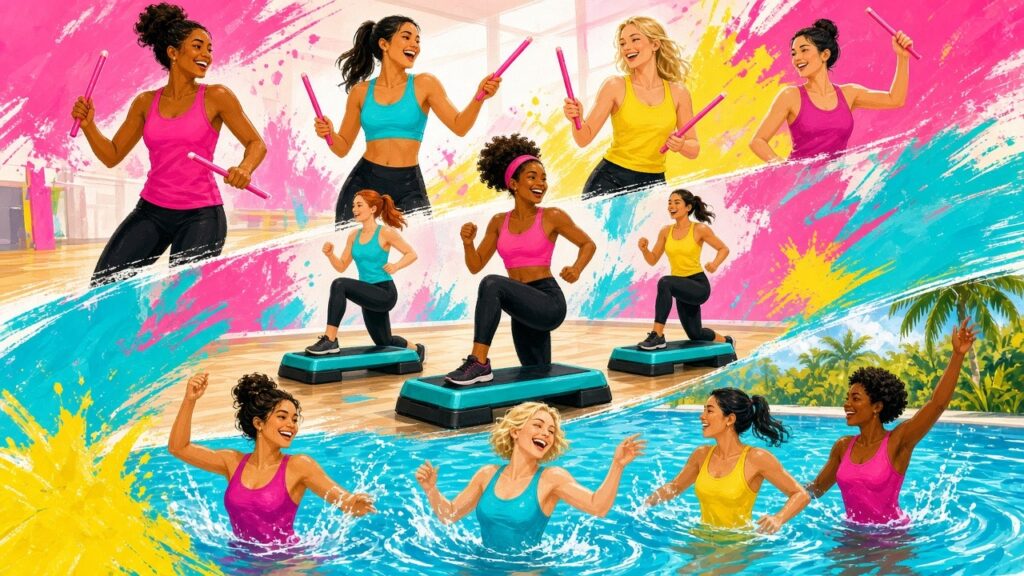
Open a gym schedule and you might see Zumba, Zumba Toning, Zumba Step, Aqua Zumba and Zumba Gold all in the same week. They share the Latin-inspired music and party feel, but they feel very different in your legs, lungs and arms. Here’s what each class is really like, so you can pick the right one before you walk in.
The main types of Zumba classes are: Zumba (the original dance-fitness class), Zumba Toning (adds light toning sticks for arm and core work), Zumba Step (dance moves on an aerobic step for more leg work), Aqua Zumba (dance moves in a pool, low impact), Zumba Gold (a lower-intensity, easier-to-follow format), Zumba Sentao (chair-based strength and cardio), plus Zumba Kids and Zumbini for children. STRONG Nation, created by the same company, is a separate interval-training class set to music rather than a dance class.
Types of Zumba classes at a glance
| Class | What you use | Effort feel | Impact | Best for |
|---|---|---|---|---|
| Zumba | Just you | Moderate to high | Low to moderate (you choose) | Most beginners |
| Zumba Toning | Toning sticks (light, maraca-like) | Moderate | Low to moderate | Arm and core focus with dance |
| Zumba Step | Aerobic step | High in the legs | Moderate | Glutes, legs, stepping lovers |
| Aqua Zumba | Pool water | Moderate, resistance from water | Very low | Joint-friendly cardio, summer fun |
| Zumba Gold | Just you | Low to moderate | Low | Gentler start, returning to exercise |
| Zumba Sentao | A sturdy chair | Moderate to high, strength-heavy | Low to moderate | Core and strength with rhythm |
| STRONG Nation | Bodyweight, sometimes light equipment | High (intervals) | Moderate to high | Athletic, sweaty, no dance moves |
| Zumba Kids / Kids Jr. | Just the kids | Playful | Varies | Children |
| Zumbini | Caregiver and little one | Gentle | Very low | Babies and toddlers with a grown-up |
Gyms sometimes rename classes or mix formats, so read the description and ask the instructor.
Zumba (Zumba Fitness)
This is the class most people mean when they say Zumba. An instructor leads choreography to rhythms like salsa, merengue, cumbia and reggaeton, and you follow without stopping to break down steps. A typical class runs 45 to 60 minutes with a warm-up, peaks and valleys of intensity, and a cool-down. Read how long a Zumba class is for a typical timeline.
What it feels like: a dance party with sweat. Some songs are bouncy and high-energy; others are slower and hip-focused. You can always march instead of jump.
Start here if: you’re new. Everything else builds on these moves. My full beginner guide is Zumba for beginners.
Zumba Toning
Zumba Toning adds toning sticks, which look like small maracas and weigh about a pound each (some are filled with sand). Choreography includes moves that target arms, shoulders, core and glutes, and the sticks shake to the beat, so they also act as percussion.
Zumba vs Zumba Toning
| Zumba | Zumba Toning | |
|---|---|---|
| Equipment | None | Toning sticks or light dumbbells |
| Focus | Cardio dance | Cardio dance + muscle endurance |
| Pace | More traveling moves | More time in place |
| Arm burn | Some | A lot |
What it feels like: familiar Zumba energy with a serious shoulder burn by the third song. No sticks? Many classes allow 1–2 lb dumbbells or no weight at all.
STRONG Nation
STRONG Nation (formerly Strong by Zumba) is high-intensity interval training synced to music made specifically for each workout. There’s no dance choreography: you do squats, lunges, burpees, kicks and plyometric moves timed to the beat drops. It’s athletic and sweaty. I compare the two in detail in a separate guide on Strong vs Zumba.
Choose it if: you like bootcamp-style workouts and music motivates you, but you don’t enjoy dance steps.
Zumba Step
Zumba Step adds an aerobic step platform. You do dance moves up, down and around the step, which builds more lower-body work than regular Zumba. Expect more stepping patterns (basic step, knee lifts, turns on the step) and lots of glute and quad effort.
Do I need special shoes for Zumba Step?
You need supportive, cushioned athletic shoes with good grip but still able to pivot. Very slick dance sneakers can slip on the step platform; heavy running shoes can catch during turns. A cross-training shoe is a good middle ground. See how to choose Zumba shoes.
Tip: start with the step at its lowest height. The platform adds challenge fast.
Aqua Zumba
Aqua Zumba is Zumba in a pool, usually in chest-deep water. Water supports your body and adds resistance, so it’s joint-friendly but still works your muscles. Moves are adapted: bigger arm movements to push water, bouncing steps, and traveling across the pool.
What it feels like: a pool party that sneaks in a workout. You won’t feel as sweaty, but your arms and legs will notice. For the detailed comparison, see Aqua Zumba vs Zumba.
Zumba Gold
Zumba Gold is a lower-intensity version with simpler choreography, slower progressions and lower-impact moves. It’s designed for active older adults, people returning to exercise, and anyone who wants an easier entry point, but you’ll find all kinds of people in Zumba Gold classes. There’s also Zumba Gold-Toning, which adds light toning sticks.
What it feels like: the same music and joy, more time to learn steps, fewer jumps. A great choice if you’re recovering from a break, have joint concerns, or are building stamina. (If you have a medical condition, check with your healthcare provider about what’s appropriate.)
Zumba Sentao
Sentao means “seated” in Spanish slang. This class uses a chair as a partner: you dance around it, sit, lift, balance and use it for core and strength moves. Despite the chair, it’s not a seated-only class; it can be challenging.
Zumba Kids, Kids Jr. and Zumbini
- Zumba Kids (around ages 7–11) and Zumba Kids Jr. (around 4–6) use kid-friendly choreography and games.
- Zumbini is for babies and toddlers with a caregiver, focused on music, movement and bonding.
Other formats you might see
- Zumba in the Circuit: dance intervals alternated with strength stations.
- Themed classes: “Zumba Latin Night,” “Throwback Zumba,” or holiday parties. Usually regular Zumba with a theme.
- Zumba Fitness-Concert / masterclass events: big group events with several instructors.
Which class to start with
| If you… | Start with |
|---|---|
| Are brand new and want the classic experience | Zumba |
| Have joint pain or prefer low impact | Aqua Zumba or Zumba Gold |
| Want to build arm and core strength | Zumba Toning |
| Love leg workouts | Zumba Step |
| Hate choreography but love music | STRONG Nation |
| Want something gentle to learn the moves | Zumba Gold |
Wondering how hard it’ll be? Read is Zumba hard, and if you’re torn between classes and the weights floor, is Zumba better than the gym.
What to bring to each class
| Class | Bring |
|---|---|
| Zumba, Zumba Gold | Water bottle, small towel, supportive shoes |
| Zumba Toning | The above; toning sticks if the gym doesn’t provide them |
| Zumba Step | The above; shoes with grip; gyms supply steps |
| Aqua Zumba | Swimsuit, towel, optional water shoes for grip on the pool floor |
| Zumba Sentao | The above; the gym provides chairs |
| STRONG Nation | Water, towel, cushioned cross-training shoes, a mat if offered |
Wear breathable clothes you can move in. My guide to what to wear to Zumba covers outfits and fabrics. Arrive five to ten minutes early for your first class so you can tell the instructor you’re new and pick a spot where you can see them clearly.
How to tell what a gym calls its class
Licensed instructors (ZIN members) can use the trademarked Zumba names. If a schedule says “Latin dance cardio,” “dance fitness,” or “Zumba-style,” it may be similar but not an official format. That’s not bad. Many non-branded dance-fitness classes are excellent. Ask:
- Is the instructor Zumba-licensed for this format?
- Is there equipment?
- How much jumping is involved?
- Is it beginner-friendly?
In Chicago, gyms, park district centers and studios all offer different formats. My list of Zumba classes in Chicago is a good starting point.
Intensity and impact comparison
| Class | Intensity | Impact | Best for |
|---|---|---|---|
| Zumba (classic) | Moderate to high | Low to moderate (modifiable) | Most beginners |
| Zumba Toning | Moderate | Low to moderate | Adding light strength work |
| STRONG Nation | High | High (modifiable) | Fit beginners and athletes who want intervals |
| Zumba Step | Moderate to high | Moderate | Leg and glute strength |
| Aqua Zumba | Moderate | Very low | Joint-friendly cardio |
| Zumba Gold | Low to moderate | Low | Active older adults and true beginners |
| Zumba Sentao | Moderate to high | Low to moderate | Core strength |
| Zumba Kids / Zumbini | Playful | Low | Children and caregivers |
Intensity in any format depends on how big you move. You can always march instead of jump.
How to try several formats without overspending
- Look for a first-class-free offer at gyms and studios, or a short intro pass.
- Check park district and community center schedules; they often include Zumba Gold and Aqua Zumba at lower prices. In Chicago, see Zumba classes in Chicago.
- Try a free online class at home for classic Zumba or Toning before you pay for a studio.
- Ask the instructor which format suits you; they’ll know their class’s real intensity.
Aqua Zumba vs water aerobics
If you’re comparing pool classes, Aqua Zumba is a dance party in water while water aerobics is a broader, often more structured workout. I compare them in Aqua Zumba vs water aerobics, and in Aqua Zumba vs Zumba.
Building a weekly mix
A balanced week could look like two classic Zumba classes for cardio and fun, one Toning or STRONG class for strength, and an easy recovery day of walking or Aqua Zumba. Read how long is a Zumba class to plan your time and Zumba for beginners for your very first class.
Which class fits your goal
- Have fun and learn to dance a little: classic Zumba.
- Burn energy fast: STRONG Nation or Zumba Step.
- Protect sore knees or hips: Aqua Zumba or Zumba Gold.
- Strengthen arms and core: Zumba Toning or Sentao.
FAQ
What is the difference between Zumba and Zumba Toning?
Zumba Toning adds light toning sticks and more moves that focus on arms, core and glutes. Regular Zumba is all dance cardio with no equipment.
Which Zumba class should I take first?
Regular Zumba or Zumba Gold. Both teach the basic rhythms and moves. Add Toning or Step once you know the steps.
Do I need special shoes for Zumba Step?
Supportive athletic shoes with good grip and some pivot. Avoid slippery dance sneakers on the step.
What is Zumba Gold?
A lower-intensity, lower-impact Zumba with simpler choreography. Anyone wanting a gentler class can take it.
Can I take more than one type in a week?
Yes. Mixing formats keeps workouts interesting and works your body differently: for example, Zumba twice a week plus one Toning or Aqua class. Give yourself rest days.
Do I need to know how to dance?
No. Every format is designed for non-dancers. Follow the instructor’s arms and feet and keep moving.
Pick the class that matches how you want to feel when you leave: sweaty and wild, strong in the arms, kind to your joints, or just happy. There’s a Zumba for each of those days.