
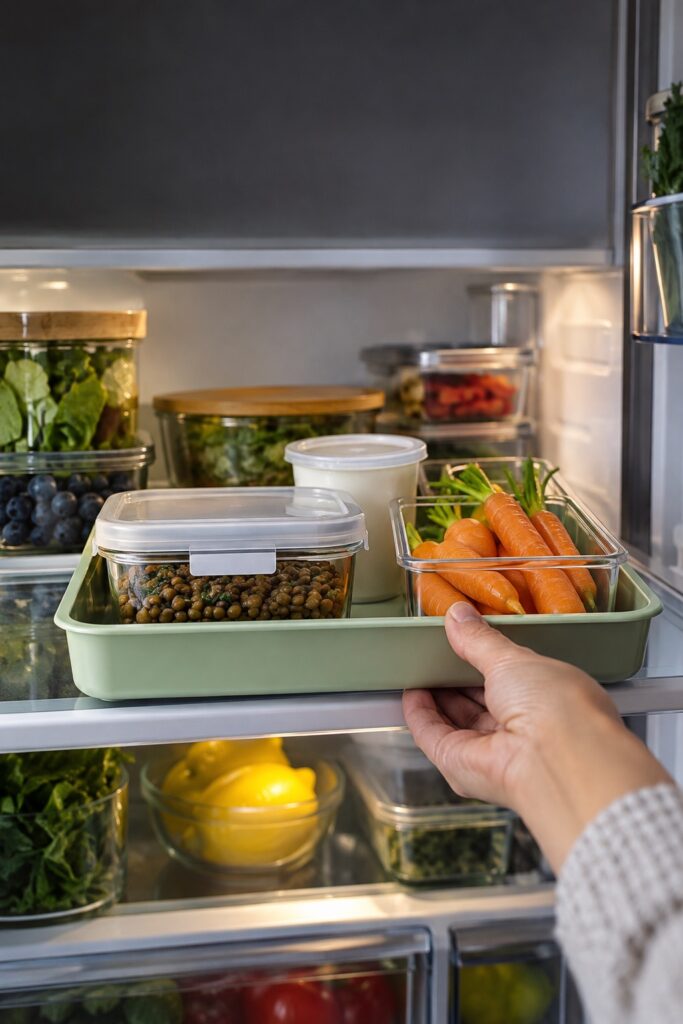
I want “use first” to feel like a helpful nudge when you open the refrigerator, not a demand to eat something doubtful. The idea is simple: put safe food where you can notice it, give it an actual next meal, and let that decision shorten your shopping list.
You do not need an app, a perfect inventory or a weekend devoted to rescuing scraps. Start with the next two meals.
Check the history before choosing the meal
Look at opened packages, cooked leftovers and produce that is losing quality. For each, ask what it is, when it was opened or cooked, and whether it has been stored properly. Keep original labels and any after-opening directions.
Smell and appearance can reveal some problems, but they cannot prove safety. Do not taste uncertain food. An unknown leftover date or unsafe time outside refrigeration is a reason to discard, not to make soup.
Under FDA household guidance, keep the refrigerator at 40°F/4°C or below. Perishables need refrigeration within two hours, or one hour above 90°F/32°C. USDA’s general leftover window is three to four refrigerated days; follow shorter product-specific limits. Turning yesterday’s food into a new dish does not give the older ingredients a new starting date.
Make a small, visible place
A washable tray or a labeled section of a refrigerator shelf can hold ready-to-eat items needing attention. Leave space for cold air to circulate. Put the date where it can be read without removing every container.
Raw meat and poultry stay contained and separated from ready-to-eat food, where their juices cannot drip onto it. Add a reminder to their package rather than moving them into the same tray. Cupboard foods need a cupboard version of “use first”; they do not all belong in one basket.
Keep the list short. If every item is urgent, you have made the whole refrigerator into homework.
Give each item one believable destination
I’ll use an imaginary refrigerator to make this practical. It contains lentils cooked and promptly chilled yesterday, a clearly dated opened yogurt still within its instructions, sound carrots, and an unidentified cooked container.
- The lentils become tomorrow’s lunch, with bread and a suitable dressing.
- The yogurt goes into breakfast or a cold sauce, whichever you actually want.
- The carrots join tonight’s dinner rather than another vegetable being bought.
- The unknown container stays out of the meal plan. If its safe history cannot be established, discard it.
If you will not be home for that lunch, freeze a suitable lentil portion promptly while it is still safe. Label the contents and dates. Freezing preserves an option; it cannot repair earlier mishandling. For texture, think ahead: a vegetable that softens after freezing may suit soup better than salad.
Do not turn waste reduction into food rescue
Date wording varies by country and product. Read the actual wording and local guidance rather than assuming every date is either an absolute deadline or “only quality.” Storage history still matters before and after the date.
Rotten produce should be discarded. Mold on bread, soft fruit or a prepared dish is not reliably solved by removing the visible patch. Use the USDA food-specific mold guidance rather than a universal trimming rule. Blending, baking and boiling are not general remedies for spoiled ingredients.
Let the next shop improve
The useful question after a repeated waste problem is “What would make this easier next time?” Half a herb bunch left every week may call for a smaller purchase or a different herb. A large cooked batch left untouched may call for less cooking, not more determination.
EPA’s food-waste guidance emphasizes checking stock, planning and appropriate storage. My practical version is one visible item, one wanted meal, one adjustment to the next grocery list. That is enough to begin.
Food-safety temperatures and storage limits here follow US household guidance; follow applicable local guidance and product instructions.
MarGo! editorial feature · AI-assisted, in the MarGo! first-person voice. Not a personal experience or product test unless stated.