
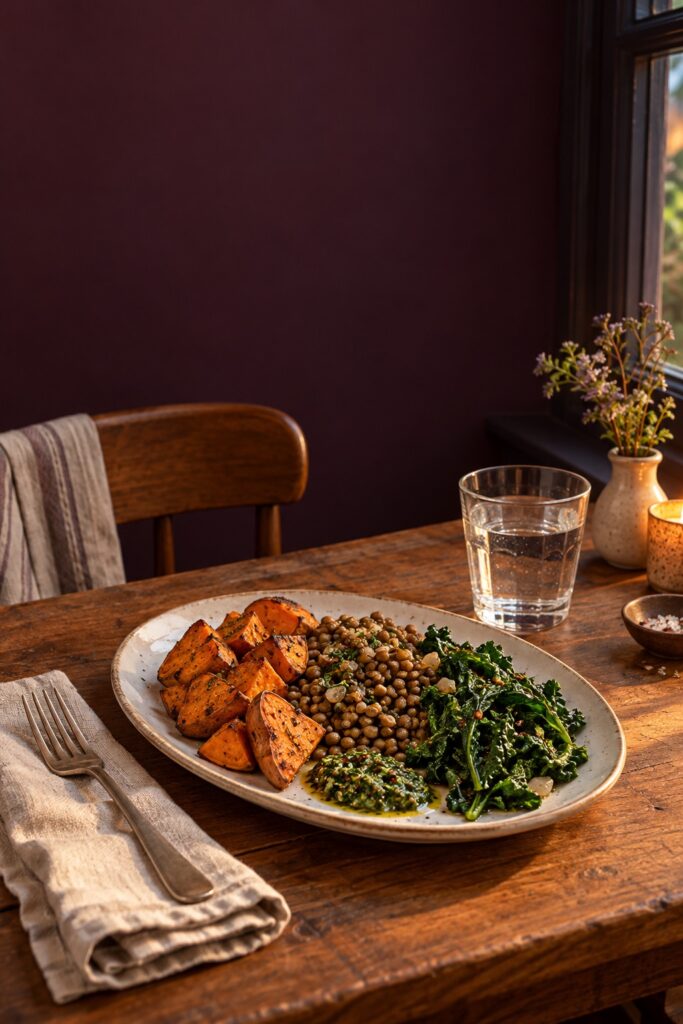
Cooking for one should begin with the meal you want, not with a family recipe that leaves you negotiating with five extra portions. I’ll help you choose where a single serving makes sense, where a second portion helps, and where a large batch creates more work than it saves.
A warm bowl, a sandwich with good fillings or a cooked dinner can all be a proper meal. The useful amount is the amount that fits your appetite and plans.
Choose today’s amount before opening the package
There are three straightforward options: cook for this meal only; cook enough for a specific second meal; or prepare an ingredient that can become two different meals. You do not have to choose the same approach every day.
For an illustrative example, imagine pasta with a tomato-and-chickpea sauce tonight. You could reserve some sauce before combining it with the pasta, then use it with bread and a separately cooked vegetable tomorrow. If you dislike repeating the sauce, make less instead. There is no prize for creating leftovers you do not want.
If tomorrow’s plans change, change the food plan while you still can. Freeze a suitable portion promptly, or reduce the quantity before cooking. Do not leave it as an unnamed obligation at the back of the refrigerator.
Shop for the portion you will use
A loose carrot, a smaller yogurt and separable frozen portions can suit a solo kitchen better than the largest pack. Check the price, but also count the wrapping, dividing, labeling and future cooking the larger purchase requires.
Before buying a perishable ingredient, name its next use. A pepper might go into dinner and tomorrow’s filling. If the second use requires three additional purchases, the bargain has become complicated. My grocery-planning guide works through a compact list.
Convenience has a place here. A prepared vegetable or canned ingredient may remove the step that would otherwise stop dinner happening. Judge it by cost, suitability and usefulness, not by how much work it allows you to claim.
Divide ingredients, not cooking time
Let me slow down at the scaling step. A quarter of a four-person recipe does not normally take a quarter of its cooking time. Food depth, pan area and evaporation all change. Use the recipe’s texture checks and the food’s required safety endpoint.
Write the smaller quantities before starting. If that produces awkward fractions of eggs or very tiny measures, halve the recipe and plan the second portion, or find a tested small-batch recipe. Baking and other structure-sensitive dishes deserve a method designed for the smaller pan.
A little sauce in a very wide skillet can dry quickly. Too much food in a tiny skillet can steam instead of browning. Try a suitable pan you already own before buying a special solo-cooking set.
Give the extra portion a name and date
Use clean utensils to reserve the portion and put it in a shallow, suitable container. A label saying what it is and when it was cooked is more useful than “leftovers.” Keep cold sauces separate if you will reheat the main component.
USDA household guidance gives cooked leftovers three to four refrigerated days and a reheating target of 165°F/74°C. Refrigerate promptly at 40°F/4°C or below, within two hours or one hour above 90°F/32°C. Do not wait for a large quantity to become completely cold on the counter. Follow shorter ingredient or product limits.
Keep the finish small and pleasant
Set out the plate, drink and utensils before serving. Put the extra food away, turn off the appliance, and leave the hot pan on a safe surface. The meal can have a clear end to the cooking even if there is a little washing up later.
For variety, change one part: bread instead of pasta, a cold sauce alongside a warm component, or a fresh herb added at serving. These are texture and flavor choices, not rules about what your plate should look like.
After three meals, notice the quantity that felt right and the task that felt disproportionate. Keep that information. A workable small kitchen comes from those details, not from learning to enjoy an entire freezer full of the same dinner.
Food-safety temperatures and storage limits here follow US household guidance; follow applicable local guidance and product instructions.
MarGo! editorial feature · AI-assisted, in the MarGo! first-person voice. Not a personal experience or product test unless stated.