
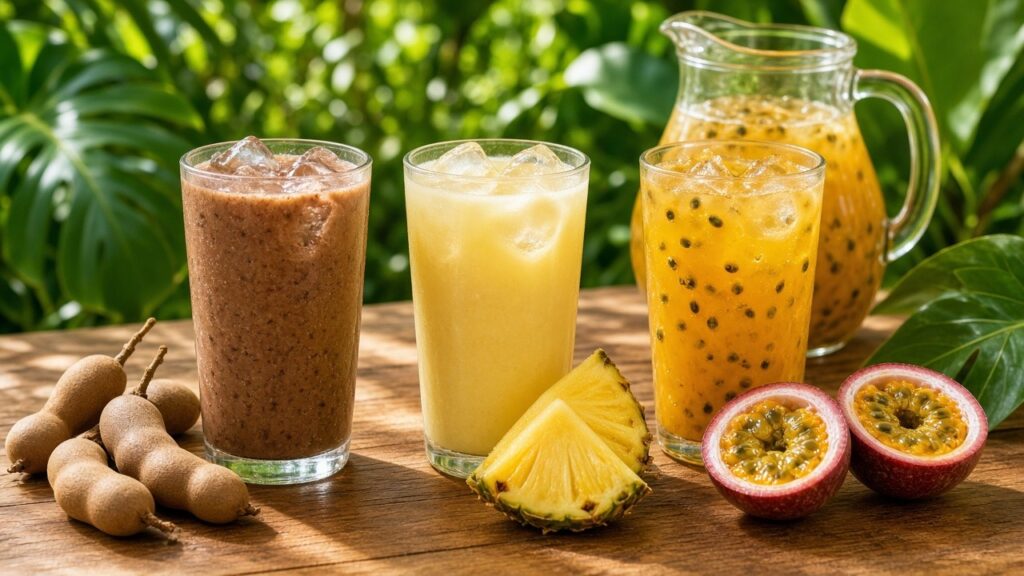
In Panama, lunch comes with a chicha. At a fonda, at a family table, at a school cafeteria, there’s almost always a pitcher of fresh fruit drink next to the rice and beans: tamarind, pineapple, passion fruit, papaya, whatever fruit is in season. For English speakers, the word can be confusing, because in other countries “chicha” means something very different.
In Panama, chicha is a fresh, non-alcoholic fruit drink made by blending or steeping fruit with cold water and sugar, then straining it and serving it over ice. The most common are chicha de tamarindo (tamarind pulp soaked and strained), chicha de piña (pineapple, sometimes made with the rind), and chicha de maracuyá (passion fruit). A basic ratio is about 1 cup of fruit pulp to 4 cups of water, sweetened with ⅓ to ½ cup of sugar, adjusted to taste. Fresh chicha keeps 2 to 3 days in the refrigerator.
Below: what chicha means in Panama, recipes for tamarind, pineapple and passion fruit chicha, other popular chichas, how sweet to make it, how to use frozen fruit pulp, how long it keeps and answers to common questions. For Panama’s corn drink, see my chicheme recipe.
What is chicha in Panama?
In Panama, “chicha” simply means a homemade fruit drink. It’s closer to what Mexicans call agua fresca or what English speakers might call fresh juice drink: fruit, water and sugar, served cold. A chicha is usually thinner and less sweet than a smoothie and more diluted than pure juice, which makes it refreshing in the heat.
Chicha is part of everyday life:
- At lunch, the main meal of the day, with rice, beans, stew and salad.
- At fondas, the small family restaurants, where the day’s chicha is often included with the plate of the day.
- At home, made with whatever fruit is ripe or cheap.
- At parties, in big pitchers or coolers.
Panamanian chicha vs Andean chicha
| Panamanian chicha | Andean chicha de jora | Peruvian chicha morada | |
|---|---|---|---|
| What it is | Fresh fruit drink | Fermented corn beer | Purple corn drink with fruit and spices |
| Alcohol | No | Yes, mildly | No |
| Main ingredient | Tamarind, pineapple, passion fruit and other fruit | Malted corn | Purple corn, pineapple, cinnamon, cloves |
| Served | Cold, with meals | Traditional, often at gatherings | Cold, with meals |
So if you order “chicha” in Panama, you’ll get fruit juice. In the Andes, you might get corn beer. Some Panamanian Indigenous communities also make fermented corn drinks, but in everyday Panamanian Spanish, chicha means a fruit drink.
Chicha de tamarindo recipe
Tamarind chicha is tart, sweet and slightly earthy, and it’s one of the most popular in Panama.
Working with tamarind pods vs pulp
- Fresh pods: brown, curved pods with brittle shells. Inside is sticky brown pulp around hard seeds, held together by fibers. Pods give the freshest flavor but take more work.
- Tamarind pulp blocks: pressed, seedless or seeded pulp sold in Latin and Asian markets. Easy and economical.
- Frozen tamarind pulp: sold as “pulpa de tamarindo” in Latin freezers. The fastest option.
- Tamarind concentrate: a thick paste in jars. Very strong; use a little at a time.
Ingredients (about 6 cups)
- 1 cup tamarind pulp (from about ½ pound pods, or a pulp block)
- 6 cups water, divided
- ⅓ to ½ cup sugar, to taste
- Ice
Instructions
- Peel the pods (if using): crack the shells and pull off the shell and the long strings.
- Soak the pulp in 3 cups of hot water for 30 minutes to 1 hour, until soft.
- Squeeze and mash the pulp with your hands or a spoon to separate it from the seeds and fibers.
- Strain through a sieve, pressing to get as much pulp as possible. Discard seeds and fibers.
- Add the remaining 3 cups of cold water and the sugar. Stir until dissolved.
- Taste and adjust: add water if it’s too tart or thick, sugar if it’s too sour.
- Chill and serve over ice.
Chicha de piña (with the rind)
Pineapple chicha can be made two ways: by blending the fruit, or by using the rind and core, which is a thrifty way to use the whole pineapple.
Fresh pineapple chicha (blended)
- Peel and core 1 ripe pineapple; cut the flesh into chunks.
- Blend with 4 cups cold water until smooth.
- Strain if you like it smooth, or leave it pulpy.
- Sweeten with ¼ to ⅓ cup sugar, depending on the pineapple.
- Serve over ice.
Pineapple rind chicha
- Wash the pineapple well before peeling.
- Place the rind and core in a pot with 8 cups of water and 1 cinnamon stick (optional; a few cloves too, if you like).
- Bring to a boil, then simmer for 20 to 30 minutes, until the water is fragrant and yellow.
- Cool, strain and discard the rind.
- Sweeten with ⅓ to ½ cup sugar.
- Chill and serve over ice.
Keep rind chicha in the refrigerator. If pineapple rind drinks are left at room temperature for days with sugar, they begin to ferment, which is how Mexican tepache is made. For a non-alcoholic chicha, chill it right away and drink it within 2 to 3 days.
Chicha de arroz con piña
A Panamanian classic: cooked rice blended with pineapple (or pineapple rind water), sugar and sometimes milk or cinnamon, then strained. It’s thick, creamy and filling.
Chicha de maracuyá
Passion fruit chicha is tangy, perfumed and bright yellow-orange.
Ingredients
- 6 to 8 passion fruits (or 1 cup frozen passion fruit pulp)
- 4 cups cold water
- ⅓ to ½ cup sugar, to taste
- Ice
Instructions
- Cut the passion fruits in half and scoop the pulp and seeds into a blender.
- Add 1 cup water and pulse briefly, just enough to loosen the pulp from the seeds without crushing the seeds.
- Strain, pressing on the pulp. Discard the seeds or keep a few for decoration.
- Add the remaining water and sugar and stir.
- Chill and serve over ice.
Passion fruit is strong, so taste and add more water if needed.
Other popular chichas in Panama
| Chicha | Flavor | Notes |
|---|---|---|
| Papaya | Sweet, mild | Often blended with milk too |
| Melón (cantaloupe) | Sweet, fragrant | Simple and refreshing |
| Guanábana (soursop) | Creamy, tart-sweet | Strain out seeds |
| Mango | Sweet, tropical | In mango season |
| Nance | Tangy, distinctive | Small yellow Panamanian fruit |
| Marañón (cashew fruit) | Astringent, tropical | Made from the fruit, not the nut |
| Limonada | Tart, sweet | Lime juice, water and sugar |
| Saril | Tart, spiced | Christmas drink of sorrel (roselle) with ginger |
Saril is a seasonal favorite. I explain it in traditional Panamanian Christmas food. And Panama’s famous non-alcoholic corn drink, chicheme, is a creamy cousin of the chichas. More drinks in the national drink of Panama.
How sweet should it be?
Panamanian chichas are usually sweet, but they should still taste of fruit. A good starting ratio:
| Fruit | Pulp | Water | Sugar (start) |
|---|---|---|---|
| Tamarind | 1 cup | 6 cups | ⅓ to ½ cup |
| Passion fruit | 1 cup | 4 to 5 cups | ⅓ to ½ cup |
| Pineapple | 1 pineapple | 4 cups | ¼ to ⅓ cup |
| Papaya | 2 cups | 3 cups | 2 to 4 tablespoons |
| Lime (limonada) | ½ cup juice | 4 cups | ½ cup |
Tips:
- Dissolve sugar in a little warm water first for a smoother drink, or make a simple syrup.
- Sweeten after chilling, when it’s easier to judge.
- Ice dilutes it, so make it a little stronger if you’ll serve it over lots of ice.
What sugar do Panamanians use?
Most people use white sugar. Some use raspadura or panela, unrefined cane sugar sold in blocks or cones, which adds a caramel flavor and works especially well with tamarind and pineapple. You can also use brown sugar, honey or a sugar substitute.
Troubleshooting
| Problem | Fix |
|---|---|
| Too sour | Add sugar a tablespoon at a time, or more water |
| Too sweet | Add water and a squeeze of lime |
| Too thick or pulpy | Strain through a finer sieve or add water |
| Watery and bland | Add more pulp; use riper fruit |
| Bitter passion fruit | Seeds were crushed in the blender; pulse briefly next time |
| Tamarind won’t separate from seeds | Soak longer in hot water and mash with your hands |
| Foam on top | Normal after blending; skim it or let it settle |
Making chicha for a party
- Scale up by the pitcher: one batch makes about 6 cups, enough for 4 to 6 glasses. Plan on about 1½ cups per person for a hot afternoon.
- Make it the morning of the party so it’s cold and fresh.
- Serve it in a large glass dispenser with fruit slices on top, and put the ice in glasses rather than the pitcher so it doesn’t get watery.
- Offer two flavors: one tart (tamarind or passion fruit) and one mild (pineapple or papaya).
- Keep a little extra sugar syrup on the side for guests who like it sweeter.
Using frozen fruit pulp
Frozen fruit pulp is a huge shortcut, and it’s how many Latin families in the US make chicha. Look in the freezer section of Latin supermarkets for packs of passion fruit, tamarind, guanábana, mango, guava, nance and more.
- Thaw the pack partially, or run it under warm water for a minute.
- Blend with water and sugar using the ratios above.
- Strain if needed.
- Taste and adjust.
Frozen pulp is usually unsweetened, but some brands add sugar, so check the label.
How long chicha keeps
| Type | Refrigerator |
|---|---|
| Fresh fruit chicha | 2 to 3 days |
| Pineapple rind chicha | 2 to 3 days (chill promptly) |
| Tamarind chicha | 3 to 4 days |
| Rice chicha | 1 to 2 days |
Keep chicha covered in the refrigerator and stir before serving, since pulp settles. If it smells sour, fizzy or alcoholic, it’s fermenting; throw it out. You can also freeze chicha in ice cube trays and blend the cubes later.
What to serve with chicha
Chicha goes with almost any Panamanian meal: arroz con pollo, sancocho, rice with red beans, stews and fried fish. On a hot day, it’s a snack on its own.
FAQ
What is pulpa de tamarindo?
Pulpa de tamarindo is tamarind pulp, the sticky, tart flesh from inside tamarind pods. It’s sold frozen, in pressed blocks or as a concentrate, and is used to make chicha, sauces and candies.
Can I use frozen fruit pulp?
Yes, and it’s very convenient. Blend thawed pulp with water and sugar. Many Latin markets in the US sell frozen pulp for tamarind, passion fruit, soursop, mango and more.
How long does chicha keep in the fridge?
About 2 to 3 days for most fresh fruit chichas, and up to 3 or 4 days for tamarind. Throw it out if it smells sour or fizzy.
Is Panamanian chicha alcoholic?
No. In Panama, chicha means a fresh, non-alcoholic fruit drink. Andean chicha de jora, a fermented corn drink, is alcoholic, but that’s a different tradition.
What sugar do Panamanians use?
Usually white sugar. Some families use raspadura (panela), unrefined cane sugar, for a deeper flavor.
Can I make chicha without sugar?
Yes. Ripe fruits like pineapple, papaya and mango are sweet enough on their own for many people. Tart fruits like tamarind and passion fruit usually need some sweetener; use a sugar substitute if you prefer.