
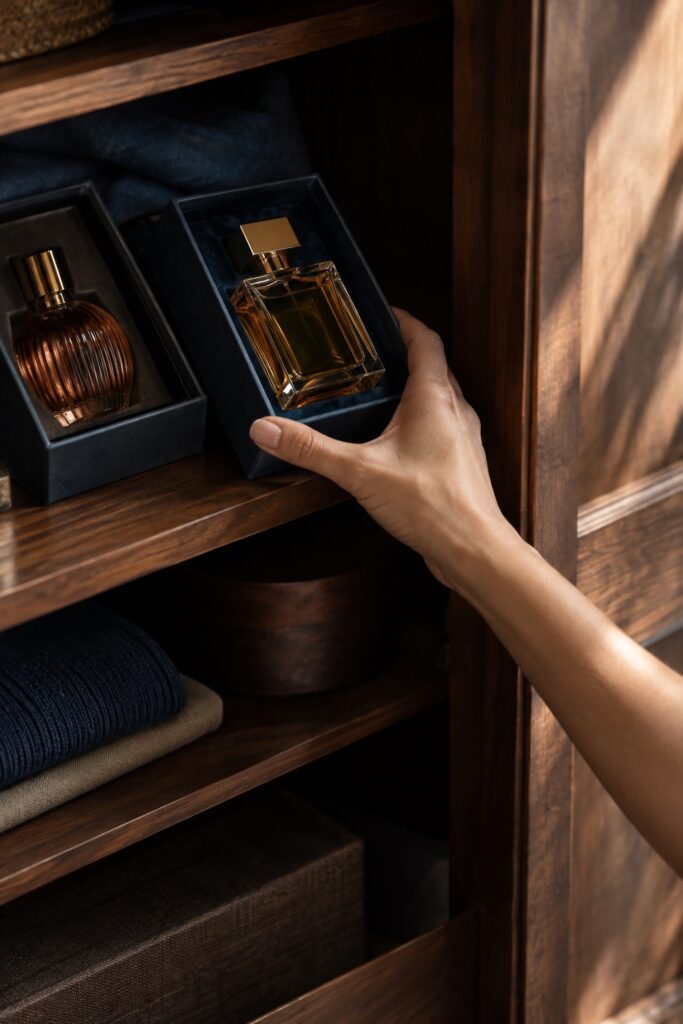
A perfume bottle can be lovely to look at, but the sunniest place on a dressing table is not necessarily the kindest place to keep it. I’ll walk you through a practical storage check, then separate a changed product from a damaged container or a change in how you perceive smells.
This is not a preservation experiment or a promise that a bottle will last a certain number of years. I’m keeping the advice grounded in product instructions and ordinary observation, without pretending that every fragrance ages the same way.
Start with the instructions, not an internet countdown
Look for storage guidance, warnings and any date or period-after-opening information supplied with the actual product. If something is unclear, the manufacturer is a better starting point than a generic claim that all perfume lasts three years.
FDA says cosmetic shelf life depends on the product, its use and its storage. Its guidance also identifies sunlight, air and temperature changes as factors that can alter cosmetics. That supports sensible care; it does not provide an exact expiry date for an unidentified perfume.
Compare places by their conditions
Consider an interior cupboard or drawer away from direct sunlight and heat, provided it follows the manufacturer’s guidance and is safely out of reach of children and pets. Check what happens during an ordinary day. A shelf that is shaded in the morning may receive strong afternoon sun; a car can be a very different storage environment from a bedroom.
The original box can help keep a bottle out of light, but it does not cancel the effect of an unsuitable location. A bathroom may also have fluctuating conditions. There is no need to turn this into a complicated display project: give the product a stable, appropriate home and keep its container properly closed.
I would not make refrigeration a default instruction. Ask the manufacturer if you are unsure about unusual conditions, rather than moving a product between environments in pursuit of a supposed universal trick.
Keep the container part of the decision
A loose closure, leaking bottle or damaged sprayer deserves attention even if the fragrance still smells familiar. Keep the product labelled and avoid mixing it with another fragrance or adding water to stretch it. Those changes make it harder to know what is in the bottle or follow the original instructions.
If you need a travel size, compare a properly labelled smaller product with any decanting arrangement you are considering. Keep identifying information and directions available. An unlabelled little container may save space now and create uncertainty later.
Record useful facts, not a whole perfume diary
A small note can be enough: exact product and version, purchase source, approximate opening date and where it has been kept. Keep the batch details if you may need to contact the manufacturer.
Here is an invented enquiry: “This bottle was opened in June and has been kept in an interior cupboard. The sprayer has started leaking and the liquid looks different from my earlier photograph. What do you advise for this batch?” That gives the company something concrete to answer without claiming that you have diagnosed spoilage.
Treat a change as a question
A darker colour, an unfamiliar smell or a packaging fault is a reason to pause and check. Appearance alone cannot certify that a product is safe or unsafe. Repeatedly applying a questionable product to skin is not a useful way to settle the uncertainty.
Likewise, “I cannot smell it as strongly” does not prove the bottle has deteriorated. Keep the question narrow: is this one bottle different, or have several familiar smells changed? NIDCD’s information on smell disorders explains why a broader or persistent change in smell deserves attention from a healthcare professional rather than an automatic shopping replacement.
Keep safety and disposal straightforward
Follow flammability warnings and keep the product away from ignition sources as directed. Do not leave a bottle where a child or pet could mistake it for something to taste or play with. A beautiful container is still a product container.
When a bottle is unwanted or questionable, check the label and your local waste authority’s instructions. EPA’s household hazardous-waste guidance is a useful starting point in the US; local collection rules decide the actual route. Do not assume a drain, fire or ordinary recycling bin is appropriate for leftover liquid.
For the next purchase, storage can be part of the budget. A smaller bottle with a clear place to live may suit you better than a large bargain that you are unlikely to use. I want fragrance care to make enjoyment easier, not give you another household obligation.
This is general product and lifestyle information, not individual medical advice. For a health concern, consult an appropriately qualified professional.
MarGo! editorial feature · AI-assisted, in the MarGo! first-person voice. Not a personal experience or product test unless stated.