
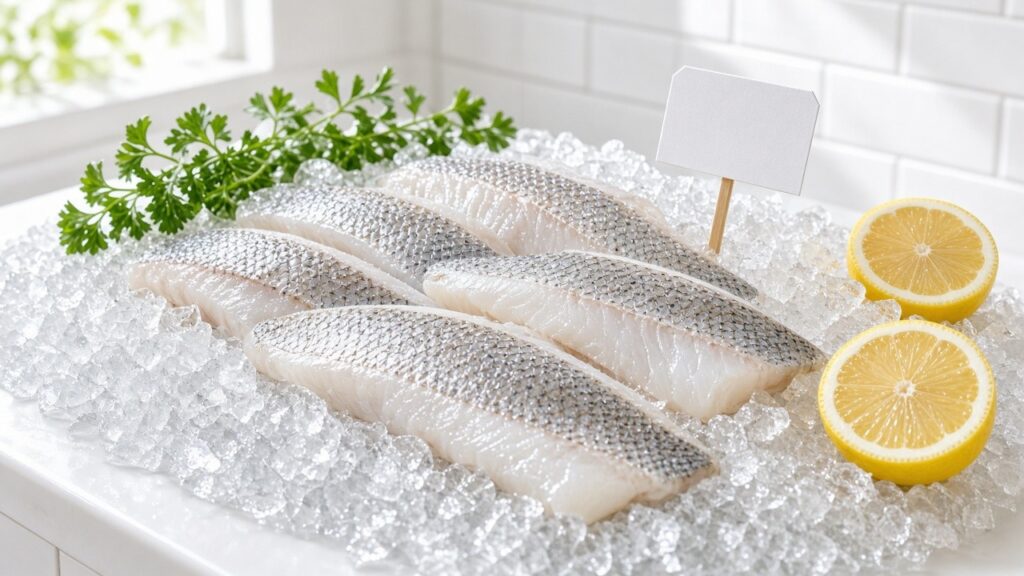
In Panama, corvina is the fish. It’s in the ceviche cups at the Mercado de Mariscos, on the plate as pescado frito with patacones at the beach and in family kitchens every week. Then you move to the U.S., ask for corvina at the supermarket and get a blank look, or a fillet labeled “sea bass,” “drum” or “croaker” that may or may not be the same thing. The naming is a mess, so let’s sort it out.
Corvina in English is usually translated as “sea bass,” but that’s misleading: corvina is a family of mild, firm, white-fleshed saltwater fish in the drum and croaker family (Sciaenidae), including several weakfish or “sea trout” species in the genus Cynoscion that are fished along the Pacific coast of Central and South America. In the U.S., you may find it sold as corvina at Latin and Asian fish counters, or as related fish like white sea bass, drum or croaker. If you can’t find corvina, the best substitutes are red snapper, halibut, striped bass or white sea bass for ceviche, and almost any firm white fish for frying or baking.
Below: what corvina is in English and why the names are confusing, what it tastes like, how Panama cooks it, whether it’s safe raw in ceviche, where to buy it in the U.S., the best substitutes, how to cook it four ways, a comparison table and answers to common questions. My recipes: Panamanian ceviche and keto ceviche.
What is corvina in English?
The short answer: corvina is a drum or croaker fish, often called “sea bass” in English-language menus and markets, though it isn’t a true bass.
Corvina vs croaker vs drum vs sea bass (the naming mess)
| Name | What it means | Is it corvina? |
|---|---|---|
| Corvina | Spanish (and Portuguese “corvina”) for several drum/croaker-family fish, especially Cynoscion weakfish in Latin America | Yes |
| Drum | English name for the Sciaenidae family (the fish make a drumming sound) | Corvina is a drum |
| Croaker | Another English name for many drums (they “croak”) | Corvina is a type of croaker in the broad sense |
| Weakfish / sea trout | English names for Cynoscion species on U.S. coasts (not true trout) | Close relatives of Latin American corvina |
| White sea bass | A Pacific drum (Atractoscion nobilis), not a true bass | A cousin; similar eating qualities |
| Sea bass | A vague market name used for many unrelated fish (black sea bass, European sea bass, Chilean sea bass, which is actually toothfish) | Not usually corvina |
| Branzino / European sea bass | A true bass from the Mediterranean | No |
| Chilean sea bass | Patagonian toothfish, a market name | No |
Why the mess? Fish names vary by country and language, and “sea bass” sells better in English than “croaker.” In Spain and some other countries, “corvina” refers to a different drum (the meagre, Argyrosomus regius). In Panama, Costa Rica, Peru and Colombia, corvina generally means local Cynoscion species and similar drums.
What does corvina taste like?
- Flavor: mild, clean, slightly sweet; not “fishy.”
- Texture: firm and moist, with medium to large flakes when cooked.
- Color: white to pale pink when raw, bright white when cooked.
- Fat: lean.
That firm, mild character is exactly why it’s prized for ceviche: it holds its shape in lime juice and takes on the flavors of onion, celery, culantro and ají chombo without falling apart.
Corvina in Panama: ceviche de corvina and pescado frito
Ceviche de corvina
Panama’s classic ceviche is cubed corvina marinated in fresh lime juice with finely chopped onion, celery, ají chombo and culantro, served chilled in small cups with saltine crackers. Full recipe: Panamanian ceviche.
Pescado frito
Whole fried fish or fried fillets, served with patacones (fried green plantains), yuca frita, coconut rice or a simple salad and lime. Corvina fillets are also breaded and fried as “filete de corvina.”
Other Panamanian corvina dishes
- Corvina al ajillo: pan-seared in garlic and butter or oil.
- Corvina en salsa: simmered in a tomato-sofrito sauce.
- Sopa de mariscos and fish soups.
- Arroz con mariscos: see arroz con mariscos vs paella.
Is corvina safe to eat raw in ceviche? (food-safety basics, no medical claims)
Lime juice “cooks” fish chemically (it denatures the proteins so the fish turns opaque), but it doesn’t kill all bacteria or parasites the way heat does. Food-safety basics for ceviche:
- Buy from a fishmonger you trust and tell them you’re making ceviche.
- Choose fish that has been frozen in a way that kills parasites. The FDA’s guidance for fish meant to be eaten raw is freezing at -4°F (-20°C) or below for 7 days, or at -31°F (-35°C) until solid and then stored at that temperature for 15 hours. Many “sushi-grade” or previously frozen fillets are handled this way; ask.
- Keep it cold from store to bowl.
- Make ceviche the day you buy the fish, and eat it within a day.
- Some people should avoid raw fish, including people who are pregnant, young children, older adults and people with weakened immune systems. They can use cooked shrimp or fish instead. Follow your healthcare provider’s advice.
Where to buy corvina in the US
Where to look
- Latin American markets and fishmongers, especially those serving Central and South American communities.
- Asian supermarkets with large fish counters (they often carry many types of drum and croaker, whole or filleted).
- Specialty seafood shops and online seafood retailers.
- Frozen sections of Latin markets: frozen corvina fillets from Latin America sometimes appear.
In Chicago, I look at the fish counters of big Asian supermarkets and Latin markets; my ceviche post and where to buy culantro in Chicago cover the shopping trip.
What to ask for at the fish counter
- “Do you have corvina?”
- If not: “Do you have white sea bass, drum, croaker, weakfish or sea trout?”
- “Was it previously frozen?” (important for ceviche)
- “When did it come in?”
- “Can you skin and fillet it?”
Look for clean, ocean-like smell, firm flesh that springs back and moist, shiny skin. Whole fish should have clear eyes and red gills.
Frozen options
Frozen fillets are often a great choice, especially for ceviche, because they’ve been frozen. Thaw them overnight in the refrigerator, never at room temperature, and pat them dry.
Best substitutes for corvina (snapper, halibut, tilapia, sea bass)
| Substitute | For ceviche | For frying | For baking/grilling | Notes |
|---|---|---|---|---|
| Red snapper | Very good | Very good | Very good | Slightly sweet, firm; a Panamanian favorite too |
| Halibut | Excellent | Good | Excellent | Firm, mild, pricier |
| White sea bass / striped bass | Excellent | Very good | Very good | Closest in texture |
| Black sea bass | Good | Very good | Very good | Delicate, sweet |
| Mahi-mahi | Good | Good | Excellent | Firmer, meatier |
| Cod / haddock | Fair | Excellent | Good | Soft, flakes easily |
| Tilapia | Fair | Good | Good | Soft, mild, freshwater; inexpensive |
| Swai / basa | Not recommended | Fair | Fair | Very soft |
For ceviche, choose firm, mild, lean, white saltwater fish. Avoid oily fish like salmon or mackerel (unless you’re making a specific style) and very soft fish.
How much to buy and how to store it
How much
| Use | Per person |
|---|---|
| Ceviche as an appetizer | About 3 to 4 oz (85–115 g) skinless fillet |
| Ceviche as a main | About 6 oz (170 g) |
| Fried or baked fillet | 5 to 6 oz (140–170 g) |
| Whole fish | About 1 lb (450 g) whole fish per person, since head, bones and skin are part of the weight |
Storage
- Fresh fish: refrigerate at 40°F or below and cook within 1 to 2 days. Keep it in the coldest part of the fridge, ideally on ice in a container that drains.
- Frozen fish: keep frozen until needed; thaw in the refrigerator overnight, or in a sealed bag in cold water for faster thawing.
- Cooked fish: refrigerate within 2 hours and eat within 3 to 4 days.
- Ceviche: best the day it’s made; keep no more than 1 day.
How to tell if fish is fresh
- Smell: mild and ocean-like, never sour or strongly fishy.
- Flesh: firm, moist and springs back when pressed.
- Color: bright, with no dull, dry or brown edges.
- Whole fish: clear, bulging eyes and bright red gills.
How to cook corvina
Pan-fried
- Pat fillets dry and season with salt, pepper and garlic powder.
- Dredge lightly in flour (optional).
- Heat oil (or oil and butter) in a skillet over medium-high heat.
- Cook 3 to 4 minutes per side, depending on thickness, until golden and opaque, about 145°F inside.
- Finish with lime and a spoonful of garlic butter.
Baked
- Heat the oven to 400°F.
- Place fillets in an oiled dish. Top with sliced onion, tomato, peppers, garlic, olive oil and culantro.
- Bake 12 to 15 minutes until the fish flakes easily.
Grilled
- Brush fillets or whole fish with oil and season.
- Grill over medium-high heat on a clean, oiled grate or in a fish basket, 3 to 5 minutes per side for fillets.
- Serve with lime and hot sauce. See my Panamanian hot sauce recipe.
Ceviche
Cut previously frozen fillets into ½-inch cubes, cover with fresh lime juice, add onion, celery, culantro, ají chombo and salt, and chill 1 to 4 hours. Full details: Panamanian ceviche.
Corvina vs sea bass vs mahi mahi vs snapper (comparison table)
| Corvina | Sea bass (black/striped) | Mahi-mahi | Red snapper | |
|---|---|---|---|---|
| Family | Drum/croaker | True bass (black sea bass is a sea bass; striped bass is a temperate bass) | Dolphinfish | Snapper |
| Flavor | Mild, clean, slightly sweet | Mild, delicate, sweet | Mild to moderate, sweet | Mild, sweet, nutty |
| Texture | Firm, medium flakes | Tender to firm, fine flakes | Very firm, large flakes | Firm, moist |
| Best for | Ceviche, frying, baking | Roasting, pan-searing, ceviche | Grilling, tacos | Whole fried, baked, ceviche |
| U.S. availability | Limited | Good | Good | Good |
| Price | Moderate to high | Moderate to high | Moderate | High |
Other Panamanian seafood
If you love corvina, try Panamanian bacalao (salt cod) and torrejitas de bacalao, or see Panamanian food for the bigger picture.
FAQ
Why is corvina expensive?
In the U.S., it’s often imported, sold fresh in limited quantities and in demand for ceviche. Prices also depend on season, catch and whether it’s sold fresh or frozen.
Is corvina farm-raised?
Most corvina sold is wild-caught, though aquaculture of some drum species exists in different countries. Ask your fishmonger where and how it was caught or raised; labels often show the country of origin and “wild” or “farmed.”
Is corvina the same as sea bass?
Not exactly. Corvina is often called “sea bass” in English, but it’s a drum or croaker, not a true bass. The texture and flavor are similar to many sea basses.
Is corvina a good fish for ceviche?
Yes, it’s the classic Panamanian ceviche fish because it’s firm, mild and lean. Buy fish that’s been properly frozen for raw use.
What’s the best substitute for corvina in ceviche?
Red snapper, halibut, white sea bass or striped bass.
Does corvina have a lot of bones?
Fillets are usually boneless or have a few pin bones you can pull out with tweezers. Whole fish have a typical central skeleton.