
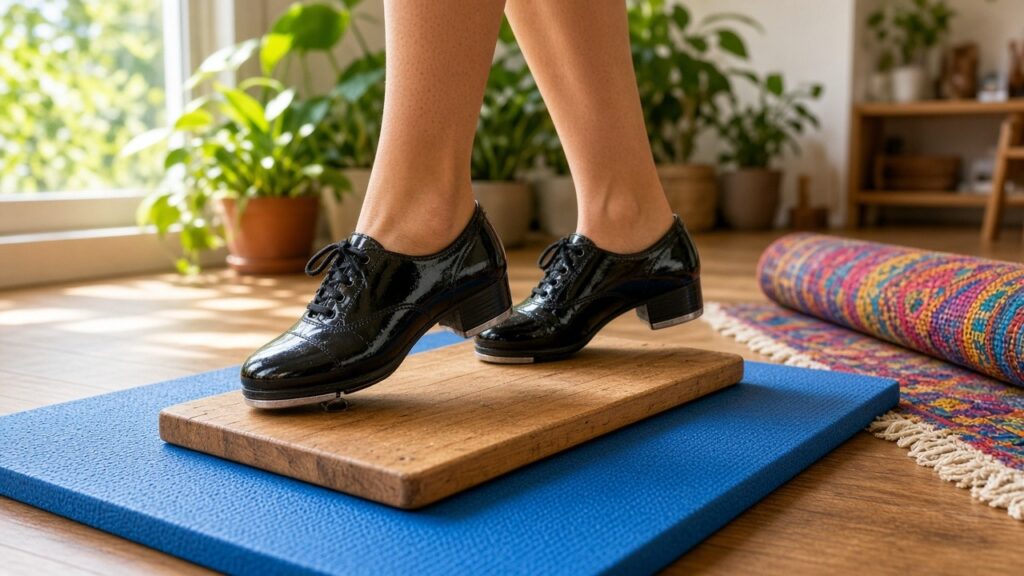
Tap dance is supposed to be heard. That’s the whole point. But when you live in an apartment, with neighbors below and thin floors, every shuffle and stomp can travel straight through the ceiling below you. The good news: you can make tap practice a lot quieter without giving it up.
You can’t make tap shoes silent, but you can make practice much quieter. The biggest difference comes from what you dance on: a wooden tap board placed on a thick rubber or foam mat absorbs impact before it reaches the floor. Tightening the screws on your taps reduces the ringing jingle, and rubber covers or tape over the taps cut the sound further for short sessions. You can also practice footwork in sneakers or soft-soled shoes first, keep practice to reasonable daytime hours, and talk to your neighbors before they talk to you.
Below: what makes tap noisy, the best practice surfaces, how loosening and tightening taps changes the sound, tap covers and rubber-soled options, practicing in sneakers, apartment etiquette, how to make tap shoes louder when you want to, and answers to common questions. If you’re just starting, see teach yourself tap dance.
Can you make tap shoes quieter?
Yes, partly. Tap noise reaches your neighbors in two ways:
- Airborne sound: the bright clicks you hear in the room. Rugs, curtains and closed doors reduce how far it carries.
- Impact sound: the vibration of your feet hitting the floor, which travels through the building structure. This is what neighbors below hear most, and it’s the hardest to stop.
So the most effective fixes are the ones that absorb impact: a floating board on a soft underlay. Changes to the shoes help with airborne sound and ringing.
| Fix | Reduces airborne sound | Reduces impact sound | Keeps the feel of tap |
|---|---|---|---|
| Tap board on rubber or foam mat | Some | A lot | Yes |
| Tightening the taps | Some | A little | Yes |
| Rubber covers or tape on taps | A lot | Some | Partly |
| Practicing in sneakers | A lot | A lot | No, but trains the footwork |
| Rugs and curtains in the room | Some | Little | Yes |
| Practicing at the right time of day | — | — | Keeps the peace |
Practice surfaces that cut noise (board on rubber or foam)
The most effective setup is a floating floor: a hard wooden board on top of a layer of soft material that isolates it from the building floor.
What to put under the board
- Rubber mats: heavy rubber gym flooring or stall mats are dense and absorb impact well. Thicker is better; ½ inch to ¾ inch works well.
- Dense foam: interlocking foam floor tiles or a thick exercise mat work, though very soft foam makes the board wobble.
- Cork underlay: quieter than bare floor, and stable.
- Combination: a rubber mat under a wooden board, with a rug underneath both, gives the most reduction.
Avoid dancing on very soft, squishy surfaces directly; they’re bad for your ankles and kill the sound you need to hear.
The board
A tap board is a piece of hardwood or plywood that gives you the right surface for clean sounds. A ¾-inch plywood board, 2 by 3 feet or larger, is a common choice. I explain sizes, materials and how to make one in best tap board for home practice.
Where to put it
- On the ground floor or in a basement if you have the option.
- Away from shared walls and not directly above a neighbor’s bedroom.
- On a concrete slab if possible; concrete transmits less impact than a wooden subfloor, though it’s harder on your joints, so keep the underlay.
- Not on carpet alone: the board will slide and rock. Put a rubber mat under it.
Loosening or tightening taps (what each does)
Most tap shoes have taps attached with small screws. Many also have a sound-adjusting screw, a small screw on the toe tap that changes how tightly the tap’s two layers press together.
| Adjustment | Sound | When to use it |
|---|---|---|
| Tighter | Duller, quieter, less ring | Apartment practice, cleaner rhythms |
| Looser | Brighter, louder, more jingle and resonance | Performances, a bigger sound |
To adjust:
- Use a small screwdriver that fits the screw heads.
- Turn a quarter turn at a time, then test the sound.
- Don’t overtighten, which can strip the screws or crack the tap.
- Don’t loosen so much that the tap moves or rattles freely; a loose tap can catch, scratch floors or fall off.
- Check the screws regularly, since they loosen with use.
If your shoes don’t have an adjusting screw, tightening the regular mounting screws helps reduce rattle but won’t change the tone much.
Practice tap covers and rubber-soled options
Covers
- Rubber or silicone sole covers stretch over the shoe and muffle the taps. They cut sound a lot but change how the taps feel and grip.
- Stretchy overshoe covers made for dance or work shoes can work too.
- Felt or moleskin pads stuck on the taps reduce the click.
Tape
Some dancers put masking tape or painter’s tape over the taps for quiet practice. It reduces the sharp sound and is cheap, but it wears through fast, leaves sticky residue and can make the taps slippery. Use it for short sessions and remove it afterward.
Rubber-soled practice shoes
Some tap shoes come with a rubber pad on the sole or heel for traction. They’re not quieter on the taps themselves but grip better on a board. Character shoes, jazz shoes or soft sneakers are quieter alternatives for practicing rhythms.
Keep in mind: muffled taps don’t let you hear whether your sounds are clean. Use them to drill steps quietly, then check clarity when you can make noise.
Practicing in sneakers first
Practicing footwork in sneakers or socks is a great way to learn steps quietly:
- Learn the shape of a step (a shuffle, flap, ball change, paradiddle) slowly in sneakers.
- Say the sounds out loud (“brush-step, brush-step”) so you build rhythm without noise.
- Use a metronome to keep time.
- Add tap shoes later at a time when you can make noise, and check that every sound is clear.
You’ll miss feedback on clarity, but you’ll build muscle memory. Many dancers combine quiet practice at night with full-sound practice on weekends or at a studio. More ideas in how to practice dance at home.
Times and etiquette for apartment practice
- Check your lease or building rules for quiet hours. Many buildings set quiet hours in the late evening and early morning.
- Practice during the day, when neighbors are more likely to be out or awake.
- Keep sessions short: 20 to 30 minutes is plenty for drilling.
- Talk to your neighbors. Tell them you’re learning tap and ask when noise bothers them least. Most people are understanding when you ask first.
- Give them your number so they can text you instead of complaining to the landlord.
- Respond quickly if someone asks you to stop.
- Rent studio time for loud practice. Many studios rent practice space by the hour.
Quiet setups by home type
| Home | Best setup | Notes |
|---|---|---|
| Upstairs apartment, wooden floor | Board on ¾-inch rubber mat, on a rug | Impact noise travels most here; keep sessions short |
| Ground-floor apartment | Board on rubber or cork | Easier; still mind shared walls |
| Basement or garage on concrete | Board on a thin rubber mat | Underlay protects your joints more than neighbors |
| House | Board on a mat in any room | Avoid rooms above bedrooms at night |
| Condo with rules on flooring | Board on mat, check HOA rules | Some buildings require underlay for hard floors anyway |
A 25-minute quiet practice session
- Warm up (5 minutes): ankle circles, rises and gentle toe and heel taps in sneakers. See dance warm-up for beginners.
- Sneaker drills (5 minutes): say the sounds out loud as you work through shuffles, flaps and ball changes to a metronome.
- Tap shoes on the board (10 minutes): the same steps at low volume, focusing on clear, even sounds.
- Combination (3 minutes): put two or three steps together.
- Cool down (2 minutes): calf and ankle stretches.
Light, controlled sounds are a skill. Dancers who can tap quietly and clearly have better control when they open up the sound on stage.
What steps are quietest?
| Quieter | Louder |
|---|---|
| Toe taps, heel digs done lightly | Stomps and stamps |
| Shuffles and flaps at low volume | Jumps and wings |
| Ball changes | Cramp rolls with heavy heel drops |
| Paddle and rolls, played lightly | Pullbacks (landing) |
Drill quiet steps at home and save jumps and stamps for the studio. Practicing at low volume also improves your control, because clean light sounds are harder than loud ones.
Making tap shoes louder (the reverse)
If you want a bigger sound for performance or a recital:
- Loosen the adjusting screw a quarter turn at a time.
- Dance on a hardwood or tap floor, which resonates.
- Use taps with a larger sound chamber. Many professional shoes have bigger taps that produce more volume.
- Keep your ankles relaxed so the taps strike fully.
- Practice with weight placement: clear, committed weight transfers make sounds stronger.
Common mistakes
- Dancing on carpet: it kills the sound and can twist your ankles. Use a board.
- Dancing on tile or bare concrete without underlay: it’s loud and hard on your joints.
- Loosening taps too much: the tap can catch or fall off.
- Practicing late at night without asking neighbors.
- Only practicing muffled: you’ll never hear whether your sounds are clean.
FAQ
Can I put tape or covers on my taps?
Yes, for short quiet sessions. Tape and rubber covers reduce noise but wear out, change the feel and can be slippery. Remove tape afterward to avoid residue.
Should I loosen or tighten the taps?
Tighten them for quieter, duller sound, and loosen them for a brighter, louder sound. Make small adjustments, and don’t loosen them so much that they rattle.
What surface is quietest for tap at home?
A wooden tap board placed on a thick rubber mat or dense foam, ideally on a rug, on the lowest floor you can use. It absorbs most of the impact before it reaches the building.
Can I practice tap in sneakers first?
Yes. Learning step shapes and rhythms in sneakers is quiet and builds muscle memory. Check your sounds in tap shoes later.
How do I keep the neighbors happy?
Talk to them early, practice at reasonable times, keep sessions short, use a board on a rubber mat, and stop when asked. Rent studio time for loud practice.
Will tap shoes damage my floor?
They can scratch wood, vinyl and laminate floors, and they can chip tile. Always practice on a tap board.
Do quiet practice taps make me a worse dancer?
No, as long as you also practice with full sound sometimes. Muffled practice builds muscle memory and control; full-sound practice on a board or in a studio shows you whether each sound is clean. Use both.