
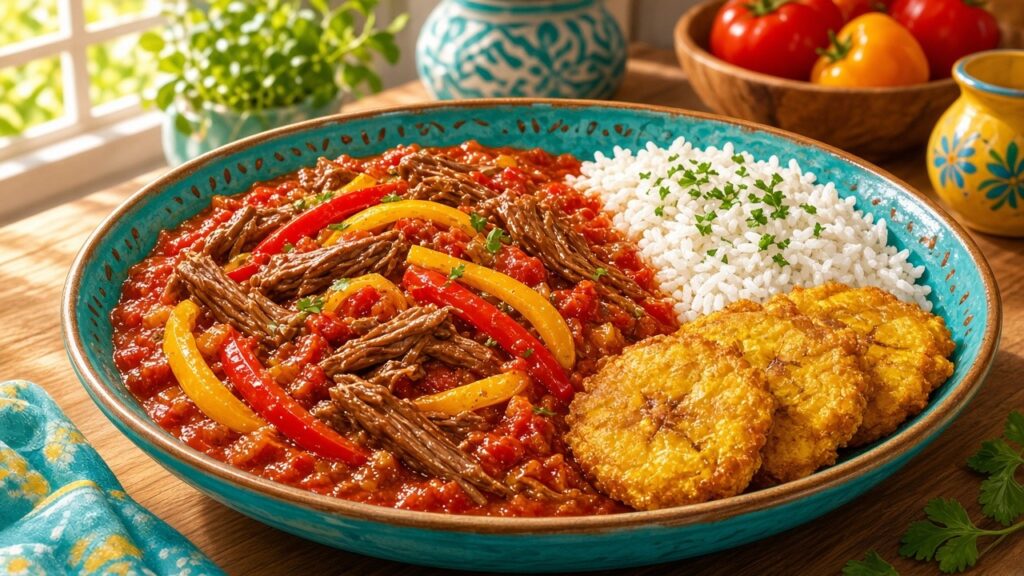
Ropa vieja is famous as a Cuban dish, but Panamanian kitchens have their own version, and it’s a staple for lunch, breakfast and the leftovers that turn into empanadas the next day. The method is the same everywhere: cook the beef until it falls apart, shred it into “old clothes,” then simmer it in a savory sauce.
Panamanian ropa vieja is beef (flank, skirt or chuck) boiled with aromatics until tender, shredded by hand, then simmered for 15 to 20 minutes in a sofrito of onion, sweet peppers, garlic, tomato sauce and culantro, often with a splash of Worcestershire. Compared with Cuban ropa vieja, it skips cumin and olives in many homes, uses culantro and is served with white rice, patacones, or hojaldras at breakfast.
Is ropa vieja Panamanian or Cuban?
Both. The dish traces back to Spain (Canary Islands) and spread across the Spanish-speaking Caribbean and Central America. Cuba made it famous internationally, but Panama, Puerto Rico, Venezuela (as carne mechada) and others have long-established versions.
What “ropa vieja” means
Literally “old clothes.” The shredded beef in its sauce is said to look like a tangle of rags. There’s a folk tale about a poor man who cooked his old clothes with love and they became meat, but the name is mostly just descriptive.
Panamanian vs Cuban ropa vieja
| Feature | Panamanian | Cuban |
|---|---|---|
| Herbs | Culantro (and cilantro) | Often bay leaf, oregano |
| Spices | Minimal; garlic, oregano | Cumin common |
| Olives / capers | Sometimes, not essential | Very common |
| Wine | Rarely | Dry white or cooking wine common |
| Sauce | Tomato sauce, sometimes Worcestershire | Tomato sauce, sofrito |
| Served with | White rice, patacones, hojaldras, tortillas | White rice, black beans, maduros |
Venezuelan carne mechada and Colombian carne desmechada are close cousins with their own seasoning.
Ingredients
Serves 6
For boiling the beef
- 2½ lb (1.1 kg) flank steak, skirt or boneless chuck
- 1 onion, halved
- 4 garlic cloves
- 1 bay leaf (optional)
- 4–5 culantro leaves
- 1 tablespoon salt
- Water to cover (about 8 cups)
For the sauce
- 2 tablespoons oil
- 1 large onion, thinly sliced
- 1 green and 1 red bell pepper, sliced into strips
- 3 ají dulce (optional), minced
- 4 garlic cloves, minced
- 1 can (8 oz/225 g) tomato sauce
- 2 tablespoons tomato paste
- 1 tablespoon Worcestershire sauce
- ½ teaspoon dried oregano
- 1 to 1½ cups reserved beef broth
- 6–8 culantro leaves, chopped
- Salt and black pepper
Best beef: flank, skirt or chuck
- Flank: the classic. Long fibers shred into beautiful strands.
- Skirt: richer and faster-cooking, slightly fattier.
- Chuck: cheapest, most forgiving and very juicy, but shreds into shorter pieces.
- Brisket: works if trimmed; long fibers.
Sofrito vegetables
Onion, peppers and garlic are the base, with ají dulce for aroma. Slice the peppers into strips rather than dicing; strips echo the shredded beef.
Tomato sauce, culantro and Worcestershire
Canned tomato sauce gives a smooth, clinging sauce. Worcestershire (called “salsa inglesa”) is common in Panamanian kitchens and adds savory depth. Culantro brings the Panamanian flavor; read culantro vs cilantro.
How to make Panamanian ropa vieja
1. Boil and save the broth
Put the beef in a large pot with the halved onion, garlic, bay leaf, culantro and salt. Cover with water by an inch. Bring to a boil, skim the foam, then simmer partly covered:
- Flank or skirt: 1½ to 2 hours
- Chuck: 2 to 2½ hours
The meat is ready when a fork pulls fibers apart easily. Let it cool in the broth for 20 minutes (it stays juicier). Strain and save the broth; you’ll use some in the sauce and can freeze the rest.
2. Shred by hand or with forks
When cool enough to handle, pull the beef apart along the grain into thin strands. Two forks work, but hands give finer, more even shreds. Discard fat and gristle. A stand mixer with the paddle on low shreds large batches in seconds, but stop before it turns to mush.
3. Simmer the sauce
- Heat oil in a wide skillet over medium. Cook onion and peppers 5 to 6 minutes until soft.
- Add garlic and ají dulce; cook 1 minute.
- Stir in tomato paste, then tomato sauce, Worcestershire, oregano and 1 cup broth.
- Add the shredded beef and half the chopped culantro. Simmer 15 to 20 minutes, stirring occasionally, until the sauce clings to the meat.
- Add more broth if it looks dry. Finish with remaining culantro, salt and pepper.
How long to cook ropa vieja
| Method | Beef cooking time | Notes |
|---|---|---|
| Stovetop | 1½–2½ hours | Most control; best texture |
| Slow cooker | 8 hours low / 5 hours high | Cook beef in the sauce; shred and return |
| Instant Pot | 60 minutes high + 15 natural release (flank); 75 for chuck | Fast; save the liquid |
| Oven braise | 3 hours at 300°F (150°C), covered | Hands-off |
How to keep it juicy, not dry
- Cool the beef in its broth before shredding.
- Shred along the grain, not chopped across.
- Use broth, not water, in the sauce.
- Don’t simmer it bone-dry; the sauce should coat every strand.
- Choose chuck if you’re worried about dryness; it has more fat.
What to serve with Panamanian ropa vieja
- White rice at lunch or dinner
- Patacones or sweet tajadas; see maduros vs tostones
- Breakfast: with hojaldras, fried eggs, or thick corn Panamanian tortillas. Find more ideas in what Panamanians eat for breakfast.
- With a bollo: see bollo de maíz
- Red beans or a simple salad
Leftovers: ropa vieja empanadas and tortillas
This is the trick that makes ropa vieja worth doubling. Leftover beef, drained of extra sauce and chopped a little finer, is a fantastic filling for Panamanian empanadas and carimañolas. Spoon it onto a crisp corn tortilla with a little cheese, or fold it into scrambled eggs. If you like ground-beef fillings too, compare with Panamanian picadillo.
Filling tip: cook the leftover beef in a dry pan for a few minutes to evaporate extra liquid before filling dough. Wet fillings cause leaks and soggy pastry.
Variations
Ropa vieja with potatoes
Add 2 diced potatoes to the sauce with an extra cup of broth and simmer until tender. It stretches the dish for a bigger family and soaks up the sauce.
Ropa vieja de pollo
Use bone-in chicken thighs instead of beef; poach 30 to 35 minutes, shred and simmer in the same sauce for 10 minutes. Lighter and faster for weeknights.
With olives and capers
If you like the Cuban-style briny note, add a handful of sliced pimento-stuffed olives and a tablespoon of capers with the tomato sauce. Reduce the salt slightly.
Ropa vieja “a caballo”
Top each plate with a fried egg with a runny yolk. It’s a favorite for a late breakfast.
How much beef do I need?
Beef loses roughly a third of its weight as it cooks and you trim fat. Plan on about 6 ounces (170 g) of raw beef per person for a main dish with rice, or 4 ounces (115 g) per person if it’s a filling or part of a breakfast spread. Two and a half pounds raw gives about 6 generous servings or roughly 24 empanada fillings.
Storage and freezing
- Fridge: 3 to 4 days, covered, refrigerated within 2 hours of cooking.
- Freezer: up to 3 months, with enough sauce to cover the meat (prevents freezer burn).
- Reheat: in a covered pan with a splash of broth, until hot throughout.
- Broth: freeze extra beef broth for soups or rice.
Troubleshooting
- Beef won’t shred: it’s undercooked. Return it to the broth and simmer 30 more minutes.
- Sauce tastes too acidic: add a pinch of sugar or more broth.
- Bland: salt the boiling water generously and finish with fresh culantro.
- Greasy: chill the broth and lift off the fat before using it.
Recipe card: Panamanian Ropa Vieja
Prep: 25 minutes | Cook: 2–2½ hours | Serves: 6
Ingredients: 2½ lb flank, skirt or chuck; 2 onions; 8 garlic cloves; 1 bay leaf; 1 bunch culantro; salt; 2 tbsp oil; 2 bell peppers; 3 ají dulce (optional); 8 oz tomato sauce; 2 tbsp tomato paste; 1 tbsp Worcestershire; ½ tsp oregano; 1–1½ cups reserved broth; pepper.
Instructions:
1. Simmer beef with halved onion, 4 garlic cloves, bay leaf, culantro and salt in water to cover until fork-tender (1½–2½ hours). Cool in broth 20 minutes; reserve broth.
2. Shred beef along the grain.
3. Sauté sliced onion and peppers 5–6 minutes; add garlic and ají dulce.
4. Add tomato paste, tomato sauce, Worcestershire, oregano and 1 cup broth.
5. Add beef and half the culantro; simmer 15–20 minutes. Finish with remaining culantro and season.
Ropa vieja at a glance
| Details | |
|---|---|
| Cut | Flank steak (classic), skirt or chuck |
| Cooking method | Boil until tender, shred, simmer in sofrito-tomato sauce |
| Total time | About 2½ to 3 hours (mostly hands-off) |
| Key flavors | Onion, sweet pepper, garlic, culantro, tomato, a dash of Worcestershire |
| Served with | White rice, beans, patacones or maduros |
| Keeps | 4 days in the fridge, 3 months frozen |
Pressure cooker and slow cooker ropa vieja
- Electric pressure cooker: cut the flank into 3 or 4 pieces, add water to just cover with onion, garlic and salt, and cook at high pressure for 45 to 55 minutes with a 15-minute natural release. Shred, then sauté the sofrito with the “sauté” setting, add sauce and a cup of the broth, return the beef and simmer 10 minutes.
- Slow cooker: put raw beef, sliced onion, peppers, garlic, tomato sauce and a cup of water or broth in the cooker and cook 8 hours on low or 4 to 5 on high. Shred right in the pot and stir. It’s less traditional (no separate broth) but excellent.
Using the leftover broth
Don’t throw away the beef broth from step 1. Strain it and use it to cook the white rice that goes with the ropa vieja, as the base for Panamanian lentil soup, or freeze it in 2-cup containers for sopa de carne.
Ropa vieja vs other Panamanian beef dishes
| Dish | Beef | Texture | Sauce |
|---|---|---|---|
| Ropa vieja | Flank, boiled and shredded | Thin shreds | Tomato-sofrito sauce |
| Bistec picado | Steak, thinly sliced or diced | Tender strips | Quick pepper-tomato pan sauce |
| Beef stew (carne guisada) | Chuck in chunks | Fork-tender cubes | Thick gravy with potatoes |
| Picadillo | Ground beef | Crumbled | Light tomato sofrito |
All four are part of the everyday Panamanian lunch table; see Panamanian food for the bigger picture.
FAQ
Is ropa vieja spicy?
No. Panamanian ropa vieja is mild and savory. Add hot sauce at the table if you like.
Can I make it ahead?
Yes, and it’s better the next day. Cook the beef up to 2 days ahead, store it in its broth, then make the sauce when you need it.
What is ropa vieja in English?
“Old clothes.” In English menus it’s often described as shredded beef in tomato sauce.
Can I use leftover pot roast?
Yes. Shred it and simmer in the sauce with some broth or stock.
Is ropa vieja the same as carne mechada?
They’re close relatives. Carne mechada is the Venezuelan name, often with slightly different seasoning.
Shred it by hand, keep it saucy and make extra. The second-day empanadas are half the reason Panamanian families make ropa vieja.