
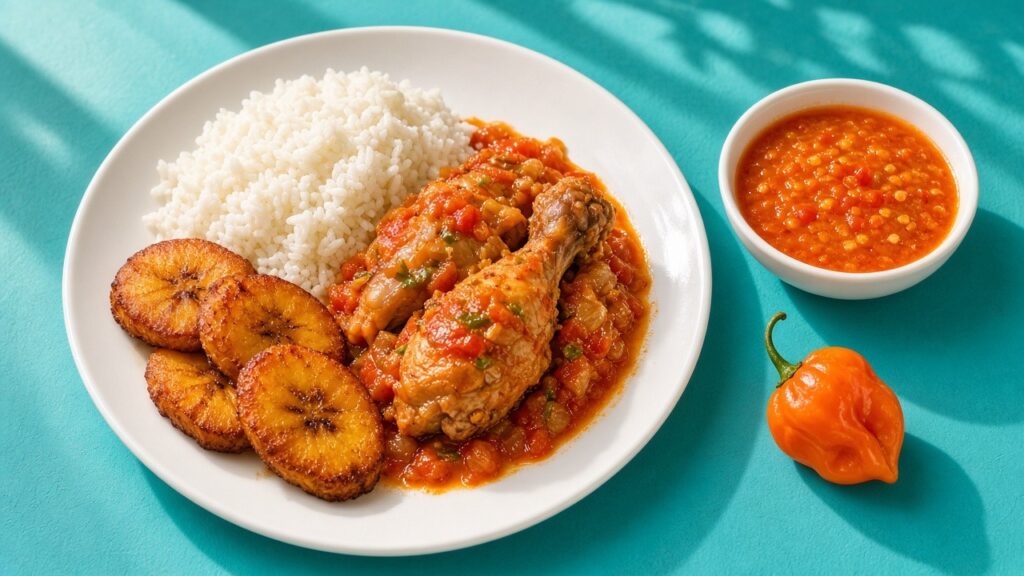
A bright red sauce does not always mean a hot meal, and a quiet-looking spoonful of picante can be much stronger than you expect. Panamanian food is a good reminder to separate flavor from chile heat.
Much everyday Panamanian food is mild rather than fiery: rice dishes, sancocho, hojaldras, patacones and many stews get their flavor from herbs, aromatics, broth and seasoning. Hot ají chombo sauces are often added separately. However, Panama’s Afro-Caribbean food traditions include genuinely spicy dishes, so it is not accurate to say the country’s food is never hot.
If you dislike heat, you can eat well. The important thing is asking whether hot pepper is already in the food, not just requesting that the bottle stay off the table.
What “spicy” means here
People use spicy in two ways: food seasoned with spices, and food that burns because it contains hot chile. A dish can have garlic, oregano, cumin or culantro and still be mild. Black pepper can add a little bite, but it does not make a dish equivalent to one cooked with a very hot chile.
Panamanian home cooking uses a broad range of flavors: savory broth, onion, garlic, tomato, fresh herbs, coconut, citrus and sweet plantain, among others. None of those automatically makes a plate hot.
It also helps to separate the main preparation from the condiment. A mild serving of fried fish can become very hot after a few drops of an intense pepper sauce. Both experiences can happen at the same table.
Panamanian dishes that are often mild
These are useful starting points, not guarantees about every restaurant or household.
| Dish | Usual flavor direction | What to check if you avoid heat |
|---|---|---|
| Sancocho | Chicken, ñame, culantro and broth | Whether hot pepper went into the pot |
| Arroz con pollo | Savory rice with chicken and vegetables | Seasoning mix, pepper or sauce added during cooking |
| Hojaldras | Fried bread, often with a savory accompaniment | Heat in the meat, sausage or sauce served beside them |
| Patacones | Crisp, savory green plantain | Dipping sauce or toppings |
| Carne guisada | Beef and vegetables in a savory sauce | Whether the stew includes chile |
| Sweet fried plantains | Soft, naturally sweet plantain | Usually the accompanying food rather than the plantain |
| Coconut rice | Rice with coconut flavor | Hot pepper in a regional or household version |
For a mild starting point at home, see Panamanian sancocho or carne guisada. Their seasoning does not require making the whole pot fiery.
Ají chombo: the heat to take seriously
Ají chombo is a very hot, aromatic chile associated with Panamanian food and hot sauces. It is related to habanero and Scotch bonnet types, not a mild substitute for bell pepper. A small amount can change an entire dish.
Specialty Produce’s ají chombo profile describes its fruity aroma and strong, lingering heat, along with its use in Panamanian table sauces. Exact heat varies between peppers and products. You do not need a numerical heat rating to understand the practical advice: start very small.
Is ají chombo sauce just heat?
No. Depending on the recipe, it can also bring vinegar acidity, mustard, onion, garlic, fruitiness or other seasonings. That is why someone may reach for it with fried fish or patacones: a few drops add brightness as well as heat.
Do not assume all yellow or orange sauces taste the same. Read the label on a commercial bottle or ask the cook about a homemade one. The color does not reveal the heat level or whether it contains an ingredient you must avoid.
How to try it without overwhelming your meal
Put a tiny drop on a small separate bite first. Wait before adding more; a hot pepper’s effect can build. Do not pour it through the whole bowl and only then decide whether it suits you.
If you are cooking for several people, keeping a mild base and serving picante separately is a practical option. It lets people choose, and it preserves the flavor of the dish for someone who cannot tolerate much heat.
The Caribbean side of the story matters
It would be misleading to describe all of Panama through one mild pot of soup. The country’s food traditions reflect Indigenous, African, European, Caribbean, Asian and other influences, with regional and household differences.
On the Caribbean coast, especially in discussions of Afro-Antillean cooking in places such as Bocas del Toro and Colón, hot peppers and coconut-based preparations have an important place. The official Panama tourism overview of Afro-Caribbean flavors explicitly describes the spicy character of Bocas del Toro’s food traditions.
That still does not mean every Caribbean dish is hot or every central-province dish is mild. A family recipe and a particular cook’s hand matter. Treat the regional distinction as a reason to ask a better question, not as a guarantee based on a location.
The spicy exceptions—and comparisons worth treating carefully
Souse, an Afro-Panamanian preparation associated with cooked pork in a tangy dressing, can include hot pepper and may be quite lively. Caribbean-style seafood stews, curries and pepper sauces can also carry real heat. Ask about a particular preparation rather than assuming a dish’s vinegar or coconut makes it mild.
Comparisons with neighboring food cultures need the same care. Mexican cooking includes both hot chile preparations and many mild dishes. Colombian cooking also has considerable regional variation, and table ají can be separate from a mild main dish. “Caribbean food” covers many distinct places and traditions, not one universal spice level. Panama shares influences and ingredients without having a single heat ranking against all of them.
If you want more heat at home, add a known pepper sauce to individual portions a few drops at a time. For a hot chile cooked into a pot, start with a very small amount and follow a recipe designed for it. You can add more later; it is much harder to recover an entire overly hot stew.
How to order food if you do not like heat
“Is it spicy?” is a useful beginning, but people have different tolerances. These questions are more specific:
- ¿Lleva ají picante? Does it contain hot chile?
- ¿El picante está en la comida o aparte? Is the hot sauce in the food or separate?
- Sin picante, por favor. No hot spice, please.
- La salsa aparte, por favor. Sauce on the side, please.
- No tolero el picante. I do not tolerate hot spice.
If the sauce is already cooked into a stew, a server may not be able to remove it. Ask about another preparation rather than expecting a finished sauce to become mild. If your concern is an allergy or a medical restriction, say that clearly; “not spicy” is not an allergy instruction.
For children or anyone with very low heat tolerance, order a small taste before committing if possible. Do not assume the food is mild because someone else at the table considers it mild.
How to keep Panamanian-style cooking flavorful without heat
You do not have to replace hot pepper with sugar or strip the seasoning out of the dish. Build the non-hot flavors instead:
- Soften onion and sweet pepper rather than rushing them into the broth raw.
- Cook garlic briefly so it smells fragrant without burning.
- Let tomato paste or tomatoes cook into the base.
- Use a suitable broth and enough salt, tasting before adding more.
- Add culantro or cilantro at the appropriate stage for the recipe.
- Finish with a little lime where it suits the dish, rather than making every pot sharply acidic.
When a recipe calls for ají dulce, check that you really have a sweet pepper. Some mild and very hot peppers look similar. A bell pepper is a safer mild substitution than guessing from the shape of an unfamiliar chile.
Can you remove heat after adding too much pepper?
You cannot reliably scoop the heat back out once it has spread through a dish. Diluting with an additional batch of the same food without chile is usually more effective than trying to “cancel” the heat with a spoonful of something else.
Starchy sides and, for those who tolerate it, dairy can make the eating experience more comfortable, but they do not remove capsaicin from the pot. Adding lime changes acidity, not the amount of hot pepper. For guests, offer a truly mild alternative rather than insisting the heat has been fixed.
Handling very hot peppers at home
Wear gloves when cutting very hot peppers, avoid touching your eyes, and wash tools and surfaces afterward. Keep peppers and prepared sauces out of reach of children and pets. Avoid breathing fumes from a very hot pan of chiles, and use ventilation.
Removing seeds does not guarantee a mild pepper. Much of the heat is associated with the inner tissues around them, and a very hot variety can remain hot after trimming. If you need a mild meal, use a mild pepper instead of trying to turn ají chombo into one.
Homemade pepper sauce is not automatically shelf-stable because it includes vinegar. Use a tested preservation method if you want to can it; otherwise follow a reliable refrigerated recipe. This guide is about choosing heat levels, not a canning formula.
Panamanian food and heat FAQ
Do Panamanians like spicy food?
Some do, some do not, and preferences vary within the same family. A table bottle of picante lets people adjust a shared meal. Neither personal preference should be presented as a rule about an entire nationality.
Is sancocho spicy?
It is often mild, with flavor from chicken, ñame and culantro, but a cook may add hot pepper. Ask about the pot itself. Adding picante at the table is different from cooking chile into the broth.
Is Panamanian food the same as Mexican food?
No. They are distinct cuisines with their own regional diversity. Comparing them only by heat flattens both: neither country has just one spice level, and Panamanian dishes are not simply milder versions of Mexican dishes.
Are patacones spicy?
Plain patacones are generally salted fried green plantains, not hot food. Heat usually comes from a sauce, seasoning or topping. For the texture difference from sweet plantains, read maduros vs tostones.
Does coconut milk mean a dish is mild?
No. Coconut can make a sauce taste rich and rounded while the dish still contains plenty of hot chile. Ask about pepper rather than using creaminess as your heat gauge.
Is all Panamanian hot sauce made with mustard?
No. Mustard is part of some familiar versions, but recipes and brands vary. Check ingredients, particularly if mustard is an allergen for you. Color alone is not enough information.
Can someone who dislikes hot food enjoy Panamanian cooking?
Absolutely. Start with mild preparations, ask what is cooked into the food, and keep hot sauces separate. The Panamanian food guide offers a wider starting point than heat alone.
The most useful answer is not “Panama is spicy” or “Panama is never spicy.” It is that much everyday cooking is mild, while hot pepper traditions are real, regional and delicious for people who enjoy them. You can make room for both at the table.