
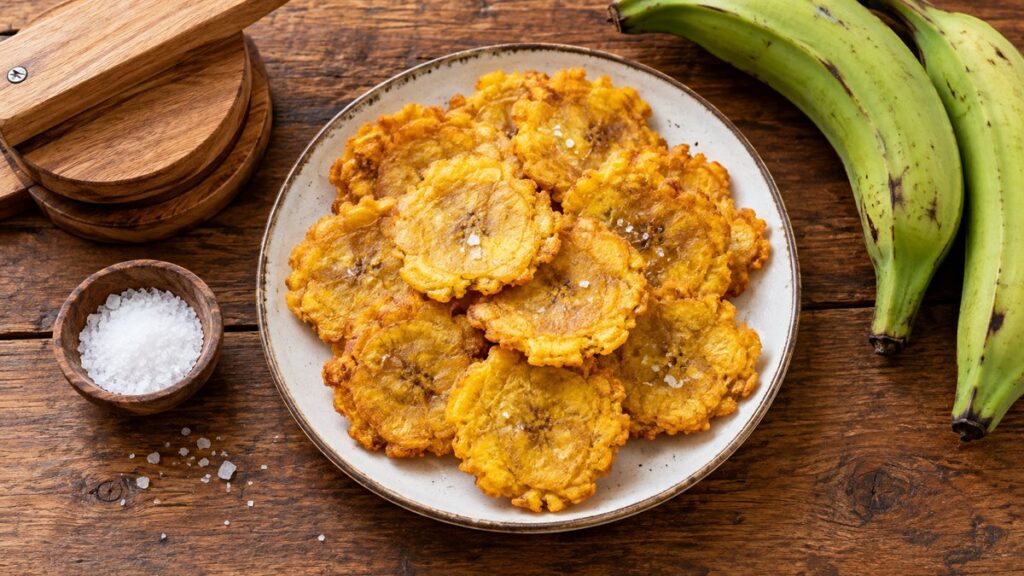
Ask a Puerto Rican or a Cuban and you’ll hear tostones; ask a Colombian or a Panamanian like me and you’ll hear patacones. Then everybody eats them. So is there any difference? Here’s the answer, country by country, plus how I make them the Panamanian way, how to fix soggy or hard ones, and what to serve them with.
Patacones and tostones are the same food: slices of green plantain fried, smashed flat and fried again until crisp. Panama, Colombia, Venezuela, Ecuador and Costa Rica say patacones; Puerto Rico, Cuba and the Dominican Republic say tostones. Differences are in size, thickness and toppings, not the method.
Same dish, different names
The name depends on where your family comes from:
| Country | Name | Typical style |
|---|---|---|
| Panama | Patacones | Medium to large, salted, served with almost anything |
| Colombia | Patacones | Often very large and thin, topped like a tostada (hogao, cheese, shredded meat) |
| Venezuela | Tostones / patacones | Patacón also names a sandwich made with fried plantain “bread” |
| Ecuador, Costa Rica, Peru | Patacones | Side dish, often with fish |
| Puerto Rico | Tostones | Smaller, thicker, with mayo-ketchup or garlic mojo |
| Dominican Republic | Tostones (also fritos verdes) | Side for fried meats and salami |
| Cuba | Tostones (also chatinos) | Side, often with mojo |
| Haiti | Bannann peze | Served with griot and pikliz |
The method is the same everywhere: green plantain, fry, smash, fry again, salt.
Why two names? In the old Spanish world, both patacón and tostón were also names of coins, and the round, flat plantain slices look like coins. The Spanish dictionary today lists patacón as a fried green plantain slice in several countries, including Panama.
So what are the real differences?
- Thickness. Puerto Rican tostones are often cut thick (about 1 inch) and smashed into chunky disks. Colombian patacones are often smashed very thin and wide.
- The soak. Many cooks, in Panama too, dip the smashed plantains in salted water (sometimes with garlic) before the second fry, which seasons them and makes them crisper.
- Toppings and sauces. Tostones come with mayo-ketchup or garlic mojo; patacones with hogao in Colombia; in Panama, with whatever is on the plate, plus ají chombo hot sauce.
- Patacón as a sandwich. In Venezuela and parts of Colombia, a “patacón” can mean a whole sandwich built between two giant fried plantains.
Are patacones the same as plátanos maduros?
No. Patacones and tostones use green, unripe plantains, which are starchy and savory, like a potato. Maduros (tajadas in Panama) are ripe, black-skinned plantains, sliced and fried once until sweet and caramelized. Totally different taste.
Plantain ripeness, explained
| Skin color | Inside | Best for |
|---|---|---|
| Fully green | Hard, pale, starchy | Patacones and tostones, chips (platanitos) |
| Green-yellow | Firm, slightly sweet | Boiled plantain, sancocho, mashed |
| Yellow with black spots | Soft, sweet | Tajadas (fried sweet plantain), baked plantain |
| Mostly black | Very soft, very sweet | Maduros, plátano en tentación, desserts |
How Panamanians make patacones
Serves 4 as a side.
Ingredients
- 3 green plantains (firm, fully green skins)
- Neutral oil for frying, about 1 inch in the pan
- Salt
- Optional soak: 2 cups warm water, 1 tsp salt, 1 crushed garlic clove
Steps
- Peel. Cut off the ends, score the skin lengthwise in 3 or 4 places without cutting the flesh, and pry it off with your thumb. Green plantain skin is tough and doesn’t peel like a banana.
- Slice into rounds about 1 inch thick, or on a diagonal for bigger patacones.
- First fry. Heat the oil to 325 to 350°F. Fry the pieces 3 to 4 minutes, turning, until pale gold and tender inside but not brown. Drain.
- Smash. While they’re warm, press each piece flat to about ¼ inch with a tostonera, the bottom of a heavy glass, or a plate. Put the plantain between two pieces of parchment or a folded zip-top bag so it doesn’t stick.
- Soak (optional). Dip each smashed piece in the salted garlic water for a few seconds and pat it dry. Carefully, because water and oil splatter.
- Second fry. Raise the oil to 375°F and fry 2 to 3 minutes, until golden and crisp.
- Salt immediately and serve hot.
Tips for crisp patacones
- Use very green plantains. Yellow plantains make soft, sweet patacones that don’t crisp.
- Don’t brown them on the first fry. You’re cooking the inside.
- Smash them warm. Cold plantain cracks.
- Hot oil for the second fry. That’s where the crunch comes from.
- Make them ahead: do the first fry and smash up to a few hours ahead, then do the second fry just before serving. You can also freeze smashed, once-fried patacones and fry them from frozen.
Patacones troubleshooting
- Why are my patacones hard and dry? The first fry was too hot or too long, so the inside dried out before smashing. Fry gently until just tender, and smash while warm.
- Why are they chewy? The plantains were a little ripe, or they were cut too thick for your taste. Use fully green plantains and slice ¾ to 1 inch.
- Why are they greasy? The oil for the second fry wasn’t hot enough. Bring it back to 375°F between batches.
- Why do they crack when I smash them? They cooled down or were undercooked. Smash right after the first fry.
- Why did they go soggy? They sat in a covered dish. Keep them on a rack, uncovered, and salt them right away.
- Why do they stick to the press? Put the plantain between parchment or inside a zip-top bag.
Sauces for patacones
- Ají chombo sauce: Panama’s choice. My Panamanian hot sauce is a few minutes of work.
- Mayo-ketchup (Puerto Rico) / salsa rosada (Panama): 3 parts mayonnaise to 1 part ketchup, plus a little garlic if you like.
- Garlic mojo: ¼ cup olive oil warmed with 4 minced garlic cloves, juice of 1 lime and a pinch of salt.
- Hogao (Colombia): tomato and green onion cooked down in oil.
How many plantains do I need?
One green plantain makes 6 to 8 patacones, about one generous serving. For a party, count one plantain per person if they’re the main snack, or half a plantain per person as a side.
Air fryer patacones
Brush the smashed, once-cooked plantains (you can boil them for 10 minutes instead of the first fry) with oil and air fry at 400°F for 10 to 14 minutes, flipping halfway. They’re lighter and less crunchy, but good.
What to serve with patacones in Panama
- Fried fish and lime: the classic beach meal.
- Ceviche: scoop it right onto a patacón.
- Sancocho or any stew, as a side. See my Panamanian sancocho.
- Bistec picado, ropa vieja or picadillo.
- Fresh cheese, for a snack.
Patacones vs tostones FAQ
Are patacones and tostones the same thing?
Yes. Same method, different names by country.
Which is correct, patacón or tostón?
Both. In Panama, say patacón.
What is a tostonera?
A wooden or plastic hinged press that smashes plantain slices evenly. Some have a cup shape for making “tostones rellenos” (stuffed cups). A heavy glass or plate works too.
Can I make patacones without frying?
Yes. Boil the plantain pieces 10 minutes, smash, brush with oil and bake at 425°F (220°C) for 20 to 25 minutes, turning once, or use the air fryer method above.
Where can I buy green plantains in Chicago?
Most supermarkets, and every Latin market. See my Chicago shopping guide.
Can I use bananas?
No. Sweet bananas are too soft and sugary. You need green plantains.
How do I store leftover patacones?
They’re best fresh. Leftovers keep 2 days in the fridge; re-crisp them in a hot oven or air fryer.
More Panamanian sides and snacks
Patacones are on almost every page of my guide to Panamanian food. Try them with carimañolas for a party, or next to my Panamanian sancocho.
¡Buen provecho!