
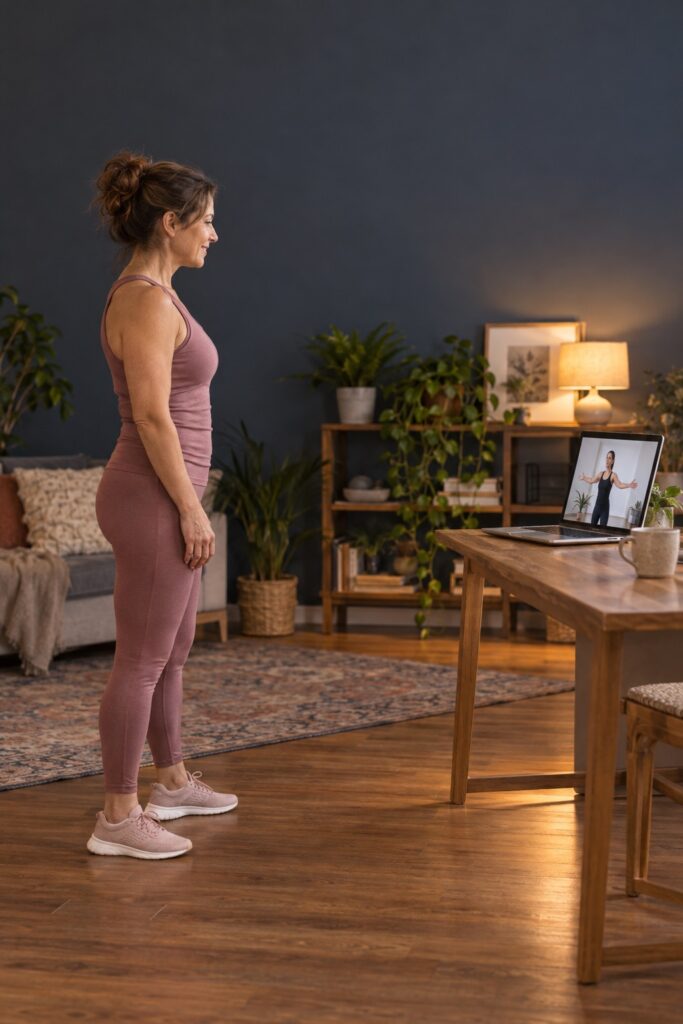
I love dancing in a studio full of people and music, but I’ve also danced in my living room in front of a laptop more times than I can count. Online classes changed how a lot of us learn to dance. So are they worth it? For most beginners, yes, with some limits you should know about.
Online dance classes are worth it for learning basics, practicing between studio classes, and dancing on a budget or a busy schedule. They’re less good for partner dances, technique corrections and performance. Live interactive classes give more feedback than recorded videos.
Online vs in-person dance classes
| Online | In person | |
|---|---|---|
| Cost | Free (YouTube) to low-cost subscriptions | Drop-in and class-card prices |
| Schedule | Any time (recorded) or fixed (live) | Fixed class times |
| Feedback | Little or none (recorded); limited (live) | Teacher sees and corrects you |
| Space | Your living room | A studio with a sprung floor and mirrors |
| Partner work | Hard without a partner at home | Partners rotate in class |
| Confidence | Private: nobody’s watching | Group energy, but it can feel intimidating at first |
| Community | Online comments and groups | Classmates, socials, friends |
| Repetition | Pause, rewind, slow down | Usually once at class speed |
The pros of online dance classes
- You can start without fear. If you feel awkward dancing in front of people, home is a safe place to learn the basics.
- You can repeat as much as you need. Pause, rewind, slow it down, learn it on the left side.
- Flexibility. Dance at 6 a.m. or 10 p.m., between work and dinner.
- Cost. Many quality classes are free or cheaper than studio classes.
- Variety. Try styles that aren’t taught near you: belly dance, K-pop, Afro, ballroom, tap.
- Practice between classes. Online videos are a great way to review what you learned in the studio.
The cons of online dance classes
- No real feedback. A teacher in the room can see that your weight is on the wrong foot or your shoulders are tight. With a recorded video, nobody can.
- Bad habits. Without corrections, small technique errors can become habits, especially in ballet, tap and turns.
- Space and floor. A small apartment or a hard floor limits big movements and jumps.
- Motivation. It’s easier to skip a video than a class you paid for with friends waiting.
- Partner dances are harder. Salsa and bachata need a partner to learn leading and following.
- Less community. You miss the energy of a room full of dancers.
Live vs recorded online classes
| Type | What you get | Best for |
|---|---|---|
| Recorded videos | Learn anytime, repeat freely, no feedback | Basics, review, budget |
| Live group classes | Real-time instruction, sometimes feedback if your camera is on | Structure and motivation |
| Private online lessons | One-on-one feedback through video | Specific technique or choreography |
If you want corrections in a live class, ask beforehand whether the teacher watches participants and gives feedback, and keep your camera on if you’re comfortable.
Which dance styles work best online?
| Works well online | Better in person |
|---|---|
| Zumba and dance fitness | Partner salsa, bachata and ballroom |
| Hip hop choreography | Advanced ballet technique and pointe |
| Belly dance basics | Tap (you need the right floor and an ear on your sounds) |
| Jazz and contemporary basics | Aerial and acrobatic dance |
| Salsa shines (solo footwork) | Performance preparation |
Zumba is one of the easiest to follow online because it’s built on repetition and following the instructor’s cues. Here’s a little taste:
For partner dances, you can learn salsa without a partner online (footwork and shines), then take that confidence to a class.
How to set up for dancing at home
- Space: clear an area where you can take a few steps in every direction.
- Floor: wood or a dance mat is better than tile or concrete. Avoid dancing on thick carpet in sneakers (turns can twist your knees).
- Shoes: the right shoes for the style; see how to choose Zumba shoes.
- Screen: a laptop or TV at eye level, far enough to see the whole body of the teacher.
- Mirror: a mirror or your phone camera to check yourself.
- Neighbors: if you live in an apartment, skip the jumps late at night!
How to get the most from online classes
- Choose beginner classes made for beginners, with breakdowns, not just “follow along” routines.
- Learn the steps slowly first, then at full speed.
- Record yourself and compare with the teacher.
- Schedule your online classes like real classes.
- Mix online and in person. Learn at home, get corrections in a studio.
- Join the community: comment, share progress, take a live class.
How to choose a good online dance class
- Check the teacher’s background: do they teach in a studio, or are they certified in the format (for example, licensed Zumba instructors)?
- Look for real beginner levels and a clear progression from one class to the next.
- Watch a free sample to see if the teaching style and camera angles work for you: can you see the feet? Is there a mirrored view?
- Read the cancellation terms before you subscribe, and use free trials to compare.
- Ask about feedback: some live classes and private lessons let you send a video for corrections.
When to choose in-person classes
- You want to learn a partner dance.
- You’re serious about technique (ballet, tap, jazz).
- You want to perform.
- You need the energy and accountability of a group.
- You want friends who love to dance.
Chicago has wonderful options for adults: see my guide to adult dance classes in Chicago and Zumba classes in Chicago.
My verdict
Online classes are worth it as a start, as practice, and as an option on busy or snowy days. They are not a full replacement for a teacher who can see you. The best mix for many dancers: learn the basics online, take an in-person class when you can, and use videos to practice in between. And if you’re just starting Zumba, my Zumba for beginners guide will help you either way.
FAQ
Can you really learn to dance online?
Yes, especially the basics and solo styles like Zumba, hip hop and belly dance. For partner dances and detailed technique, in-person classes help a lot.
Are online dance classes good for beginners?
Yes. They let you learn privately and at your own pace. Choose classes with step-by-step breakdowns.
Are paid online dance classes better than free YouTube videos?
Paid platforms usually offer structured programs and progressions; free videos vary in quality. Try free first, then pay if you want structure.
How often should I take online dance classes?
Two or three times a week is a good rhythm for steady progress. Even 15 minutes of practice helps.
Do I need special shoes for online dance classes?
Use the shoes the style needs, and think about your floor. Avoid sticky soles on carpet when you turn.
¡A bailar en casa! Your living room can be your first dance floor.