
For pasta and noodles, I’ll start with the step that comes after the pot. Are they going straight into sauce, into a soup, into the oven, or into a chilled lunch? Knowing the destination helps you stop cooking at the right point and have somewhere ready for them to go.
The package supplies the method for the particular product. I want to help you fit that method into the whole meal, rather than offer a universal boiling time that cannot suit every noodle.
Read beyond the shape
Similar-looking strands can be wheat, rice, egg or another ingredient, with different soaking and cooking requirements. Fresh noodles may be raw or already cooked. Rice noodles may need soaking, boiling or a combination. Keep the package directions when you move them into a storage container.
Check ingredient labels when allergies matter. The noodle, sauce, broth and garnish all count, as do utensils and shared cooking water. Appearance cannot establish that a product is suitable.
Choose a shape for the eating situation, too. A small pasta shape may be easier in a packed bowl; long strands need room and appropriate utensils. That is a practical choice, not a rule about what you are allowed to enjoy.
Have the next stage ready
Prepare the sauce before the noodles reach their finishing point. Clear the sink, position a stable colander, and decide where the hot pan will land. If lifting a large pot is awkward, use a suitable smaller-batch method or a safe transfer tool rather than forcing the lift.
For pasta finishing briefly in sauce, use directions that allow for that final cooking. For a bake, follow a recipe that accounts for sauce quantity, pasta starting state and pan depth. “Undercook before baking” means the later stage completes the cooking, not that the served dish should contain a raw center.
Let me use a simple illustrative sequence: prepare a tomato sauce, cook the chosen pasta by its directions, reserve a little cooking water if useful, then bring the pasta and sauce together. Chopping every topping after draining is where this sequence often loses its advantage.
Check texture without guessing at safety
Stir as needed to separate strands, especially early in cooking, without beating fragile pasta apart. Use package timing as a checking window. A firm bite is different from a dry, uncooked center.
Filled pasta needs the manufacturer’s complete cooking instructions; floating alone does not prove the filling is safely cooked. Do not taste homemade raw dough. FDA explains that flour is a raw food, and removing eggs does not make uncooked flour safe.
Give reserved water a purpose
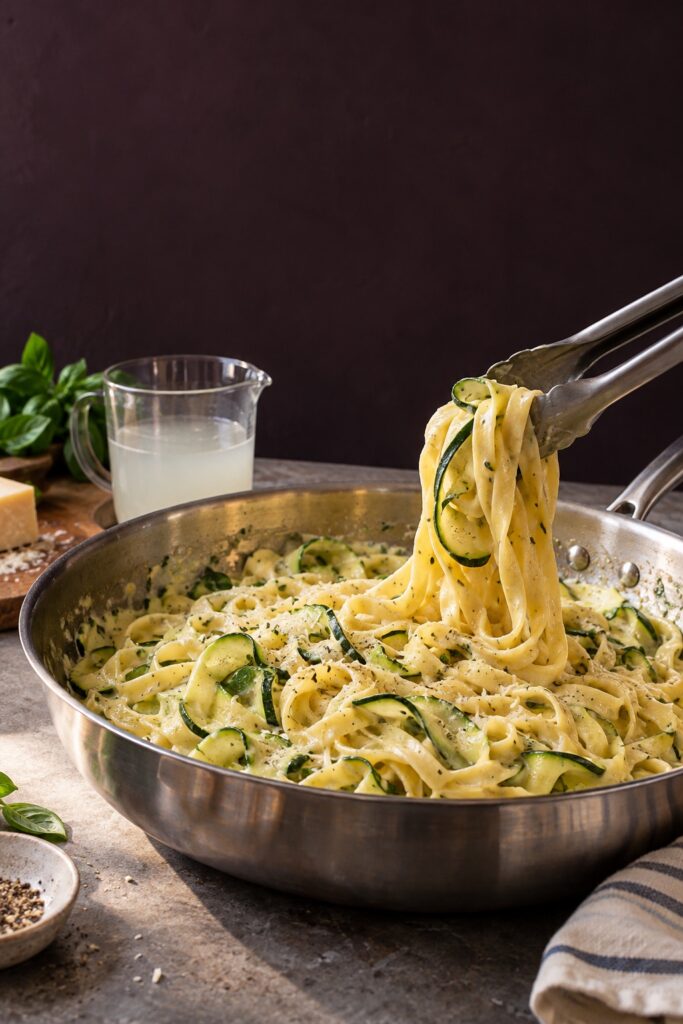
A little cooking water can loosen a sauce and help it distribute. Reserve it in a heat-safe vessel before draining, then add it gradually. Maryland Extension’s zucchini pasta uses this approach.
Cooking water varies in salt and starch concentration. If the sauce is already salty, more salted water may be the wrong adjustment. If the mixture is watery, continuing to boil already-tender pasta can sacrifice its texture to fix the sauce.
Rinsing depends on the product and dish. Many hot wheat-pasta preparations keep surface starch for the sauce; some cold noodle methods call for rinsing. Neither “always” nor “never” describes the full range of noodles. A rinse also does not make cooked food safe to leave unrefrigerated.
Keep soup and lunch textures in mind
Noodles left in soup absorb broth during storage. For a broth that should stay distinct, cook them separately and combine only the serving you need. For chilled dishes, try a small portion first: some noodles firm, stick or become fragile when cold.
Keep crisp toppings and very wet additions separate until eating when useful. Drain appropriately before dressing. A vinegar dressing does not make a cooked pasta salad shelf stable; follow a safe cold route, as in packing lunches that travel well.
Store the useful amount promptly
Cooked pasta and noodles are perishable even without meat. Divide leftovers into shallow containers and refrigerate at 40°F/4°C or below within two hours, or within one hour above 90°F/32°C. USDA guidance gives refrigerated leftovers three to four days and a reheating target of 165°F/74°C, with shorter ingredient limits taking priority.
If you change noodles in a recipe, cook the replacement by its own directions before assembly when possible. Swapping raw rice noodles into a one-pot wheat-pasta recipe changes the liquid and timing, not merely the name of the ingredient. Keep the meal’s destination; let the new product supply its own route.
Food-safety temperatures and storage limits here follow US household guidance; follow applicable local guidance and product instructions.
MarGo! editorial feature · AI-assisted, in the MarGo! first-person voice. Not a personal experience or product test unless stated.