
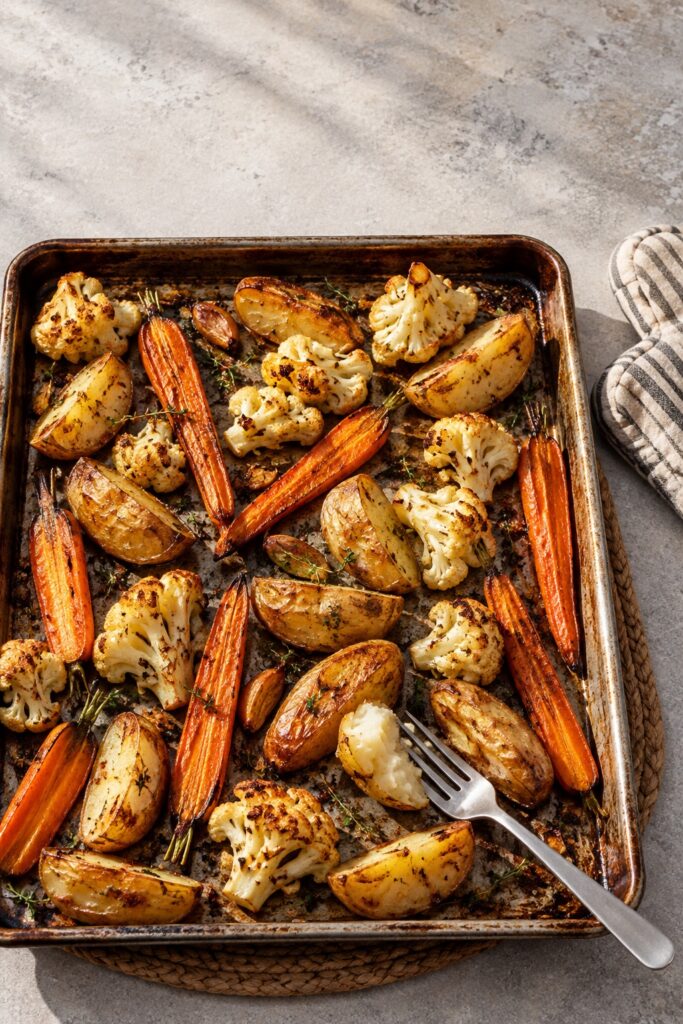
For roasting, I want you to keep two questions separate: is the center tender, and is the outside browned the way you want? A vegetable can answer yes to one and no to the other. Once you notice which part is behind, the next adjustment becomes much easier.
I’ll begin with a single vegetable rather than asking a crowded tray of unrelated ingredients to finish together. The examples explain decisions; they are not newly tested recipes with guaranteed cooking times.
Choose the cut for the meal
A thick carrot piece can have a substantial soft center and a few browned faces. A thin piece cooks differently and may dry sooner. A large cauliflower floret has a dense stem and delicate edges. Cut with those differences in mind.
For a filling, make pieces small enough to fit comfortably into the bread or wrap. For a purée, distinct crisp edges may matter less. For a side dish, keep enough shape to lift and serve easily. Similar thickness within the batch makes checking simpler.
Prepare the surface and the pan
Wash produce under running water before cutting, including produce whose skin you will remove. Do not use soap or detergent. Prewashed, ready-to-eat produce does not need washing again. Dry washed surfaces with a clean towel as appropriate. These handling points follow FDA produce guidance.
Use a suitable oven-safe, shallow pan with a rim to contain oil and juices. Follow the recipe for a light, even coating of suitable oil. Spread the vegetables in a single layer with some space; a single layer can still be crowded if pieces press into every gap.
A deep, full dish retains more moisture than an open tray. That may produce pleasant soft vegetables, but it is a different route from a dry, browned surface. Use more pan area or a smaller batch if browning is the goal.
Follow the pan and liner manufacturers’ limits. Parchment is not for use under a broiler; keep paper away from heating elements. Make a stable, heatproof landing space before lifting the hot tray.
Use a recipe to set the starting conditions
Choose a reliable roasting recipe for the vegetable and cut you have, including preheating, oven setting and turning instructions. Do not borrow a timing from tiny pieces for a tray of large wedges. Convection settings and rack positions also need the appliance’s guidance.
At a useful checkpoint, test several pieces for tenderness and look at their contact faces. Turn or redistribute as the method calls for it. Closing the door between deliberate checks is more useful than opening it repeatedly without changing anything.
Read the result before changing the heat
- Brown outside, firm inside: the surface is moving ahead. A gentler finish may help, depending on the recipe. Next time, try a thinner cut or a more suitable starting method rather than burning the outside while waiting.
- Tender but pale: inspect crowding, surface moisture and the dish’s depth. More oil will not necessarily solve trapped moisture. Decide whether a browned surface is important enough to continue cooking already-tender vegetables.
- Uneven pieces: check thickness and hot spots. Removing a finished vegetable piece is reasonable when it has not contacted raw animal-food juices and is otherwise safe to serve.
Turn the roasted component into dinner
For an illustrative meal, pair roasted cauliflower with separately cooked beans, bread and a chilled herb sauce. Keep the sauce alongside if you want to preserve the browned surfaces. A little fresh herb or acidic finish can change the bite without requiring another elaborate cooking stage.
When adding raw meat, poultry or seafood, use a recipe designed for the combination or separate pans. Vegetables touched by raw juices cannot be served merely because they are tender. Use a thermometer for the animal food: poultry needs 165°F/74°C, for example. See the full safe-temperature chart for other categories.
Save a portion without expecting the same crispness
Refrigerate perishable leftovers promptly in shallow portions, within two hours or one hour above 90°F/32°C. Keep the refrigerator at 40°F/4°C or below. USDA recommends using refrigerated leftovers within three to four days and reheating to 165°F/74°C.
A reheated vegetable may be softer than its first appearance from the oven. Plan a later soup, filling or bowl where that texture belongs. My soup guide gives that softened component another useful destination.
Food-safety temperatures and storage limits here follow US household guidance; follow applicable local guidance and product instructions.
MarGo! editorial feature · AI-assisted, in the MarGo! first-person voice. Not a personal experience or product test unless stated.